
AI vs Human Creativity: Can AI Replace Creativity?
Explore the debate on AI vs human creativity. Learn if AI can truly replace human innovation, its limitations, and the future of creative work in simple terms.

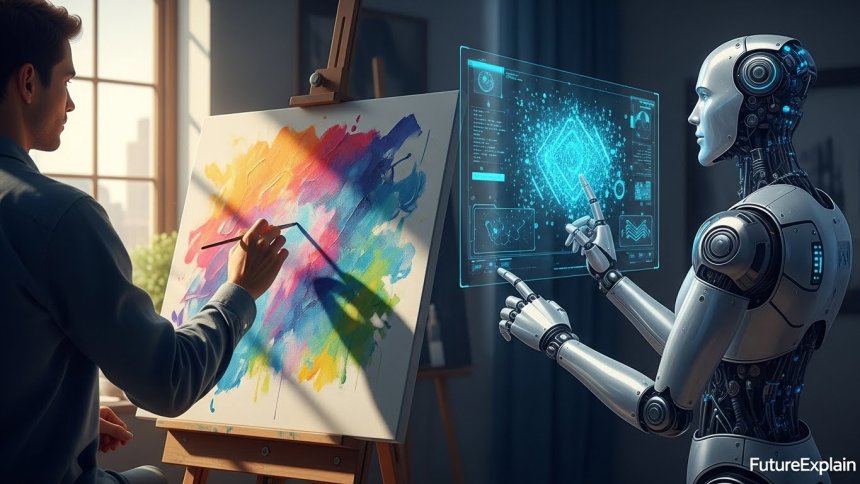
Introduction to AI and Creativity
Creativity has always been seen as a uniquely human trait. It's what allows us to imagine new worlds, solve problems in unexpected ways, and express emotions through art, music, and stories. But with the rise of artificial intelligence, questions arise: Can AI be creative? And more importantly, can it replace human creativity? In this article, we'll explore these ideas in simple terms, without hype or fear. We'll look at how AI works in creative tasks, its strengths and limits, and what this means for our future.
If you're new to AI, start with our guide on What Is Artificial Intelligence? A Complete Beginner’s Guide. Understanding the basics will help you grasp how AI intersects with creativity.
What Is Creativity?
Before diving into AI, let's define creativity. At its core, creativity is the ability to produce something new and valuable. It involves combining ideas in novel ways, often driven by personal experiences, emotions, and intuition. Psychologists describe it as a process with stages like preparation, incubation, illumination, and verification.
For humans, creativity isn't just about output—it's tied to our lived experiences. A painter might draw inspiration from a childhood memory, or a writer from a heartfelt conversation. This personal touch makes human creations unique and relatable.
In contrast, AI "creativity" is based on patterns learned from vast data sets. It doesn't feel emotions or have experiences; it predicts and generates based on probabilities. To learn more about AI's foundations, check out How Does Machine Learning Work? Explained Simply.
Types of Creativity
- Combinational Creativity: Mixing existing ideas, like remixing songs.
- Exploratory Creativity: Pushing boundaries within a style, such as evolving jazz music.
- Transformational Creativity: Breaking rules to create entirely new paradigms, like the invention of cubism in art.
Humans excel in all three, but AI is mostly good at the first two, relying on data rather than true innovation.
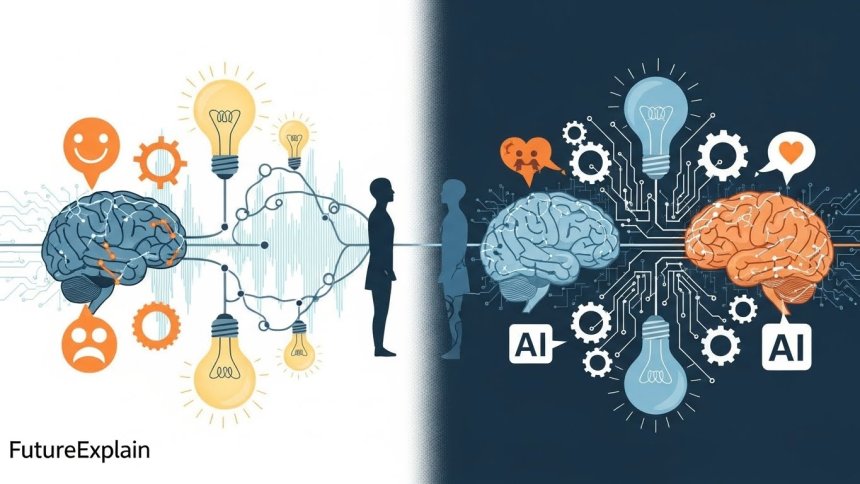
How AI Simulates Creativity
AI tools like DALL-E for images or ChatGPT for text seem creative because they produce novel outputs. But how do they work? AI uses machine learning models trained on millions of examples. For instance, an AI image generator analyzes patterns in photos and art to create new combinations.
Take generative adversarial networks (GANs): One part generates content, while another critiques it, improving over time. This mimics trial-and-error but without conscious thought.
Examples include AI composing music or writing poems. Tools reviewed in Top AI Tools for Beginners to Boost Productivity show how AI assists in creative tasks, like generating ideas for writers.
AI in Art and Design
AI can create stunning visuals by blending styles. For example, it might combine Van Gogh's starry night with modern photography. But it's remixing, not inventing from scratch.
In design, AI helps with layouts or color schemes, saving time for humans. Learn about these in AI Image & Design Tools subcategory.
Limitations of AI in Creativity
Despite impressive outputs, AI has clear limits. It lacks true understanding or originality. AI generates based on existing data—if something hasn't been done before, AI can't imagine it independently.
AI also struggles with context and nuance. A human artist might infuse work with cultural significance or irony, but AI might miss these subtleties, leading to generic results.
Moreover, AI can perpetuate biases from training data, creating unethical or stereotypical content. This ties into discussions in Is Artificial Intelligence Safe? Risks, Ethics, and Responsible Use.
Emotional Depth Missing
Creativity often stems from emotions like joy, pain, or curiosity. AI doesn't feel; it simulates based on patterns. A poem written by AI might rhyme perfectly but lack soul.
Studies show humans prefer art with a human story behind it, even if AI output is technically superior.
Human Strengths in Creativity
Humans bring irreplaceable elements: intuition, empathy, and adaptability. We can pivot based on real-time feedback or personal growth, something AI can't do without reprogramming.
Collaboration amplifies this—humans working with AI can achieve more, like using AI for brainstorming then adding human flair.
For insights on jobs, see How AI Is Changing Jobs (And Which Jobs Are Safe).
Real-World Examples
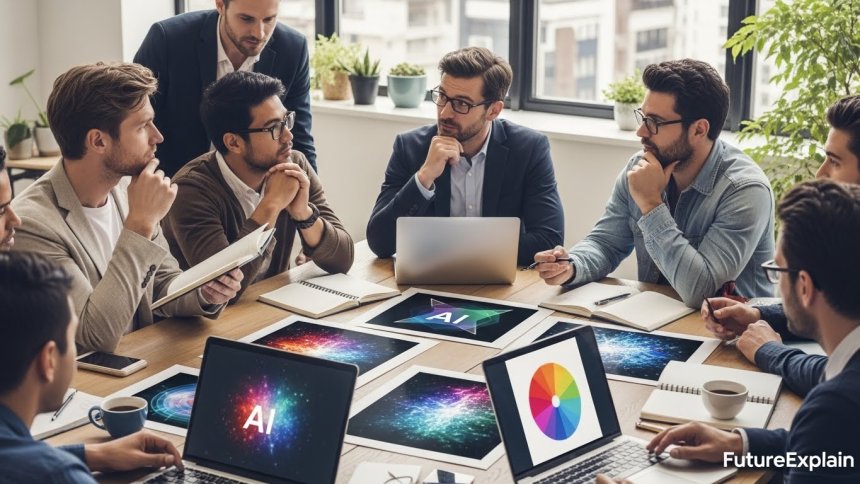
In music, AI like AIVA composes symphonies, but conductors note it lacks emotional interpretation. In writing, AI tools help draft articles, but human editors add depth—much like how we explain topics in AI Myths vs Reality: What AI Can and Cannot Do.
Art auctions have sold AI-generated pieces, but buyers value the novelty, not inherent creativity. In business, AI personalizes ads, as explained in How AI Personalization Works (Netflix, YouTube, Amazon), but human marketers craft the strategy.
Case Study: AI in Hollywood
AI scripts stories, but films like those from Pixar succeed due to human storytelling. AI might suggest plots, but directors infuse them with vision.
Ethical Considerations
If AI "creates," who owns the work? Copyright issues arise when AI trains on human art without permission. We must use AI responsibly, as outlined in How to Use AI Responsibly (Beginner Safety Guide).
Bias in AI can stifle diverse creativity, emphasizing the need for ethical development.
The Future of Creativity with AI
AI won't replace human creativity but augment it. In the next years, expect more hybrid tools where AI handles routine tasks, freeing humans for innovation. This aligns with trends in Future of Artificial Intelligence: What to Expect in the Next 5 Years.
For careers, creative fields will evolve—learn skills in Skills You Should Learn to Stay Relevant in the AI Era.
Preparing for Change
Embrace AI as a tool, not a threat. Start with free options from Best Free AI Tools You Can Use Without Technical Skills.
Conclusion
AI simulates creativity impressively but can't replace the human essence. By understanding both, we can use AI to enhance our work ethically. Explore more in our AI & Society subcategory or Intelligent Automation Explained (AI + Automation Together) for related topics.
Creativity remains a human superpower, evolving with technology for a brighter future.
Share
What's Your Reaction?
 Like
150
Like
150
 Dislike
5
Dislike
5
 Love
40
Love
40
 Funny
10
Funny
10
 Angry
2
Angry
2
 Sad
3
Sad
3
 Wow
25
Wow
25








Makes me appreciate human artists more.
Could add more on AI in design tools.
Shared this with my art class. Very insightful.
Well-written and beginner-friendly. Keep it up!
Is there a way AI can learn emotions? Future possibility?
AI simulates emotions via data, but true feeling requires consciousness, which AI lacks. See our ethics guides.
This helped me understand why my AI-generated stories feel flat.