
How AI Is Changing Jobs (And Which Jobs Are Safe)
Worried about AI and your job? Learn how AI is changing the workforce, which jobs are evolving, and which roles are likely to stay safe in the near future.


Understanding the Shift: AI as a Tool, Not Just a Replacement
The conversation around artificial intelligence and jobs is often filled with extreme predictions. Headlines swing from utopian visions of limitless leisure to dystopian fears of mass unemployment. The reality, as with most technological shifts, is more nuanced and already happening around us. To navigate this change, it's crucial to move past hype and understand the practical dynamics at play.
Historically, major technologies like the internet, personal computers, and industrial machinery didn't erase work—they transformed it. They made some tasks obsolete, created entirely new industries, and changed the skills required for success. AI is following a similar path. Rather than a sudden job apocalypse, we are experiencing a gradual but significant restructuring of tasks and responsibilities across nearly every sector. The core question isn't "will I have a job?" but rather "how will my job change, and what new skills should I learn?"
How AI is Actually Changing Work Today
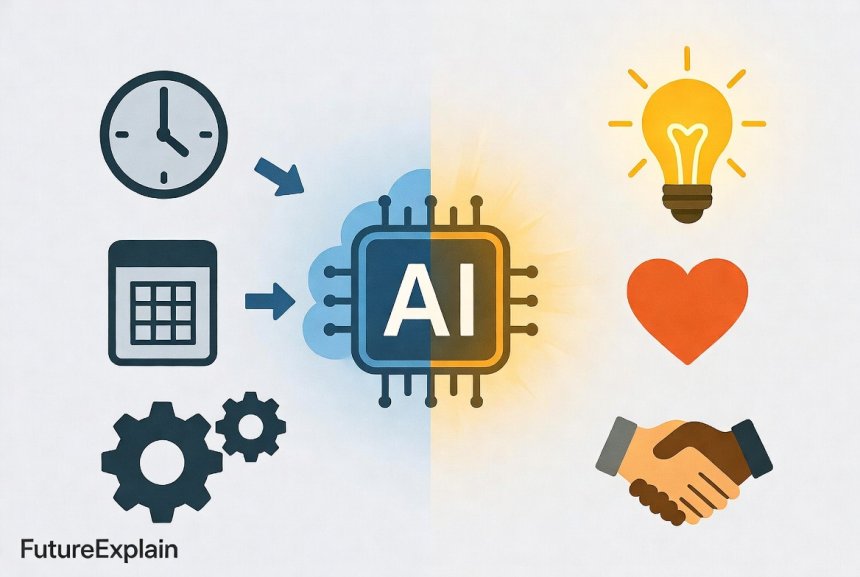
AI doesn't typically replace entire jobs overnight. Instead, it automates specific tasks within a job, freeing up human time for other activities. Let's look at the types of work AI is currently impacting:
- Repetitive, Rule-Based Tasks: Data entry, scheduling, basic customer service queries, and quality control on assembly lines. These are prime candidates for automation through workflow automation and intelligent systems.
- Data Analysis and Pattern Recognition: Sifting through large datasets to identify trends, which aids in fields like marketing, finance, and logistics. This is a core function of machine learning.
- Content Generation and Drafting: Creating first drafts of reports, marketing copy, or simple code. This is where many AI writing and productivity tools come into play, acting as assistants rather than replacements.
- Enhanced Decision Support: Providing insights and recommendations to professionals in healthcare, law, and management, who then apply human judgment and ethics to the final decision.
This shift means that many jobs are becoming "augmented" roles. For example, a marketer might spend less time on data crunching and more on creative strategy. An accountant might focus less on data entry and more on financial advisory services.
Jobs Facing Significant Change (Evolution, Not Extinction)
Certain professions are in the midst of a major transformation. The key for workers in these fields is adaptation and skill-building.
- Customer Service: While AI chatbots handle routine inquiries, human agents are increasingly needed for complex problem-solving, empathy, and handling escalated issues.
- Manufacturing and Logistics: Physical robots and AI-driven systems handle dangerous or repetitive assembly and sorting, while humans maintain, program, and oversee these systems.
- Routine Office Work: Administrative tasks like transcription, report generation, and appointment setting are becoming automated. This pushes roles towards coordination, project management, and interpersonal communication.
- Transportation: While fully autonomous vehicles are a future prospect, AI is already assisting drivers with navigation and safety, changing the nature of the role.
Jobs Likely to Remain Safe (For the Foreseeable Future)
Some jobs are built on a foundation of skills that are incredibly difficult—and arguably undesirable—for AI to replicate. These roles are not "AI-proof," but they are "AI-resilient" because they center on deeply human capabilities. Understanding what AI truly cannot do is key here.
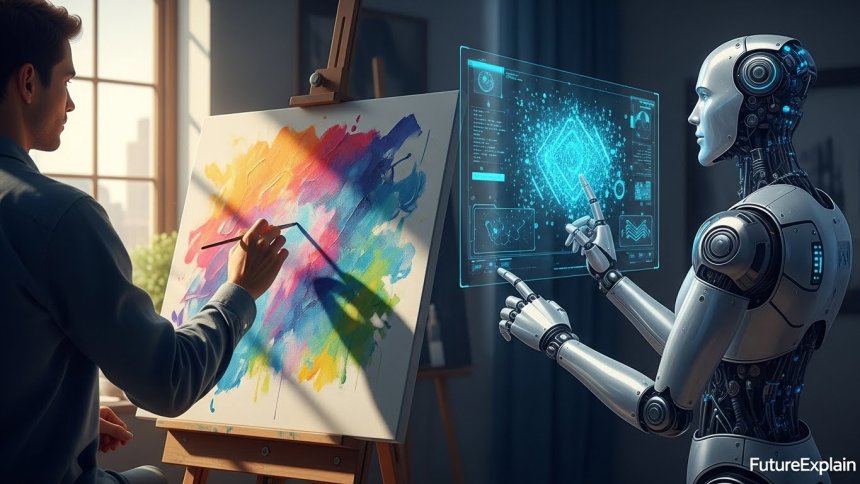
- Jobs Requiring High-Level Creativity and Innovation: Strategic planners, research scientists, novelists, and artists. AI can generate variations, but breakthrough ideas and authentic artistic expression stem from human experience. The debate around AI and human creativity is ongoing, but the human role remains central.
- Jobs Centered on Complex Human Relationships and Care: Therapists, nurses, social workers, teachers, and senior care providers. Empathy, nuanced emotional understanding, and physical care are profoundly human domains.
- Skilled Trades and Unpredictable Physical Work: Electricians, plumbers, emergency repair technicians, and construction workers in dynamic environments. These require adaptability, manual dexterity, and on-the-spot problem-solving in unstructured settings.
- Roles Involving Persuasion, Negotiation, and Leadership: CEOs, business negotiators, trial lawyers, and political leaders. Building trust, inspiring teams, and navigating complex human motives are core to these jobs.
How to Prepare and Stay Relevant
The goal isn't to outrun AI, but to learn to work alongside it. Proactive preparation is your best strategy. This involves a mindset shift towards continuous learning.
- Embrace "AI-Human Collaboration" Skills: Learn to use AI tools effectively in your field. This could mean using a design AI for mock-ups, a writing assistant for drafts, or an analytics platform for insights. Become the person who knows how to leverage the tool.
- Cultivate Uniquely Human ("Soft") Skills: Double down on creativity, critical thinking, emotional intelligence, communication, and ethical judgment. These are becoming the premium differentiators.
- Focus on Problem-Finding, Not Just Problem-Solving: AI is excellent at solving well-defined problems. Humans excel at identifying which problems are worth solving in the first place—a strategic skill.
- Commit to Lifelong Learning: The half-life of technical skills is shrinking. Be curious. Explore resources on how to start learning AI and consider the broader skills relevant for the AI era.
Looking Ahead with Clarity, Not Fear
The future of work with AI is not a predetermined script. It will be shaped by the choices of businesses, policymakers, and individuals like you. While disruption is inevitable, so is opportunity. By understanding the nature of the change, you can move from anxiety to agency. Focus on adapting your skill set, leveraging AI as a powerful assistant, and strengthening the human qualities that technology cannot emulate. For a broader view of what's coming, explore our thoughts on the future of AI in the next 5 years and a comprehensive practical guide to preparing for an AI-driven future.
The journey ahead is one of collaboration between human intuition and machine intelligence. By preparing wisely, you can not only stay safe but thrive in the new world of work.
Share
What's Your Reaction?
 Like
850
Like
850
 Dislike
15
Dislike
15
 Love
320
Love
320
 Funny
40
Funny
40
 Angry
25
Angry
25
 Sad
60
Sad
60
 Wow
210
Wow
210










The historical perspective is crucial. People feared spreadsheets would put accountants out of work. It just changed their job. This feels similar, but faster. Lifelong learning is no longer optional.
I appreciate the practical "how to prepare" advice. "Become the person who knows how to leverage the tool" is a powerful mindset shift. It turns a threat into an opportunity for leadership.
The section on skilled trades is spot on. I'm an electrician, and while they have apps for diagrams now, every house and problem is different. You need experience and intuition no machine has. Good to see that acknowledged.
What about middle management? You mention leadership is safe, but a lot of a manager's job is processing reports and data - tasks that seem automatable. Is the traditional manager role at risk?
Good overview. I'm a teacher, and it's reassuring to see care and education listed as safe. But I also think we'll use AI a lot for administrative tasks and personalized learning plans, which could be great.
As a graphic designer, I've been worried about AI image tools. This article helped me see I need to focus more on the client strategy and conceptual side of my work, which AI can't do. The "problem-finding" point is key.