
AI for Agriculture: Smart Farming & Crop Management
This comprehensive guide explores how artificial intelligence is revolutionizing agriculture through smart farming and crop management. We demystify AI technologies for farmers and agricultural professionals, covering practical applications from drone-based crop monitoring to predictive yield analytics. The article explains how machine learning algorithms analyze soil data, weather patterns, and plant health indicators to optimize farming decisions. We provide a tiered adoption framework suitable for farms of all sizes, discuss cost-benefit considerations, and address common implementation challenges. Real-world case studies demonstrate successful AI integration, while a practical implementation checklist helps farmers start their smart farming journey responsibly and effectively.

Introduction: The Quiet Revolution in Our Fields
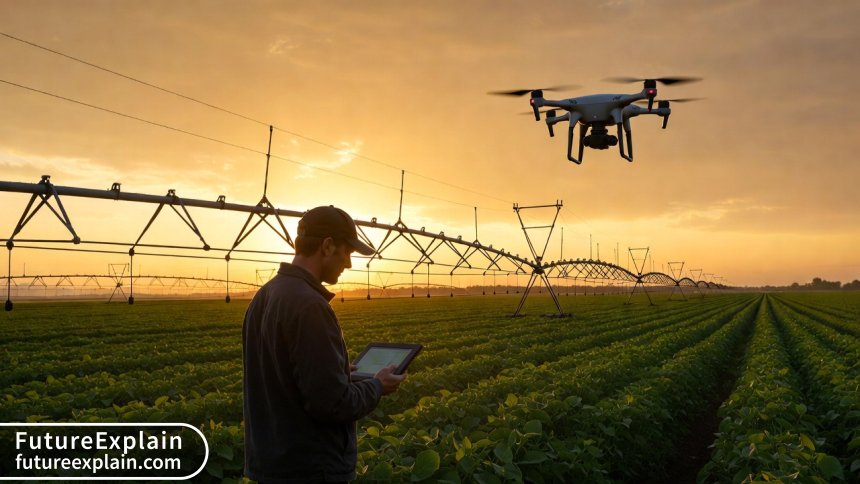
Agriculture, humanity's oldest industry, is undergoing its most profound transformation since the mechanization of the 20th century. While combines and tractors revolutionized physical labor, artificial intelligence is now revolutionizing decision-making in farming. This isn't about replacing farmers with robots—it's about augmenting human expertise with data-driven insights that were previously impossible to obtain. The global population is projected to reach nearly 10 billion by 2050, requiring a 70% increase in food production while facing climate change challenges, water scarcity, and limited arable land expansion. AI offers practical solutions to these complex problems.
Smart farming represents a fundamental shift from reactive to proactive agriculture. Instead of waiting for visible signs of crop distress or disease, farmers can now anticipate problems weeks in advance. Rather than applying fertilizers and pesticides uniformly across entire fields, they can target specific areas with precision. This transition from blanket treatments to surgical interventions reduces costs, minimizes environmental impact, and increases yields simultaneously. The data revolution that transformed retail, finance, and healthcare is now reaching the world's farms, and the implications are staggering for food security, sustainability, and farm profitability.
This comprehensive guide breaks down AI applications in agriculture into understandable concepts, practical implementations, and realistic expectations. Whether you're a small-scale organic farmer, an agricultural student, or simply curious about where your food comes from, you'll find clear explanations of how AI technologies work, what they can actually do today, and how they're likely to evolve. We'll move beyond the hype to examine real-world applications, cost considerations, implementation challenges, and the human-AI collaboration that defines modern smart farming.
Understanding the AI Agriculture Ecosystem
The AI agriculture ecosystem comprises several interconnected technologies working together. At its core are sensors that collect data, networks that transmit it, algorithms that analyze it, and interfaces that present actionable insights. This ecosystem operates across multiple scales—from individual plants to entire agricultural regions—and addresses diverse challenges including yield optimization, resource management, disease prevention, and supply chain efficiency.
The Data Collection Layer: Eyes and Ears in the Field
Data collection forms the foundation of any AI agriculture system. Modern farms generate data from multiple sources:
- Satellite and Aerial Imagery: High-resolution satellite images from companies like Planet Labs and Airbus provide regular field overviews, while drones offer more detailed, on-demand aerial views. These images capture visible light as well as near-infrared and thermal data, revealing plant health indicators invisible to the naked eye.
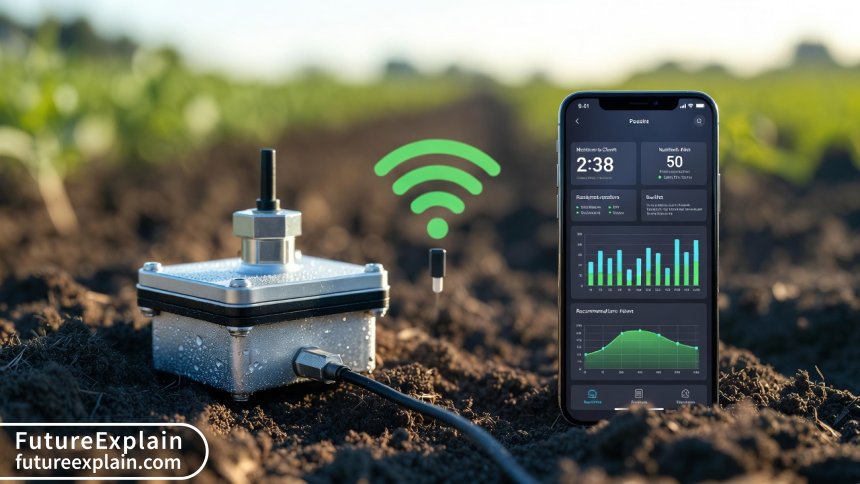
- Ground Sensors: IoT (Internet of Things) sensors embedded in soil measure moisture, temperature, pH levels, and nutrient content. Weather stations track microclimates, while canopy sensors monitor plant growth patterns. These devices create a continuous data stream about field conditions.
- Equipment Telematics:Modern farm machinery generates operational data including fuel consumption, working speed, and implement performance. This equipment data helps optimize field operations and maintenance schedules.
- Manual Inputs: Farmer observations, historical records, and traditional knowledge provide context that pure sensor data might miss. The most effective systems blend automated data collection with human expertise.
The volume of data generated is enormous—a single medium-sized farm can produce terabytes of data annually. The challenge isn't data scarcity but data management: filtering noise, identifying patterns, and transforming raw numbers into actionable intelligence.
The Analysis Layer: From Data to Decisions
Once collected, agricultural data undergoes sophisticated analysis through various AI techniques:
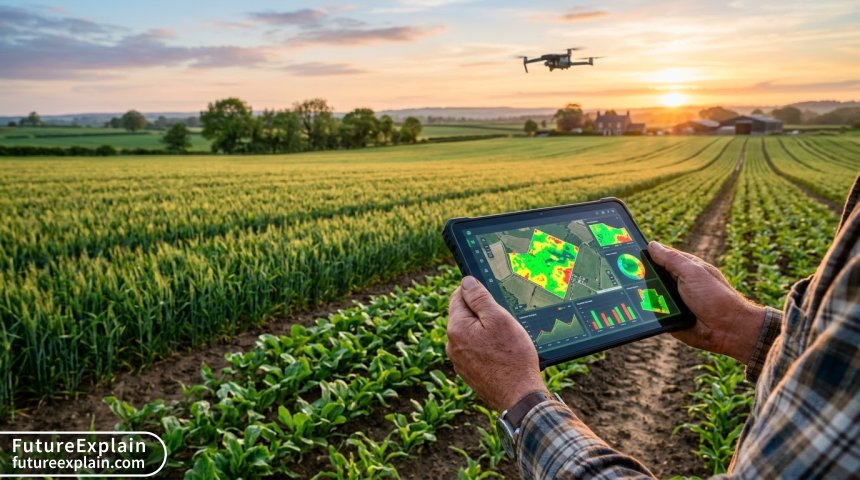
- Computer Vision: Algorithms analyze images from drones and satellites to identify crop health issues, count plants, detect weeds, and monitor growth stages. These systems can distinguish between healthy and stressed plants based on subtle color variations and texture patterns.
- Machine Learning Models: Predictive algorithms analyze historical yield data alongside current conditions to forecast production outcomes. Regression models correlate inputs (water, fertilizer, weather) with outputs (yield, quality) to identify optimal resource allocation.
- Deep Learning Networks: More complex neural networks identify disease patterns before visible symptoms appear, classify crop types in mixed plantings, and predict pest outbreaks based on environmental conditions.
- Natural Language Processing: Some systems process textual data from research papers, extension bulletins, and farmer forums to extract relevant insights and recommendations.
These analytical tools don't operate in isolation. The most advanced systems use ensemble approaches that combine multiple AI techniques to cross-validate findings and improve accuracy. For example, computer vision might identify potential disease areas, while machine learning models check these against weather conditions known to promote that specific pathogen, and natural language processing scans recent research for treatment recommendations.
Core Applications: Where AI Makes a Tangible Difference
Precision Agriculture: The Right Treatment in the Right Place
Precision agriculture represents AI's most immediate impact on farming. By analyzing field variability, AI systems enable targeted interventions that optimize resource use. The principle is simple: no field is uniform—soil quality, moisture retention, slope, and microclimate vary across even small areas. Traditional farming treats the entire field the same, but precision agriculture adapts treatments to local conditions.
Variable Rate Technology (VRT) exemplifies this approach. AI systems analyze soil maps, yield histories, and real-time sensor data to create prescription maps for seed planting, fertilizer application, and irrigation. The system might direct planters to place seeds closer together in high-fertility zones and further apart in marginal areas. Similarly, sprayers apply herbicides only where weed pressure exceeds economic thresholds, reducing chemical use by 20-40% according to University of Nebraska research.
Case Study: Midwestern Corn Farm: A 2,000-acre corn operation in Iowa implemented an AI-driven precision system that reduced nitrogen fertilizer application by 35% while maintaining yields. The system combined soil nitrate sensors, drone-based crop health monitoring, and predictive weather analysis to time applications perfectly. The farm saved approximately $42 per acre on fertilizer costs while reducing nitrate runoff—a win for both economics and environment.
Crop Health Monitoring and Disease Prediction
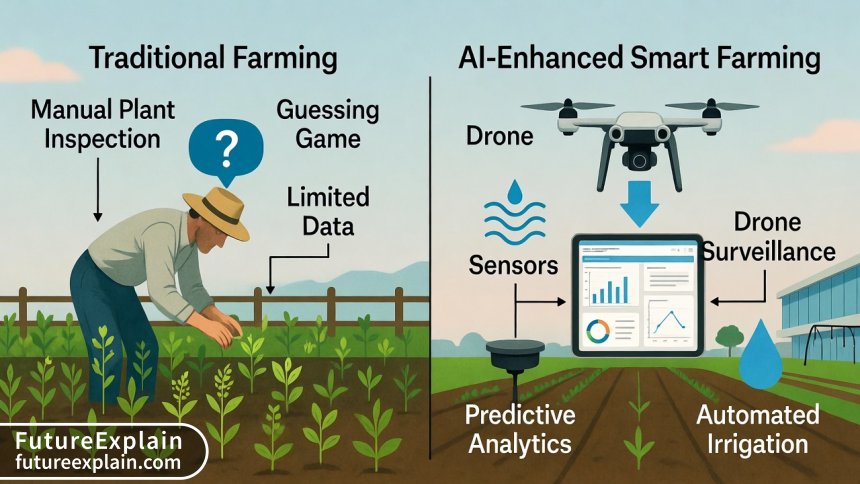
Early detection of plant stress and disease represents one of AI's most valuable contributions to agriculture. Traditional scouting methods are labor-intensive and often detect problems only after significant damage has occurred. AI systems continuously monitor fields and identify issues at their earliest stages.
Modern systems use multispectral and hyperspectral imaging to detect subtle changes in plant physiology. Healthy plants reflect specific light patterns in visible and non-visible spectra. Stress from disease, nutrient deficiency, or water shortage alters these reflectance signatures before visible symptoms appear. AI algorithms trained on thousands of annotated images learn to distinguish between different stress types and severity levels.
Disease Prediction Models take this a step further by anticipating outbreaks before they occur. These models analyze weather patterns (temperature, humidity, leaf wetness duration), historical disease incidence, and current crop stage to calculate infection risk probabilities. When risk exceeds predetermined thresholds, the system alerts farmers to implement preventive measures. Research from Cornell University shows that such systems can reduce fungicide applications by up to 50% while maintaining or improving disease control.
Yield Prediction and Quality Assessment
Accurate yield prediction transforms farm management and marketing decisions. Traditional yield estimates often rely on limited sampling and subjective judgment, leading to significant errors. AI systems integrate multiple data streams—satellite vegetation indices, weather forecasts, soil moisture readings, and historical patterns—to generate probabilistic yield forecasts with remarkable accuracy.
These systems don't just predict total volume; they forecast quality parameters as well. For specialty crops like wine grapes, coffee, or almonds, quality determines price more than quantity. AI models can predict sugar content, oil percentage, size distribution, and other quality markers based on growing conditions and management practices. This enables farmers to optimize harvest timing and target premium markets.
Harvest Optimization represents another critical application. AI systems analyze crop maturity across fields and recommend harvest sequences that maximize quality and minimize losses. For time-sensitive crops like fruits and vegetables, even a 24-hour difference in harvest timing can significantly impact market value and shelf life.
Automated Weed Detection and Management
Weeds compete with crops for nutrients, water, and light, reducing yields and increasing production costs. Traditional weed management often involves blanket herbicide applications, but AI enables precise, targeted approaches.
Computer vision systems mounted on tractors or autonomous robots scan fields in real time, identifying weeds and distinguishing them from crops. When a weed is detected, the system activates a micro-sprayer that applies herbicide only to that plant, or in some systems, uses mechanical or laser methods for elimination. This approach reduces herbicide use by 70-90% compared to broadcast applications, according to Blue River Technology (now part of John Deere).
The economic implications are substantial. A typical soybean farm might spend $30-50 per acre on herbicides. Precision weed control could reduce this to $10-15 per acre while achieving equal or better weed suppression. Environmental benefits include reduced chemical runoff and preserved biodiversity.
The Technology Stack: Building Blocks of Smart Farming
Sensors and IoT Devices: The Data Foundation
The agricultural IoT market has exploded with specialized sensors for every imaginable parameter. Understanding these devices helps farmers select appropriate technology for their needs:
- Soil Sensors: Measure moisture at multiple depths, temperature, electrical conductivity (indicating salinity), and nutrient levels (NPK). Advanced models use time-domain reflectometry or capacitance methods for highly accurate moisture readings.
- Canopy Sensors: Mounted on equipment, these active sensors emit light at specific wavelengths and measure how plants reflect it, calculating vegetation indices like NDVI (Normalized Difference Vegetation Index).
- Environmental Stations: Track temperature, humidity, rainfall, wind speed/direction, solar radiation, and leaf wetness at field level, creating microclimate data crucial for disease modeling.
- Yield Monitors: Installed on combines, these sensors measure grain flow, moisture content, and quality parameters in real time during harvest.
Connectivity remains a challenge in rural areas. Solutions range from LoRaWAN (Long Range Wide Area Network) for low-power, long-distance communication to cellular networks (4G/5G) for data-intensive applications. Satellite-based IoT is emerging as a viable option for remote locations without cellular coverage.
Drones and Robotics: Mobile Data Collection and Intervention
Unmanned aerial vehicles (drones) have become essential tools in modern agriculture. Their ability to capture high-resolution imagery across entire fields makes them ideal for crop monitoring. Modern agricultural drones offer:
- Multispectral Imaging: Capturing data across specific wavelength bands that reveal plant health information invisible to humans
- Thermal Imaging: Identifying water stress through canopy temperature variations
- LiDAR Capabilities: Creating detailed 3D maps of crop structure and terrain
- Automated Flight Planning: Pre-programmed routes for consistent data collection across time
Ground robots extend monitoring capabilities and enable physical interventions. Small, autonomous vehicles can navigate between crop rows, collecting close-up imagery and sensor data. Some robots perform precise tasks like thinning excess plants, applying spot treatments, or harvesting specialty crops. While still emerging, agricultural robotics promises to address labor shortages and enable 24/7 field operations.
Data Platforms and Analytics Software
The true value of agricultural data emerges through analysis platforms that transform raw numbers into actionable insights. These platforms vary in sophistication:
- Basic Visualization Tools: Display sensor data and imagery in user-friendly formats, allowing manual interpretation
- Analytics Platforms: Apply statistical analysis and basic machine learning to identify patterns and correlations
- Decision Support Systems: Provide specific recommendations (when to irrigate, where to scout, what to treat) based on AI analysis
- Full Integration Suites: Combine data from multiple sources (equipment, sensors, drones, markets) with advanced AI to optimize entire farm operations
Key considerations when selecting platforms include data ownership policies, interoperability with existing equipment, and the quality of agronomic expertise embedded in the algorithms. The best systems blend AI capabilities with deep agricultural knowledge, recognizing that farming involves biological systems with inherent variability and unpredictability.
Implementation Framework: A Tiered Approach to Adoption
Farmers shouldn't attempt to implement all AI technologies simultaneously. A phased, tiered approach reduces risk, manages costs, and allows learning through implementation. We propose a four-tier framework suitable for farms of all sizes and technological sophistication levels.
Tier 1: Foundation and Data Collection
The first tier establishes basic data collection infrastructure without complex analytics. Goals include familiarization with digital tools and building historical data sets. Recommended starting points:
- Basic Weather Station: Install an affordable station that records temperature, rainfall, and humidity at your specific location
- Soil Moisture Sensors: Place 3-5 sensors in representative areas to understand field variability
- Manual Data Logging App: Use smartphone applications to record planting dates, inputs, observations, and yields
- Satellite Imagery Subscription: Access free or low-cost satellite data through platforms like Sentinel Hub or commercial providers
This tier requires minimal investment (typically $500-$2,000) and focuses on changing farm management culture toward data awareness. Farmers learn what data matters, how to collect it consistently, and begin noticing patterns. The key deliverable is a basic digital farm record that replaces paper notebooks and memory-based decisions.
Tier 2: Basic Analytics and Visualization
With foundational data established, tier two introduces basic analysis capabilities. The goal shifts from data collection to insight generation. Implementation steps include:
- Data Integration Platform: Select a platform that consolidates data from various sources into unified dashboards
- Drone with Basic Camera: Invest in an entry-level drone for aerial imagery, focusing on visible spectrum initially
- Data Analysis Training: Learn to interpret vegetation indices, yield maps, and basic statistical outputs
- Precision Equipment Retrofit: Add GPS guidance to existing equipment if not already present
Investment ranges from $3,000 to $15,000 depending on equipment choices. At this stage, farmers begin making data-informed decisions, such as adjusting irrigation based on soil moisture readings rather than fixed schedules or identifying underperforming field zones for targeted soil testing. The transition from reactive to proactive management begins here.
Tier 3: Advanced Analytics and Predictive Capabilities
Tier three introduces true AI capabilities through predictive analytics and automated decision support. This represents a significant step in technological sophistication and investment:
- Multispectral Drone or Satellite Service: Upgrade to imagery that captures plant health indicators beyond visible light
- Advanced Soil and Canopy Sensors: Deploy networks of sensors for comprehensive field monitoring
- Predictive Analytics Software: Implement systems that forecast yields, disease risks, and optimal input timing
- Variable Rate Capability: Enable equipment to automatically adjust application rates based on prescription maps
Investment ranges from $15,000 to $75,000 depending on farm size and specific technologies. The focus shifts from what's happening now to what will happen next. Farmers receive alerts about emerging issues before they become visible and get recommendations for preventive actions. Management becomes increasingly precise, with inputs matched to spatial and temporal variability across fields.
Tier 4: Integrated AI Farming System
The highest tier represents full integration of AI across the farming operation. This level suits large operations or those with specific technical expertise:
- Complete Sensor Networks: Dense arrays of sensors providing continuous, comprehensive field data
- Automated Equipment: Machinery with AI-driven decision capabilities in real time
- Advanced Robotics: Autonomous vehicles for data collection, monitoring, and specific tasks
- Full System Integration: Seamless data flow between equipment, sensors, analytics, and financial systems
Investment can exceed $100,000 but delivers comprehensive optimization across the entire operation. At this level, AI doesn't just support decisions—it automates routine decisions while surfacing strategic choices for human consideration. The system continuously learns and improves based on outcomes, creating a feedback loop that enhances performance over time.
Economic Considerations: Costs, ROI, and Funding Options
Understanding the economics of AI adoption is crucial for making informed investment decisions. The financial case varies significantly based on farm type, size, location, and existing infrastructure.
Cost Breakdown by Technology Category
AI agriculture technologies span a wide price range:
- Basic Monitoring Systems: $500-$5,000 for entry-level sensors and visualization software
- Drone Systems: $1,500-$25,000 depending on capabilities (camera types, flight time, automation)
- Soil Sensor Networks: $2,000-$20,000 for comprehensive coverage of typical fields
- Analytics Platforms: $500-$10,000 annually for subscription-based services
- Precision Equipment Upgrades: $5,000-$50,000 to retrofit existing machinery
- Complete Integrated Systems: $50,000-$500,000 for enterprise-level implementations
These costs should be evaluated against potential benefits. A University of California study found that precision agriculture technologies typically deliver a 2-5 year payback period through input savings and yield increases.
Return on Investment Calculation Framework
ROI calculations should consider both direct financial benefits and indirect advantages:
Direct Financial Benefits:
- Input savings (fertilizer, pesticides, water, fuel) typically 15-35%
- Yield increases of 5-20% through optimized management
- Labor efficiency improvements of 10-30%
- Quality premium opportunities of 5-25% for certain crops
Indirect Benefits:
- Risk reduction through early problem detection
- Improved decision-making consistency
- Enhanced farm valuation for financing or sale
- Regulatory compliance advantages
- Sustainability credentials for market access
A practical ROI calculation for a 500-acre corn operation might show: $25,000 technology investment yielding $15,000 in input savings, $20,000 in yield increase, and $5,000 in labor efficiency—total $40,000 annual benefit, paying back in under one year. These numbers vary significantly based on specific circumstances, but the pattern of substantial returns is consistent across many implementations.
Funding and Support Options
Several funding sources can help offset implementation costs:
- USDA Programs: The Environmental Quality Incentives Program (EQIP) and Conservation Stewardship Program (CSP) offer cost-sharing for precision agriculture technologies that improve environmental outcomes
- State Agricultural Programs: Many states have specific grants or tax incentives for technology adoption
- Equipment Financing: Technology vendors often offer financing plans with agricultural terms
- Carbon Credit Programs: Emerging markets pay for practices that reduce emissions or sequester carbon, which precision agriculture often enables
- Crop Insurance Discounts: Some insurers offer premium reductions for farms using monitoring technologies that reduce risk
Regional Considerations: Adapting AI to Local Conditions
AI agriculture isn't one-size-fits-all. Successful implementation requires adaptation to local climates, crops, soils, and economic conditions. What works in California's Central Valley may not apply to Midwestern cornfields or Southeast Asian rice paddies.
Climate-Specific Adaptations
Different climate zones present unique challenges and opportunities for AI applications:
- Arid Regions: Focus on water optimization through evapotranspiration modeling and soil moisture monitoring. AI systems prioritize irrigation scheduling and leak detection.
- Humid/Tropical Regions: Emphasize disease prediction and management due to higher pathogen pressure. Computer vision for early symptom detection becomes crucial.
- Temperate Regions: Leverage growing degree day accumulation models and frost prediction algorithms to optimize planting and harvest timing.
- Variable/Unpredictable Climates: Implement robust weather forecasting integration and stress detection systems to manage climate volatility.
AI models must be trained on region-specific data to ensure accuracy. A disease prediction model developed in Europe may perform poorly in Africa without retraining on local pathogen strains and environmental conditions. This localization requirement creates opportunities for regionally-focused AI solutions tailored to specific agricultural systems.
Crop-Specific Applications
Different crops benefit from specialized AI approaches:
- Row Crops (Corn, Soybeans, Wheat): Benefit from precision planting, variable rate applications, and yield monitoring at scale
- Perennial Crops (Fruits, Nuts, Vines): Require multi-year optimization, individual plant tracking, and quality-focused harvest timing
- Vegetable Production: Need precise harvest scheduling, quality grading, and rapid response to market conditions
- Livestock Integration: Mixed systems require balancing crop and animal needs through pasture management and feed optimization
Specialty crops with high value per unit area (like berries, hops, or saffron) often justify more intensive monitoring and intervention systems. The economics of AI adoption vary significantly based on crop value, production scale, and market requirements.
Challenges and Limitations: Realistic Expectations
While AI offers tremendous potential, implementation faces significant challenges that farmers should understand before investing.
Technical Challenges
Technical implementation hurdles include:
- Connectivity Issues: Rural broadband limitations affect real-time data transmission and cloud-based analytics
- Data Integration Complexity: Combining data from diverse sources (different brands, formats, frequencies) requires technical expertise
- Algorithm Accuracy Limitations: AI models make mistakes, especially with edge cases or insufficient training data
- Maintenance Requirements: Sensors and equipment need regular calibration, software updates, and physical maintenance
- Cybersecurity Risks: Connected agricultural systems present potential vulnerabilities that must be managed
These technical challenges require either in-house expertise or reliable vendor support. Farmers should assess their technical capacity realistically and seek solutions matching their support capabilities.
Economic and Social Considerations
Beyond technical issues, broader considerations impact adoption:
- High Initial Investment: Capital requirements can be prohibitive, especially for smaller operations
- Skills Gap: Farmers need new skills in data interpretation, technology management, and digital literacy
- Data Ownership Concerns: Questions about who owns farm data and how it's used create uncertainty
- Labor Displacement Fears: While AI augments rather than replaces most agricultural jobs, transition management is necessary
- Interoperability Issues: Lack of standardization between equipment brands creates integration headaches
Addressing these challenges requires thoughtful implementation strategies that consider human factors alongside technological capabilities. The most successful adoptions involve gradual integration, staff training, and clear communication about goals and expectations.
The Future of AI in Agriculture: Emerging Trends
AI agriculture continues evolving rapidly. Several emerging trends will shape the coming decade:
Edge AI and On-Device Processing
Moving AI processing from the cloud to field devices (edge computing) addresses connectivity limitations and enables real-time decision making. Drones with onboard AI can identify issues during flight and immediately alert farmers. Tractors with edge processing can adjust operations instantaneously based on field conditions. This trend reduces dependency on internet connectivity and speeds response times.
Generative AI for Agricultural Knowledge
Large language models trained on agricultural research, extension materials, and farmer experiences will provide conversational interfaces to complex agricultural knowledge. Farmers could ask natural language questions ("What's causing yellow streaks on my corn leaves?") and receive diagnoses and treatment recommendations based on the latest research and local conditions.
Blockchain-Enabled Traceability
Combining AI with blockchain creates transparent supply chains from field to consumer. AI systems monitor growing conditions and practices, recording verified data on immutable ledgers. Consumers can scan QR codes to see the complete history of their food, including sustainability metrics and quality parameters.
Climate Adaptation AI
As climate change alters growing conditions, AI systems will help farmers adapt through predictive modeling of new climate patterns, recommendation of alternative crop varieties, and optimization of practices for changing conditions. These systems will become essential tools for climate resilience.
Implementation Checklist: Getting Started with AI Agriculture
For farmers ready to begin their AI journey, this practical checklist provides actionable steps:
Phase 1: Assessment and Planning (Weeks 1-4)
- □ Conduct technology audit of existing equipment and data systems
- □ Identify 2-3 priority problems AI could solve (water use, disease, yield variability, etc.)
- □ Research local support options (vendors, consultants, extension services)
- □ Determine budget range and potential funding sources
- □ Select one pilot field or crop for initial implementation
Phase 2: Foundation Building (Months 2-3)
- □ Install basic weather station and soil moisture sensors
- □ Set up digital record-keeping system for manual data entry
- □ Subscribe to satellite imagery service for your region
- □ Train key staff on basic data collection and interpretation
- □ Establish data organization system with clear protocols
Phase 3: Initial Implementation (Months 4-6)
- □ Deploy first analytics platform (start with visualization, then basic analysis)
- □ Conduct first drone flight (visible spectrum only initially)
- □ Implement first data-driven decision (irrigation timing, scouting location)
- □ Document process and results for learning and adjustment
- □ Expand to additional fields or crops based on initial experience
Phase 4: Scaling and Optimization (Months 7-12+)
- □ Add advanced sensors based on identified needs
- □ Implement predictive analytics for key challenges
- □ Integrate data across systems (equipment, sensors, financials)
- □ Develop standard operating procedures for AI-assisted decisions
- □ Evaluate ROI and plan next technology investments
Conclusion: The Human-AI Partnership in Modern Farming
The future of agriculture isn't about replacing farmers with machines but about empowering farmers with unprecedented insights. AI doesn't make farming decisions—it provides information that helps farmers make better decisions. The most successful implementations enhance rather than replace human expertise, combining the pattern recognition capabilities of algorithms with the contextual understanding, intuition, and experience of agricultural professionals.
As we've explored, AI applications in agriculture range from basic monitoring to sophisticated predictive systems. The key to successful adoption lies in matching technology to specific needs, starting small, learning through implementation, and scaling based on demonstrated value. The economic case continues strengthening as technology costs decrease and benefits become more clearly documented.
Perhaps most importantly, AI agriculture offers hope for addressing some of our most pressing challenges: producing more food with fewer resources, adapting to climate change, reducing environmental impact, and improving farm profitability. The quiet revolution in our fields is just beginning, and its implications extend far beyond agriculture to global food security, environmental sustainability, and rural community vitality.
The journey toward smarter farming begins with a single step—whether that's installing a soil sensor, trying a drone flight, or simply starting to record observations digitally. Every farm's path will be different, but the direction is clear: toward more informed, precise, and sustainable agriculture through thoughtful integration of artificial intelligence with human wisdom.
Visuals Produced by AI
Further Reading
Share
What's Your Reaction?
 Like
15428
Like
15428
 Dislike
124
Dislike
124
 Love
2347
Love
2347
 Funny
315
Funny
315
 Angry
89
Angry
89
 Sad
42
Sad
42
 Wow
1128
Wow
1128














Question about the climate adaptation section: Are there AI models that recommend entirely different crops for changing conditions? Not just optimizing existing crops but suggesting alternatives as climate shifts what's viable in a region.
Great question Olga! Yes, several research projects are doing exactly this – using climate models with crop suitability algorithms to recommend alternative crops. The Practical Farmers of Iowa network has a tool that suggests alternative crops based on projected climate changes. It's still emerging but promising.
The checklist is gold! We're at phase 3 and it's exactly what we experienced. One suggestion: add "establish data backup procedures" to phase 2. We lost a season's data when a tablet died. Now everything syncs to cloud automatically.
Future trends section is exciting but where are the examples of AI helping with biodiversity? We're using computer vision to monitor pollinator activity and adjust spraying schedules to protect bees. This should be a major focus for sustainable AI agriculture.
Ezekiel, check out the BeeHero project – they use IoT sensors and AI to monitor hive health and pollination efficiency. Integrates with farm management systems to protect pollinators during spray operations. More farms should adopt this.
The interoperability discussion needs more emphasis. We have 5 different systems that don't talk to each other – John Deere equipment, Trimble GPS, independent sensors, etc. The promised "integration" is years away for most farms until standards emerge.
From Ukraine: We're using AI for mine detection in former conflict areas before returning land to agriculture. Not mentioned in article but important application – computer vision identifies unexploded ordnance from drone imagery. Agriculture technology saving lives.
Viktor, this is a profound and important application we hadn't considered. Thank you for sharing. Agricultural technology serving peace and safety is perhaps its highest use. We'd be honored to feature this application in a future article if you're willing to share more details.
The generational perspective is missing. Young farmers embrace this technology, but convincing the older generation is hard. We've found success starting with simple apps that solve immediate problems (like spray record-keeping) before introducing sensors.
So true! My dad resisted for years until I showed him how the drone could find broken sprinklers in our 80-acre pivot. Saved us thousands in water and repair costs. Sometimes you need that "aha" moment with a specific problem they care about.