
AI Myths vs Reality: What AI Can and Cannot Do
This beginner-friendly guide separates common AI myths from reality, explaining clearly what artificial intelligence can actually do, where its limits are, and what people often misunderstand.

Understanding the Confusion Around Artificial Intelligence
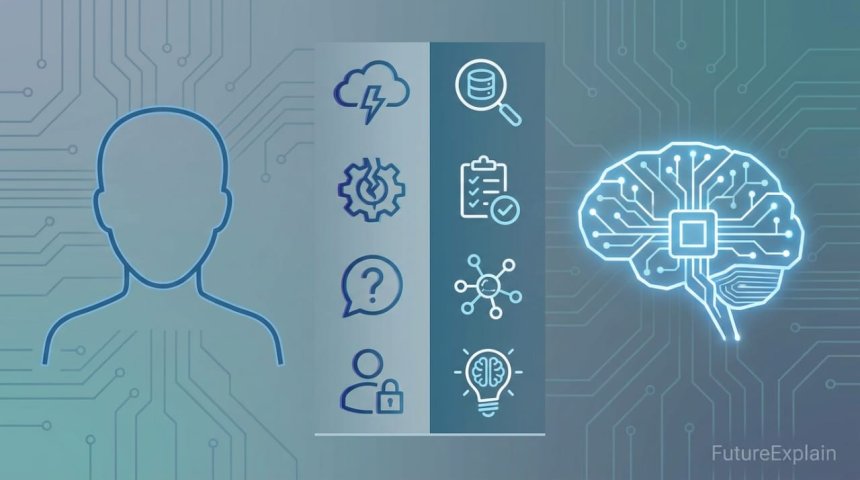
Artificial intelligence has become part of everyday conversations, news headlines, and workplace discussions. Unfortunately, much of what people hear about AI is mixed with exaggeration, fear, and unrealistic expectations. This has created many myths that confuse beginners and non-technical users.
This article explains the most common AI myths and compares them with reality. If you are new to AI, this guide will help you understand what AI truly does today and where its real limitations exist.
Myth 1: AI Thinks Like Humans
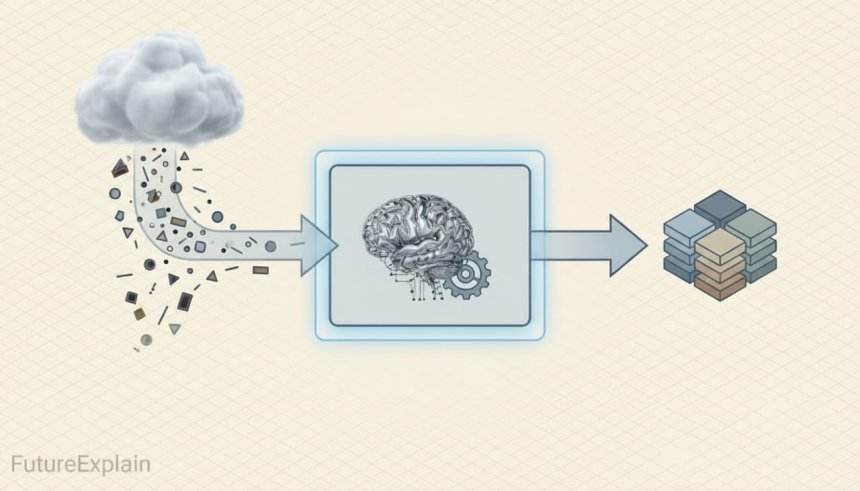
One of the biggest misconceptions is that AI thinks, reasons, and understands the world like humans do. In reality, AI does not have consciousness, emotions, or awareness.
AI systems analyze data, recognize patterns, and generate outputs based on mathematical models. They do not “understand” meaning the way humans do. For a foundational explanation, you can read What Is Artificial Intelligence?.
Myth 2: AI Is Always Accurate
Many people believe AI always provides correct answers. This is not true. AI depends heavily on the quality of data it is trained on.
If data is incomplete, biased, or outdated, AI results can be misleading or wrong. This is why responsible use of AI is essential, especially in sensitive areas like healthcare or hiring.
Myth 3: AI Will Replace All Human Jobs
Job replacement is one of the most feared AI myths. While AI can automate repetitive tasks, it does not eliminate the need for human creativity, judgment, and emotional intelligence.
In reality, AI is changing jobs rather than completely removing them. Many roles are evolving, as explained in How AI Is Changing Jobs.

Myth 4: AI Can Work Without Human Control
AI systems do not operate independently in the real world. Humans design, train, monitor, and update AI models.
Even advanced systems require human oversight to prevent errors, misuse, and ethical problems. This is closely related to responsible AI practices discussed in Is Artificial Intelligence Safe?.
What AI Can Actually Do
- Analyze large amounts of data quickly
- Recognize patterns and trends
- Automate repetitive tasks
- Assist humans in decision-making
- Improve efficiency in business and daily life
What AI Cannot Do
- Think independently like humans
- Understand emotions or morality
- Make ethical decisions on its own
- Operate without data or human guidance
Why Understanding AI Reality Matters
Believing AI myths can lead to unnecessary fear or unrealistic expectations. Understanding AI realistically helps people use it effectively, responsibly, and confidently.
As AI continues to evolve, having accurate knowledge will become even more important. Future-focused articles like Future of Artificial Intelligence explore where AI is heading without exaggeration.
Conclusion
Artificial intelligence is a powerful tool, but it is not magical or human-like. By separating myths from reality, beginners can better understand AI’s role today and make informed decisions about its use.
Share
What's Your Reaction?
 Like
1320
Like
1320
 Dislike
18
Dislike
18
 Love
410
Love
410
 Funny
65
Funny
65
 Angry
4
Angry
4
 Sad
6
Sad
6
 Wow
290
Wow
290









I finally understand why AI is not magic.
This fits perfectly with other beginner articles on this site.
Do you plan to write more myth-based articles?
Very informative without being overwhelming.
Good balance between optimism and caution.
This article should be part of school education.