
Predictions for AI in 2025: Realistic Trends to Watch
This guide explores realistic and practical AI trends to watch in 2025, moving beyond hype to focus on tangible developments. We cover the mainstream rise of Multimodal AI, which combines text, image, audio, and video understanding in single applications, making AI more intuitive. The article explains the shift towards pragmatic, integrated Business AI focused on solving specific problems like customer service and document processing, especially for small businesses. We detail the emergence of practical Agentic AI—systems that can plan and execute multi-step tasks autonomously. The guide also examines the evolving regulatory landscape, including new laws on AI transparency and safety, and what they mean for users and developers. Finally, we provide actionable advice on how to prepare, from upskilling to piloting projects, to leverage these trends effectively and responsibly.


Predictions for AI in 2025: Realistic Trends to Watch
As 2024 draws to a close, the world of artificial intelligence continues to evolve at a breathtaking pace. For beginners, non-technical professionals, and business owners, it can be challenging to separate fleeting hype from meaningful trends that will actually impact work and daily life. This guide provides a clear, grounded look at the most realistic AI developments to expect in 2025, focusing on practical applications, safety considerations, and actionable insights you can use.
Unlike speculative predictions about far-off artificial general intelligence, we'll focus on trends that are already taking shape in research labs and early-adopter businesses. The year 2025 will be less about discovering completely new AI capabilities and more about refining, integrating, and governing existing ones. We'll see AI become more useful, more accessible, and subject to clearer rules. Whether you're a student planning your career, a manager looking to improve efficiency, or simply a curious individual, understanding these trends will help you navigate the year ahead with confidence.
Trend 1: The Mainstreaming of Multimodal AI
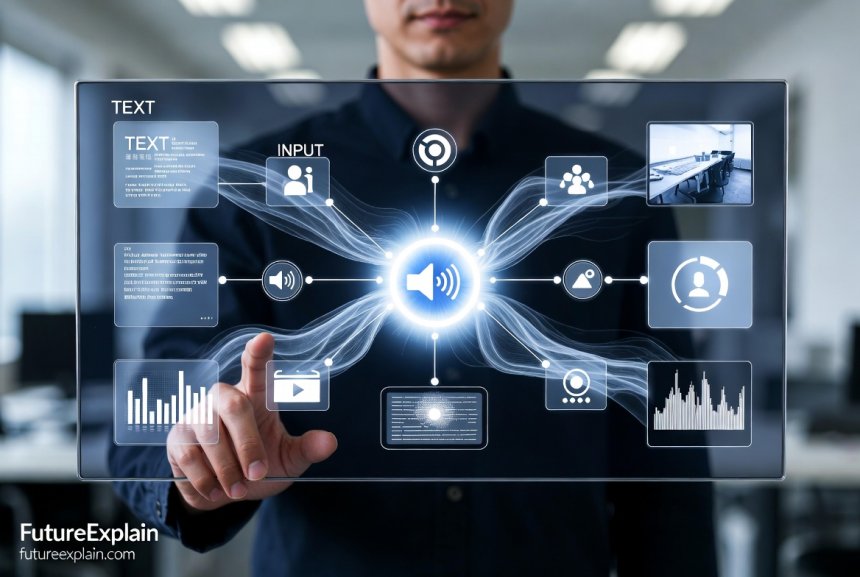
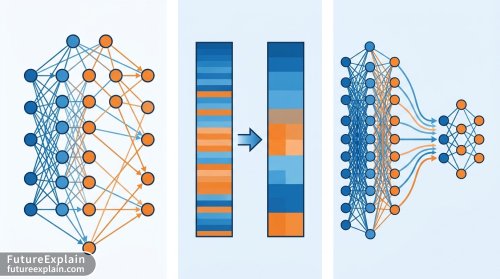
The first major trend for 2025 is the move of Multimodal AI from a cutting-edge novelty to a mainstream feature. In simple terms, a multimodal AI system can understand and generate more than one type of "mode" of information—like text, images, audio, and video—all at once. Instead of having separate tools for writing text and creating images, future applications will handle them together seamlessly.
Think of it like human perception. We don't experience the world through just sight or just sound; we combine all our senses to understand context. Multimodal AI aims to do something similar digitally. For example, in 2025, you might use a single AI assistant that can watch a video tutorial, read the written comments below it, listen to the audio, and then generate a concise written summary for you—all in one go. This represents a significant leap from the single-mode chatbots (text-only) and image generators we use today.
What This Means for You
- Simpler Interfaces: You won't need to switch between different AI apps. A single platform could handle complex tasks that involve multiple formats.
- Richer Content Creation: Creating marketing materials, educational content, or presentations will become more fluid. You could describe a concept in text, and the AI could draft the copy, suggest relevant images, and even propose a video storyboard.
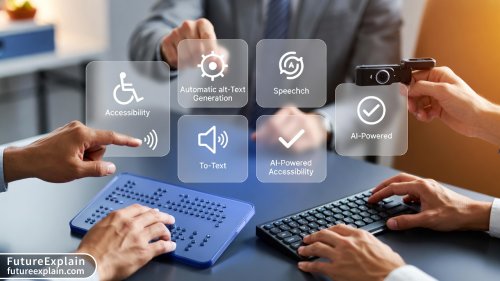
- Better Accessibility: Multimodal AI can power powerful tools that describe images for the visually impaired (using text-to-speech) or generate captions and sign-language avatars for videos, making digital content more inclusive.
To dive deeper into how these systems are built, you can explore our guide on Multimodal AI: Combining Text, Image, Audio, and Video. The key takeaway is that in 2025, AI interactions will feel more natural and holistic, moving us closer to the helpful, all-in-one digital assistants we've imagined.
Trend 2: The Shift to Pragmatic, Integrated Business AI
In 2024, many businesses experimented with AI, often using standalone tools for specific tasks like writing emails or creating social media graphics. In 2025, the trend will shift towards pragmatic, integrated AI that solves concrete business problems by weaving intelligence directly into existing workflows and software.
The hype cycle will give way to an implementation phase. Companies will move past asking "What can AI do?" to asking "How can AI solve *this specific* problem in *our* workflow?" This means less focus on flashy, generative content for its own sake and more focus on automation, data analysis, and decision support that has a measurable return on investment (ROI).
Key Areas of Business Impact in 2025
- Hyper-Personalized Customer Operations: AI will move beyond simple chatbots to manage entire customer journeys. Imagine an AI system that can analyze a customer's purchase history (data), understand their complaint via email or call transcript (text/audio), check inventory (data), and offer a personalized discount code—all without human intervention. Our article on AI-Assisted Customer Support Workflows explores this evolution.
- Intelligent Document Processing: A major pain point for many businesses is handling invoices, contracts, and forms. AI in 2025 will become adept at not just reading text from PDFs, but understanding the structure, extracting key information (like dates, amounts, clauses), and entering it directly into accounting or CRM systems. This is a core component of Intelligent Automation.
- Predictive Analytics for Small Businesses: Sophisticated forecasting, once the domain of large corporations with data science teams, will become accessible. AI tools integrated into platforms like Shopify or QuickBooks will analyze sales data, seasonal trends, and even local event calendars to predict inventory needs, cash flow, and optimal marketing spend for small business owners.
For small businesses and entrepreneurs looking to start this journey, a structured approach is key. We recommend reviewing our Enterprise AI Adoption: Roadmap for Small Businesses for a step-by-step plan.
Trend 3: The Rise of Practical Agentic AI
One of the most technically exciting trends for 2025 is the development of Agentic AI or AI Agents. Don't let the term intimidate you. Think of today's common AI (like ChatGPT) as a brilliant but passive consultant. You ask it a question, it gives an answer, and the interaction ends. An AI Agent, however, is more like a proactive assistant you can delegate a complex task to.
An AI Agent can plan, reason, and take actions across multiple steps and even multiple applications to achieve a goal. For instance, you could tell an AI Agent: "Plan a team offsite meeting in Seattle for next quarter." The agent might then break this down into sub-tasks: search the web for venue options, check team calendars for availability, draft an email proposal, gather feedback, and finally book the chosen venue—all by itself, using different tools along the way.
How Agentic AI Will Work
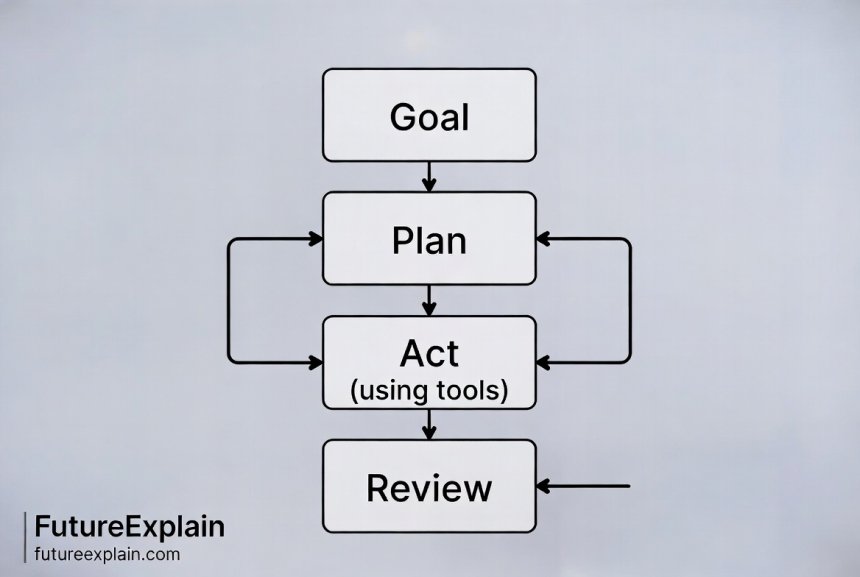
The "agentic" capability relies on a loop often called Plan-Act-Review. The AI first creates a plan to achieve the goal. Then, it takes an action (like running a web search or writing a file). After the action, it reviews the outcome, checks if it's closer to the goal, and then decides on the next step. This loop continues until the task is complete or it gets stuck and asks for human help.
Practical Applications on the Horizon
- Personal Workflow Agents: An agent that manages your personal knowledge. It could automatically file articles you save, tag them, connect related ideas, and surface relevant information when you're writing a report.
- Research and Development Assistants: In fields like science or law, agents could be tasked with reviewing the latest academic papers on a specific topic, summarizing findings, identifying gaps in research, and proposing new experiment ideas.
- Code Development Agents: Beyond just suggesting lines of code (like today's Copilots), future agents could be tasked with implementing an entire software feature, writing the code, testing it, and debugging errors. Learn about the foundation in our article on Code Writing with AI.
It's crucial to understand that these agents in 2025 will operate within strict boundaries and under human supervision. The trend is toward creating reliable, trustworthy tools that amplify human capability, not replace human judgment. You can expect early versions of these agents to be integrated into existing software platforms, making them accessible to non-programmers through no-code interfaces.
Trend 4: The Maturing of the AI Regulatory and Safety Landscape
As AI becomes more powerful and woven into the fabric of society, calls for oversight and safety grow louder. 2025 will be a pivotal year for AI regulation, ethics, and safety practices moving from theoretical discussions to enforceable rules and standardized processes.
Governments around the world are actively drafting and passing AI laws. The European Union's AI Act is leading the charge, set to be fully in force by 2025. This law, and others likely to follow, won't seek to stop AI development but to ensure it's safe, transparent, and respects fundamental rights. For users and businesses, this is ultimately a positive trend that builds trust and reduces risk.
What to Expect from Regulation in 2025
- Transparency Requirements: Developers of powerful AI models may be required to document their systems in detail—what data they were trained on, their known limitations, and potential risks. This documentation, sometimes called a "Model Card," will help businesses choose the right, responsibly-built tools.
- Rules for High-Risk Applications: Stricter rules will apply to AI used in critical areas like hiring, healthcare diagnostics, law enforcement, and access to essential services (like loans). These systems will need rigorous testing, human oversight, and the ability for individuals to challenge automated decisions.
- Focus on Authenticity and Copyright: Laws will begin to tackle the challenges of AI-generated content. We may see clearer requirements for labeling synthetic media (like deepfake videos or AI-generated images) and continued evolution of copyright law regarding AI training data. Our guide on the Ethics of AI-Generated Media covers the current landscape.
Practical Safety Becomes Standard
Beyond government regulation, the industry itself will adopt better safety practices. This includes:
- Robust Testing: More focus on "red teaming"—where experts deliberately try to make AI systems fail or behave badly to find and fix vulnerabilities before public release.
- Mitigating Bias: Tools and checklists for managing AI bias will become more widespread, helping ensure AI treats all users fairly.
- Secure Deployment: As companies deploy more AI, securing these systems from hacking or data leaks becomes paramount. Best practices for AI app security will become essential knowledge for IT teams.
For everyone, this trend means you can expect more disclosure about how the AI tools you use are built and more recourse if something goes wrong. It creates a more stable environment for long-term AI adoption.
How to Prepare for AI in 2025: A Practical Guide
Knowing the trends is one thing; preparing for them is another. Here are actionable steps you can take in the coming months to get ready for the AI landscape of 2025.
For Individuals and Professionals: Skill Up Strategically
- Develop "AI Hybrid" Skills: The most valuable professionals won't just be AI experts or domain experts—they'll be both. A marketer who deeply understands how AI content personalization works will outperform others. Start by learning the basics in our AI Basics category, then apply that knowledge to your field.
- Master Prompt Engineering & Tool Evaluation: As AI interfaces become multimodal, the ability to communicate your goals effectively (prompting) remains crucial. Simultaneously, learn to ask the right questions to evaluate AI vendors. Is the tool transparent about its data? How does it handle errors?
- Focus on Uniquely Human Skills: Double down on skills AI cannot replicate: complex strategic thinking, creativity that connects disparate ideas, emotional intelligence, mentorship, and ethical judgment. These are your durable career advantages.
For Business Owners and Managers: Pilot and Integrate
- Identify a Single, High-Impact Problem: Don't try to "add AI" everywhere. Look for one process that is time-consuming, repetitive, and data-rich. Customer onboarding, weekly reporting, or inventory reconciliation are classic starting points.
- Run a Contained Pilot: Test an AI solution on this single problem with a small team. Measure everything: time saved, error rates, cost, and user satisfaction. Use this data, not hype, to decide on further investment.
- Plan for Integration, Not Just Adoption: The most successful AI projects will be those woven into daily tools (like your CRM, email, or design software). When evaluating tools, prioritize those with good APIs or built-in integrations with your existing stack.
- Establish Guidelines Early: Create simple, clear policies for how your team should and should not use AI. Cover data privacy, copyright, disclosure (e.g., should clients know if AI drafted a report?), and quality control checks. This proactive step prevents future problems.
Conclusion: A Year of Consolidation and Responsible Growth
The overarching theme for AI in 2025 is consolidation and responsible application. The foundational breakthroughs of the past few years will now be engineered into more reliable, integrated, and governable systems. The trends point toward AI becoming a more practical and powerful tool for boosting productivity, enhancing creativity, and solving specific problems—all while society builds the necessary guardrails.
The opportunity for beginners and non-technical people has never been greater. You don't need to understand the complex mathematics behind neural networks to leverage these trends. You need curiosity, a willingness to learn, and a focus on applying technology to human-centered goals. By understanding the realistic path ahead for multimodal interfaces, business integration, agentic capabilities, and regulation, you can make informed decisions, avoid costly distractions, and position yourself or your business to thrive in an AI-augmented future.
Further Reading
To continue building your understanding, explore these related guides on FutureExplain:
- Future of Artificial Intelligence: What to Expect in the Next 5 Years - A broader look at the longer-term trajectory.
- Skills You Should Learn to Stay Relevant in the AI Era - Deep dive into future-proofing your career.
- Legal Landscape: AI Regulation Overview (2024 Update) - Stay current on the rules shaping AI use.
Share
What's Your Reaction?
 Like
1250
Like
1250
 Dislike
12
Dislike
12
 Love
310
Love
310
 Funny
45
Funny
45
 Angry
8
Angry
8
 Sad
5
Sad
5
 Wow
220
Wow
220














Solid, grounded overview. No wild AGI claims, just a clear look at the next steps. This is the kind of content that helps people actually plan and adapt. Bookmarked!
As a graphic designer, I'm watching the "AI Ethics & Media" trend closely. The idea of watermarking or labeling AI-generated content is crucial[citation:7]. It protects artists and maintains trust. I hope the industry adopts standards quickly in 2025.
It's interesting to see the prediction about Google potentially dethroning OpenAI as the dominant player[citation:4]. Gemini is getting really good, and the deep integration with Google Workspace is a huge advantage in the business world. The race in 2025 will be fascinating to watch.
The most useful part for me was the "How to Prepare" guide. It gave me concrete steps instead of just theory. I've already tasked my team with identifying one high-impact process for a Q1 pilot. Thank you!
A bit of a counterpoint: I think the article might be too optimistic on the speed of enterprise adoption. Legacy systems are a monster to integrate with[citation:3]. I think 2025 will see more pilots and experiments, but true, deep integration will take most companies well into 2026.
A very fair point, Natalie. You're right to highlight the integration challenge. The trends we discuss are the direction of travel, but the *speed* will vary wildly between a nimble startup and a large enterprise with decades-old software. For many, 2025 will be about laying the groundwork—cleaning data and defining processes—so they can integrate effectively when the tools mature a bit more.
Love the "Further Reading" links at the end. I clicked through to the "Skills You Should Learn" article and it was super helpful. This internal linking is great—it feels like a real knowledge hub.