
Enterprise AI Adoption: Roadmap for Small Businesses
This guide provides a clear, non-technical roadmap for small business owners and managers to adopt artificial intelligence. Moving beyond the hype, it breaks down the process into four manageable phases: Foundation & Assessment, Pilot Project, Integration & Scale, and Optimize & Innovate. You'll learn how to identify real business problems AI can solve, assess your team's readiness, select and test tools with low-risk pilots, and create a culture for responsible scaling. The article includes practical checklists, common pitfalls to avoid, and realistic case studies, empowering you to make informed decisions that boost productivity, customer experience, and growth without overwhelming your resources.


Artificial Intelligence is no longer a distant future technology reserved for tech giants. Today, it's a practical toolkit available to small businesses ready to work smarter. However, the journey from curiosity to implementation can feel overwhelming. Where do you start? How much does it cost? What if it fails?
This article is your definitive roadmap. We will move past the abstract promises and provide a clear, step-by-step path for integrating AI into your small business operations. You'll learn how to assess your readiness, choose the right first project, implement tools your team can actually use, and build a foundation for sustainable growth. Think of this not as a technical manual, but as a strategic guide for leaders who want to harness AI's potential without getting lost in the complexity.
Why AI Adoption is Different for Small Businesses
Before plotting the course, it's crucial to understand the landscape. Small businesses operate with unique constraints and advantages compared to large enterprises. Your adoption strategy must account for these.
Your Advantages: Agility is your superpower. You can make decisions quickly, pivot faster, and implement new tools without navigating layers of corporate bureaucracy. There's less legacy technology holding you back, allowing you to adopt modern, cloud-based AI solutions from the start. Furthermore, the impact of a successful AI tool is often more visible and immediate in a small team, boosting morale and proving value rapidly.
Your Constraints: Budgets are limited. You likely don't have a dedicated IT department, let alone a data science team. Every hour spent on a new tool is an hour not spent on core business activities. This makes the cost of failure—whether in money, time, or team morale—significantly higher.
The key is focused adoption. You're not building a sprawling AI empire. You are a surgical strike team, identifying one or two critical, repetitive problems and applying precise AI solutions to solve them. Success is measured not in the sophistication of the technology, but in the hours saved, errors reduced, or customer satisfaction gained.
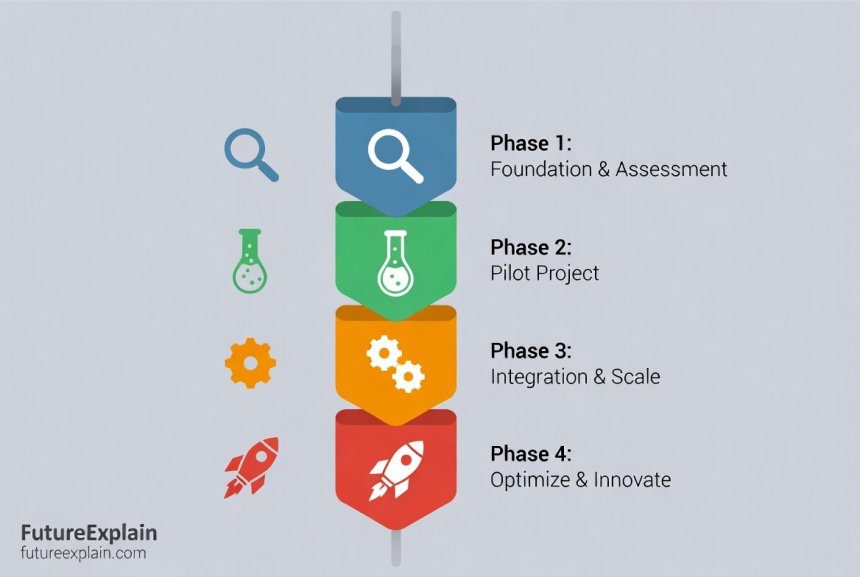
Phase 1: Foundation & Assessment – Laying the Groundwork for Success
The most common mistake is jumping straight into buying software. Phase 1 is about preparation and ensures your first AI project has the highest chance of success. This phase involves looking inward at your business and your team.
Step 1: Identify the Pain Points, Not the Technology
Start with the problem, not the solution. Gather your team and ask: What repetitive tasks drain our time? Where do communication bottlenecks occur? What data do we have that we're not using?
Focus on areas like:
- Customer Interactions: Are you spending hours answering the same questions via email? Is scheduling a nightmare?
- Content & Marketing: Does creating social media posts, blog drafts, or ad copy take too long?
- Internal Operations: Are manual data entry, invoice processing, or report generation eating into productive time?
- Sales & Support: Are you losing track of leads or failing to follow up consistently?
Prioritize problems that are clearly defined, repetitive, and have a measurable impact. "Improve customer service" is vague. "Reduce the time to answer common billing questions from 24 hours to 5 minutes" is a perfect AI target.
Step 2: Conduct a Realistic Readiness Audit
Be honest about your starting point. This audit covers three pillars:
1. Data Readiness: AI tools need data. Do you have clean, accessible data related to your identified pain point? For a customer service chatbot, this might be past support tickets and FAQ documents. For a sales predictor, it could be your CRM history. You don't need "big data"—you need relevant, organized data.
2. Team & Culture Readiness: Technology is adopted by people. Gauge your team's openness to change. Are they curious or fearful? Identify potential "AI champions"—team members excited to learn and advocate for new tools. Plan for training time. A tool is useless if no one knows how to use it.
3. Technical & Financial Readiness: Assess your infrastructure. Do you have stable internet and modern devices? For financial readiness, define a realistic pilot budget. Many powerful AI tools offer free tiers or low-cost starter plans perfect for testing. Remember to factor in the cost of employee time for training and implementation.
A useful framework for this assessment is inspired by strategic foresight methods like the Futures Table[citation:1]. Instead of predicting one future, you map out key "drivers" (like team adoption rate, data quality, budget) and their possible "future states" (e.g., high adoption vs. resistance, clean vs. messy data). This helps you visualize different scenarios (like a best-case and worst-case pilot outcome) and prepare for them during your planning[citation:1]. It's a structured way to think through variables before you commit.
Phase 2: Pilot Project – Learning Through Focused Action
With a solid foundation, you're ready for action. Phase 2 is about running a small, controlled experiment. The goal is not to transform your business overnight but to learn, prove value, and build confidence.
Step 3: Select Your First AI Tool
Choose a tool that aligns directly with the #1 pain point you identified. Here are beginner-friendly categories to consider:
- AI-Powered Writing Assistants: Tools like Jasper or Copy.ai can draft marketing emails, product descriptions, or social media posts. Ideal for solopreneurs or small marketing teams. (Explore more in our guide to AI Writing Tools).
- Customer Service Chatbots: Platforms like ManyChat or Drift allow you to build simple, rule-based bots for FAQs or booking without coding. They can handle repetitive queries 24/7.
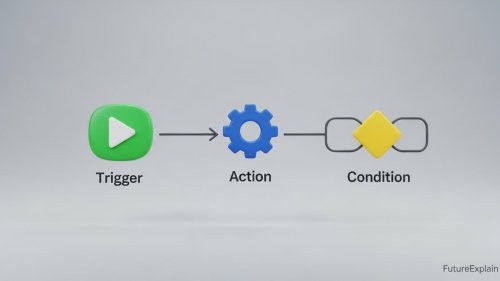
- No-Code Automation Platforms: Zapier or Make can connect your apps (like Gmail, Shopify, and Slack) to create automated workflows. For example, automatically add new email subscribers to your CRM and send a welcome message.
- AI for Design & Images: Tools like Canva's AI features or dedicated platforms like Midjourney can help create graphics for social media or websites, saving on design costs. (See our practical guide to image-generation tools).
Evaluation Checklist:
- Free Trial: Does it offer a no-cost way to test core features?
- Learning Curve: Is the interface intuitive for non-technical users?
- Integration: Does it connect with tools you already use (e.g., Google Workspace, Microsoft 365)?
- Support: Is there accessible customer support, documentation, or a community?
Step 4: Run a Time-Boxed Pilot
Set clear boundaries for your test:
- Define Success Metrics: How will you know if the pilot worked? Metrics could be "time spent on task reduced by 30%," "customer response satisfaction score increased by X points," or "number of qualified leads increased."
- Set a Short Timeline: Limit the pilot to 30-60 days. This creates urgency and prevents a pilot from drifting aimlessly.
- Choose a Pilot Group: Start with a small, willing team or for a single function. Don't roll it out company-wide on day one.
- Document Everything: Create a simple log of what's working, what's frustrating, questions that arise, and any workarounds found. This is your key learning document.
During this phase, you are both a project manager and a student. The primary deliverable is not just a worked/didn't work verdict, but a deep understanding of how AI fits into your specific workflows.
Phase 3: Integration & Scale – Building on Your Success
A successful pilot delivers a proof of concept. Phase 3 is about turning that experiment into a standard operating procedure and responsibly expanding its use.
Step 5: Formalize and Train
Integrate the new tool into your official workflows. This might mean:
- Updating process documentation.
- Creating quick-reference guides or short video tutorials for your team.
- Formally training all relevant staff, not just the pilot group.
- Assigning clear ownership (e.g., "Sarah is the primary admin for our chatbot and will handle updates").
This step mitigates risk by ensuring knowledge isn't siloed with one person. It also signals that the tool is now a supported, permanent part of how you work.
Step 6: Scale Strategically and Ethically
With one win under your belt, you can look for a second application. Use the same disciplined approach: identify a pain point, assess fit, and run a pilot. The process will be faster this time.
As you scale, ethical and responsible use becomes paramount. This is not an abstract concern. For a small business, it's about trust.
- If you use an AI chatbot, be transparent with customers that they are interacting with automation.
- If you use AI for hiring, be aware that training data can contain biases, and never let AI make a final decision without human review.
- Always protect customer data. Understand the privacy policy of any AI vendor you use. (Our guide on using AI responsibly covers this in detail).
Building ethical guardrails from the start protects your reputation and aligns with best practices for long-term, sustainable adoption.

Phase 4: Optimize & Innovate – Cultivating an AI-Aware Culture
The final phase is about moving from conscious adoption to unconscious competence. AI becomes a natural part of your business toolkit.
Step 7: Review, Measure, and Iterate
Schedule quarterly reviews of your AI tools. Ask:
- Are they still delivering the expected value?
- Have new, better, or more cost-effective tools entered the market?
- Are there new features we're not using?
- Has our business need changed, making this tool less relevant?
This ensures your tech stack stays aligned with your business goals and doesn't become a cost center for outdated solutions.
Step 8: Foster Continuous Learning
Cultivate a culture where your team feels empowered to suggest new uses for AI. This could be as simple as a shared channel where people post interesting AI tools or articles. Encourage your "AI champions" to share their learnings in a brief team meeting.
The goal is to build AI literacy—a general understanding of what AI can and cannot do—across your organization. This prepares you not just to use today's tools, but to evaluate and adopt tomorrow's innovations confidently. For teams looking to deepen this knowledge, exploring future-ready skills is a great next step.
Real-World Case Studies: AI in Action for SMBs
Let's look at how these phases play out in practice.
Case Study 1: The Local Marketing Agency
- Pain Point: The founder spent 10+ hours weekly writing first drafts of social media content and blog posts for clients.
- Pilot: Subscribed to a writing assistant (like Jasper). Used it for 30 days to draft posts for their two smallest clients. Success Metric: Reduce drafting time by 40% without quality loss. Result: Time saved was 50%. The founder used the extra hours for business development. Scale: Tool was rolled out to all client work. The team was trained to use it as a "first draft brainstomer," with a human always editing and adding nuance.
Case Study 2: The E-commerce Retailer
- Pain Point: A high volume of customer emails asking about order status, return policies, and store hours was overwhelming a two-person team.
- Pilot: Implemented a simple, rule-based chatbot on their website using ManyChat for 60 days. Success Metric: Answer 50% of common queries automatically, reducing email volume. Result: The bot handled 60% of common questions. Customer satisfaction scores remained stable. Scale & Ethics: Made the bot's automated nature clear. Freed-up staff time was redirected to handling more complex, high-value customer issues.
Common Pitfalls and How to Avoid Them
Forewarned is forearmed. Here are the major traps small businesses fall into:
Pitfall 1: Solving for Technology, Not Problems. The Trap: "We need AI!" leads to buying a cool tool with no specific use case. The Avoidance: Always start with Phase 1. Let the business problem lead the way.
Pitfall 2: Underestimating the Human Element. The Trap: Rolling out a new tool without training or change management, leading to low adoption and resentment. The Avoidance: Involve your team early. Identify champions. Budget time and resources for proper training and support.
Pitfall 3: The "Set and Forget" Fallacy. The Trap: Implementing a tool and never reviewing its performance or cost. The Avoidance: Build in the quarterly reviews from Phase 4. Treat tech tools as active investments, not passive expenses.
Pitfall 4: Ignoring Data Privacy and Security. The Trap: Using a free, unvetted AI tool that may compromise sensitive customer or business data. The Avoidance: Vet vendors. Read their privacy policies. Start with tools that handle non-sensitive data in your pilot. For more on this, see our article on securing AI apps.
Your Roadmap to an AI-Enhanced Future
Adopting AI in your small business is a journey of incremental, smart upgrades, not a single, disruptive revolution. By following this phased roadmap—starting with a solid foundation, learning through a focused pilot, scaling with intention, and fostering a culture of learning—you systematically de-risk the process.
You don't need to be a tech expert. You need to be a thoughtful leader who can identify opportunities, empower your team, and make measured decisions. The goal is to use AI to handle the repetitive, the mundane, and the time-consuming, freeing you and your team to focus on what truly matters: strategy, creativity, and human connection—the irreplaceable heart of any small business.
The future of small business is not human versus AI; it's human with AI. This roadmap is your first step toward that more productive, innovative, and sustainable partnership.
Further Reading
Share
What's Your Reaction?
 Like
245
Like
245
 Dislike
3
Dislike
3
 Love
98
Love
98
 Funny
12
Funny
12
 Angry
1
Angry
1
 Sad
0
Sad
0
 Wow
67
Wow
67















The "AI Champion" idea is gold. We asked for volunteers to test a new scheduling tool, and our receptionist jumped at it. She's now the expert who teaches everyone else. It made the rollout 10x smoother.
We used the "identify pain points" exercise from Phase 1 in our team meeting yesterday. It was eye-opening. We found three clear candidates for automation we'd never even discussed because we were all just dealing with the frustration silently.
As a graphic designer at a small agency, I was worried AI was for replacing me. This article framed it as a tool to handle the boring parts (resizing images, creating simple social variants) so I can focus on the actual creative strategy. Much better perspective.
I'd add a Pitfall 5: "Not calculating the true cost." Beyond subscription fees, we didn't budget for the time it took to train our team. That created hidden strain. Next time, we'll factor in 3-5 hours of paid time per employee for learning.
The link to the "No-Code vs AI Tools" article was super helpful context. It helped me realize that for our first step, a simple no-code automation to move data between apps is what we actually need, not a complex "AI". Starting there thanks to this guide.
Question about pilot timelines: Is 30 days always enough? We're testing an AI bookkeeping assistant and feel like we need 2-3 months to see if it catches seasonal variations in our expenses.
Valid point, Silas. The 30-60 day guideline is for learning the tool and seeing initial workflow fit. For processes tied to longer business cycles (like quarterly bookkeeping or annual reviews), extend the pilot to cover at least one full cycle. The principle is "time-box it to force evaluation," not rush it. Adjust the timeline to match the natural rhythm of the task you're automating.