
Benchmarking LLMs: What Metrics Really Matter
This guide demystifies the complex world of Large Language Model (LLM) benchmarking. We explain what benchmarks actually measure, from accuracy and reasoning to speed, cost, and safety. You'll learn how to interpret common metrics, understand the trade-offs between different performance aspects, and apply practical frameworks to choose the right model for your specific project—whether you're building a chatbot, analyzing documents, or creating content. The article cuts through marketing hype to provide a clear, actionable understanding of what truly matters when evaluating AI models.


When you hear that a new AI model has "beaten the state-of-the-art" or "tops the leaderboard," what does that actually mean for you? If you're a developer, business owner, or just someone trying to choose the right tool for a project, the world of Large Language Model (LLM) benchmarks can feel like a confusing blur of acronyms and numbers. Terms like MMLU, GSM8K, latency, and throughput are thrown around, but rarely explained in plain language.
Benchmarking is the process of systematically testing and comparing AI models to understand their strengths and weaknesses[citation:10]. Think of it like reading a car review before you buy. You wouldn't just look at the top speed; you'd care about fuel efficiency, safety ratings, comfort, and maintenance costs. Similarly, with LLMs, raw "smartness" is just one piece of the puzzle. A model that aces a science exam might be too slow or expensive for your customer service chatbot, while a model that's fast and cheap might make up facts when asked about complex topics.
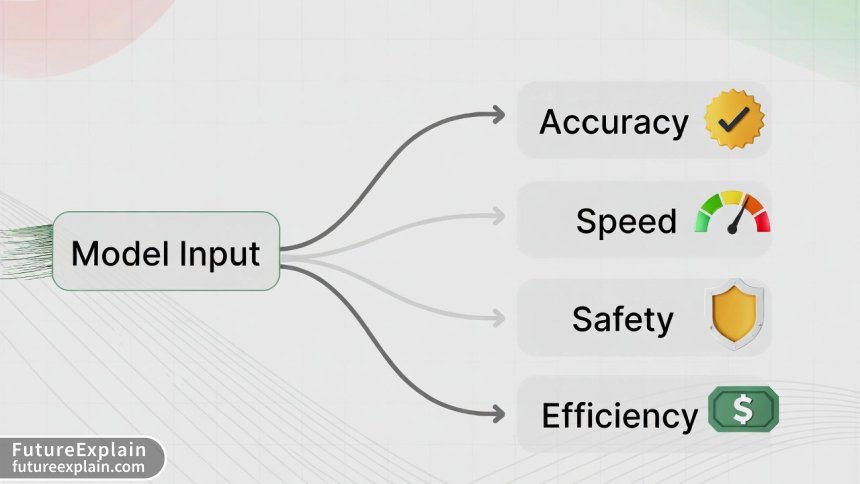
This guide will walk you through the key metrics that really matter. We'll move beyond the headline-grabbing scores and look at the four crucial dimensions of model performance: accuracy and capability, speed and responsiveness, safety and robustness, and efficiency and cost. By the end, you'll know how to read a benchmark report, ask the right questions, and select a model that's truly fit for your purpose.
Why Benchmarking is More Than Just a Score
Before diving into specific metrics, it's important to understand the "why." Benchmarks serve several critical functions. For researchers, they drive progress by setting clear goals. For companies releasing models, they provide a standardized way to demonstrate capability. For you, the user, they are a vital comparison tool to cut through marketing claims.
However, a major limitation is that benchmarks measure performance on specific, often artificial, tasks. A model that performs well on a curated Q&A dataset might behave differently when faced with the messy, unpredictable questions from real users[citation:8]. This is why understanding what a benchmark tests is as important as the final score.
Furthermore, the field is evolving rapidly. New benchmarks are constantly being created to probe specific weaknesses, like a model's tendency to make up information (a phenomenon known as "hallucination") or its vulnerability to malicious prompts designed to bypass its safety rules. A holistic evaluation requires looking at a suite of tests, not a single number.
Visuals Produced by AI
Dimension 1: Accuracy and Capability Metrics
This is what most people think of when they hear "benchmark." It answers the question: How correct and capable is the model? These tests evaluate the model's knowledge, reasoning, and problem-solving skills. It's crucial to remember that these models don't "know" facts like a database; they generate responses based on patterns learned from massive amounts of text data[citation:7]. Their performance is a measure of how well they can replicate and recombine those patterns to provide useful answers.
Core Knowledge and Reasoning Benchmarks
These are the classic academic-style tests. They often involve multiple-choice or short-answer questions.
- MMLU (Massive Multitask Language Understanding): A widely respected benchmark that tests a model's knowledge across 57 subjects, including STEM, humanities, and social sciences. It's a broad measure of general knowledge and comprehension. A high MMLU score suggests the model has ingested and can utilize a wide range of information.
- GSM8K (Grade School Math 8K): A dataset of 8,500 linguistically diverse grade-school math word problems. Success here requires not just calculation, but the ability to parse language, identify the steps needed, and reason sequentially. It's a strong proxy for logical reasoning and instruction-following.
- HumanEval: Focused on evaluating the ability to generate functional computer code. It presents a model with a programming problem description (a "docstring") and asks it to write the correct code. This tests algorithmic thinking and precision.
While these scores are important, they represent a model's performance in a controlled, "open-book" test setting. Real-world tasks are often messier and require integrating knowledge in novel ways.
Instruction Following and Real-World Tasks
More recent benchmarks try to mimic how people actually use LLMs.
- MT-Bench: This uses a set of multi-turn conversations to evaluate a model's ability to engage in a dialogue, remember context, and provide helpful, detailed responses. A high score indicates good conversational ability.
- Big-Bench Hard: A collection of especially challenging tasks that are believed to be beyond the capabilities of current models. It tests the frontiers of reasoning, such as understanding irony or solving complex puzzles.
When evaluating accuracy, always ask: Which benchmark is most relevant to my use case? If you're building an educational tutor, MMLU and GSM8K are highly relevant. If you're building a creative writing assistant, other evaluations of style and coherence matter more.
Dimension 2: Speed and Responsiveness Metrics
A brilliant model is useless if it takes minutes to answer a simple question. Speed metrics determine the practical user experience and the scalability of an application. This is where the concepts of inference (the process of the model generating an output) and throughput become critical.
Key Speed Metrics
- Time to First Token (TTFT): This is the latency you feel as a user—the delay between hitting "send" and seeing the first word of the response appear. A low TTFT (under a few hundred milliseconds) is essential for a chatty, responsive feel. High TTFT makes a chatbot feel laggy and unengaging.
- Tokens per Second (TPS): Once the response starts streaming, this measures how quickly the subsequent tokens (words or word pieces) are generated. A higher TPS means the complete answer finishes faster.
- Throughput: This measures the total workload a system can handle, often defined as the number of tokens or requests processed per second across multiple, simultaneous users. It's crucial for public-facing applications expecting high traffic. A model might have decent TTFT for a single user but poor throughput, causing it to slow down dramatically under load.
Speed is heavily influenced by the model's size (number of parameters), the hardware it's running on (powerful GPUs are faster), and how it's deployed (cloud API vs. on your own servers). There's almost always a trade-off: larger models tend to be more accurate but slower, while smaller, "optimized" models sacrifice some capability for speed.
Dimension 3: Safety, Reliability, and Alignment
This dimension asks: Can I trust this model? An unsafe or unreliable model can create serious problems, from generating harmful content to leaking private data. Benchmarks in this category evaluate a model's robustness against misuse and its tendency to produce undesirable outputs[citation:1].
Evaluating Safety and Hallucination
- TruthfulQA: This benchmark tests a model's propensity to imitate human falsehoods or misconceptions. It asks questions where many people would believe a false answer (e.g., old myths). A good model should resist repeating these falsehoods and base its answers on factual accuracy.
- Hallucination Rate: While harder to benchmark universally, many evaluations measure how often a model "hallucinates"—that is, generates plausible-sounding but incorrect or fabricated information[citation:8]. This is a critical risk in domains like law, medicine, or news summarization.
- Jailbreak Resistance: Tests how easily a model's built-in safety guidelines can be circumvented by clever or malicious prompting. A robust model should refuse to generate harmful, unethical, or dangerous content even when asked indirectly.
It's vital to understand that safety isn't a binary score. A model can be highly safe against generating violent text but poor at avoiding biased statements. Evaluating safety requires thinking carefully about the specific harms most relevant to your application and user base[citation:6].
Dimension 4: Efficiency and Cost Metrics
Finally, we arrive at the bottom line: What does it cost to run this model? This includes direct financial cost and resource consumption. A model might be free to use via an API for testing, but costs can scale dramatically in production.
Understanding Cost Drivers
- Model Size & Memory: Larger models require more GPU memory (VRAM) to run. Hosting them on your own infrastructure requires expensive hardware. Via an API, you are typically charged per token (input and output), and prices are often higher for larger, more capable models.
- Inference Cost per Token: This is the direct price from cloud providers. You must calculate the expected number of tokens your application will process per day or month to forecast expenses.
- Context Window: The amount of text (in tokens) a model can process in a single request. A larger context window (e.g., 128K tokens) allows you to submit entire documents for analysis but often comes with a higher per-request cost and slower processing.
Efficiency is where smaller, specialized models often shine. For a task like classifying customer emails, a fine-tuned, efficient model may be 99% as accurate as a giant general-purpose LLM but cost 1/10th to run and respond 10 times faster.

Visuals Produced by AI
A Practical Framework: Choosing Your Metrics
You don't need to score top marks in every category. The key is to prioritize based on your project's needs. Here is a simple decision framework:
Step 1: Define Your Primary Use Case. Be as specific as possible. Is it "a chatbot for answering internal company policy questions" or "a creative partner for generating marketing copy"?
Step 2: Map Use Case to Metric Priorities.
For a customer support chatbot: High priority on Speed (TTFT) and Safety/Jailbreak resistance. Medium priority on Accuracy for factual Q&A. Lower priority on cutting-edge reasoning (GSM8K).
For a research analysis tool: High priority on Accuracy (MMLU) and a large Context Window. Medium priority on Hallucination rate. Lower priority on TTFT (users expect to wait for complex analysis).
For a mobile app feature: High priority on Efficiency/Cost and Speed. May require a small model that can run on-device. Accuracy is important but must be balanced against size constraints.
Step 3: Test with Your Own Data. Public benchmarks are a great filter, but the final test should always be on a representative sample of your actual data. A model that performs averagely on MMLU might excel at your specific jargon or workflow.
Looking Ahead: The Future of Evaluation
Benchmarking is an arms race. As models get better at existing tests, the community develops new, harder challenges. The future of evaluation is moving toward:
- Multi-Modal Benchmarks: Testing models that understand and generate text, images, audio, and video together[citation:7].
- Real-World Interactive Evaluation: Testing models not with static questions, but by having them use software tools, browse the web, or complete multi-step tasks in a simulated environment.
- Standardized Safety Audits: More rigorous and standardized testing for biases, toxicity, and manipulation risks, potentially leading to "safety ratings" similar to other industries.
The most important trend is a shift from evaluating models in isolation to evaluating human-AI systems. The best metric might not be the model's raw score, but how much it improves a human's productivity, creativity, or decision-making accuracy.
Conclusion
Benchmarking LLMs is not about finding a single "best" model. It's about understanding a complex landscape of trade-offs to find the right tool for your specific job. The next time you see a benchmark result, look beyond the headline. Ask: What specific tasks does this test? How do speed and cost metrics look? Has the model's safety been evaluated?
By focusing on the four dimensions—Capability, Speed, Safety, and Efficiency—you can make informed, confident decisions. Start with your use case, let it guide your metric priorities, and remember that real-world testing is the final and most important benchmark of all.
Further Reading
- Learn about the foundational concepts behind these models in our guide: What Is Artificial Intelligence? A Complete Beginner’s Guide.
- Dive deeper into the mechanics of how models learn and improve: How Does Machine Learning Work? Explained Simply.
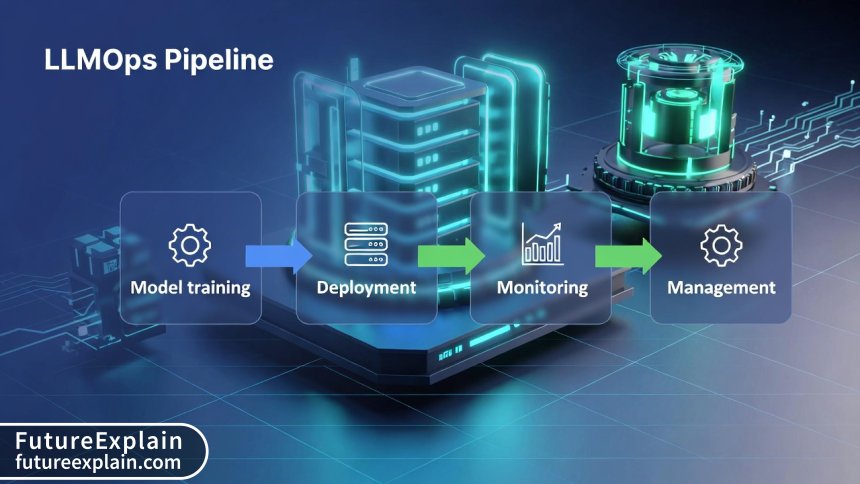
- Explore the critical considerations for deploying models in real applications: LLMOps 101: Deploying, Monitoring and Managing Models.
Share
What's Your Reaction?
 Like
412
Like
412
 Dislike
8
Dislike
8
 Love
95
Love
95
 Funny
12
Funny
12
 Angry
3
Angry
3
 Sad
2
Sad
2
 Wow
67
Wow
67

















The trade-off illustration is perfect. It's always a triangle of Cost, Speed, and Quality. You can pick two.
Helpful for my university research. It provides a structured way to critique the methodology sections of AI papers that only report one type of benchmark score.
Solid, no-nonsense guide. It aligns with my experience as a DevOps engineer. The pressure is always for the "smartest" model, but then we have to figure out how to serve it affordably and quickly. This gives the product side the vocabulary to understand our constraints.
The article mentions "model collapse." This is a terrifying concept for long-term reliability. If models are trained on other model's outputs, won't benchmarks also become less reliable over time? How do we adjust for that?
I'm in education. Are there benchmarks specifically for tutoring or explanatory ability? A model might know a fact but be terrible at breaking it down for a 10-year-old.
Claire, that's a great point. I haven't seen a single dominant benchmark for that. It often involves human evaluation. Some research groups use datasets of student questions and expert-written explanations to measure similarity. For now, testing with your own curriculum materials is probably best.
Good overview. I'd add that for enterprise use, "vendor lock-in" is another hidden cost metric. Consider how easy it is to switch models if pricing changes or a better one emerges. APIs with standard interfaces help.