
AI for E-commerce: Product Images, Descriptions, and Recommendations
This comprehensive guide explains how artificial intelligence is revolutionizing three key areas of e-commerce: product visuals, written content, and customer suggestions. You'll learn how AI tools can generate and edit professional product images, create SEO-friendly descriptions at scale, and build smart recommendation systems that boost sales. The article provides practical, step-by-step advice for beginners, compares free and paid tools, addresses ethical considerations like bias and transparency, and explores future trends. Whether you run a small online store or manage a large catalog, this guide will help you harness AI to save time, reduce costs, and improve the customer experience.

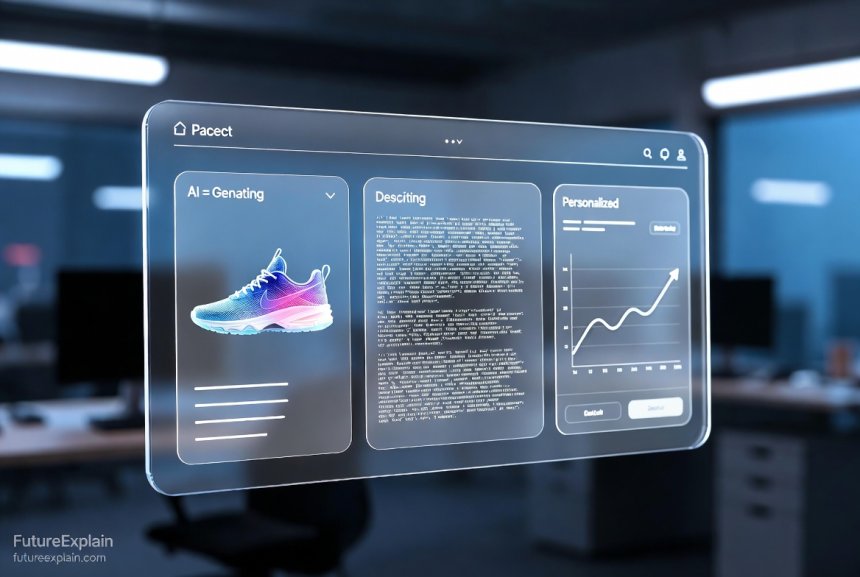
AI for E-commerce: Product Images, Descriptions, and Recommendations
The world of online shopping is being reshaped by artificial intelligence. For store owners, managers, and marketers, AI is no longer a futuristic concept but a practical toolkit that solves everyday problems: creating eye-catching visuals, writing compelling product copy, and showing customers exactly what they want to buy. This guide breaks down how AI works in e-commerce, focusing on the three areas that directly impact sales and customer experience: product images, descriptions, and recommendations.
We'll explain each area in simple, non-technical language, provide step-by-step guides you can follow, compare tools, and discuss how to use this technology responsibly. By the end, you'll have a clear roadmap for integrating AI into your own e-commerce workflow.
Why AI is a Game-Changer for Online Stores
E-commerce is highly competitive. Customers make quick decisions based on what they see and read. High-quality, consistent product images build trust. Clear, persuasive descriptions answer questions and reduce hesitation. Personalized recommendations can turn a browser into a buyer and increase the value of each order. Traditionally, excelling in all three areas required significant time, money, and skill—hiring photographers, copywriters, and data analysts. AI is changing that by automating and enhancing these tasks, making advanced capabilities accessible to businesses of all sizes.
The impact is measurable. Studies show that up to 35% of Amazon's revenue comes from its recommendation engine[reference:0]. Furthermore, the AI image generation market is projected to grow at over 30% annually, driven largely by e-commerce adoption[reference:1]. This isn't just for giants like Amazon; small and medium-sized businesses are using AI to level the playing field.
In this article, we'll explore how you can do the same. Let's start with the first thing a customer notices: the product image.
1. AI for Product Images: Beyond the Photoshoot
Professional product photography is expensive and time-consuming. AI image tools now allow you to create, edit, and enhance product visuals without a studio. These tools can generate entirely new images from text descriptions, remove backgrounds, place products in realistic settings, upscale low-quality photos, and ensure visual consistency across your entire catalog.
How AI Generates and Edits Product Images
AI image generators use models trained on millions of pictures. You provide a text prompt (e.g., "a minimalist white sneaker on a marble floor, soft shadow, studio lighting"), and the AI creates an image that matches. For e-commerce, this is powerful for creating lifestyle shots, showing product variations, or visualizing items that don't yet exist physically.
Editing tools use AI to perform complex tasks in seconds:
- Background Removal/Replacement: Isolate your product and place it on any background.
- Inpainting & Outpainting: Fill in missing parts of an image or expand its canvas.
- Upscaling & Enhancement: Increase image resolution and fix blurriness or noise.
- Shadow & Reflection Generation: Add realistic shadows or reflections to make products look naturally placed.
Top AI Image Tools for E-commerce
Here's a comparison of popular tools, from beginner-friendly to professional:
- For Beginners & Small Budgets: Tools like Pebblely and Magic Studio offer free tiers or low-cost plans with templates and easy background removal[reference:2].
- For Shopify Stores: Snapshot integrates directly with Shopify, allowing bulk uploads and automated background removal[reference:3].
- For Professional Quality & Scale: WizStudio and Claid.ai offer advanced features like AI-generated lifestyle scenes, model integration, and API access for automating large catalogs[reference:4].
- For Creative Control: Adobe Firefly integrates with Photoshop, offering powerful generative fill tools for creatives[reference:5].
When choosing a tool, consider image quality, ease of use, integration with your e-commerce platform, and pricing scalability[reference:6].
Practical Steps to Get Started
- Audit Your Current Images: Identify weak spots (e.g., inconsistent backgrounds, low-quality shots).
- Start with a Pilot Project: Pick 10-20 products and use an AI tool to improve their images. Compare click-through rates.
- Master the Prompt: For image generation, be specific. Include product type, setting, lighting, mood, and style.
- Ensure Consistency: Use the same AI tool and settings (like background color or lighting style) for all products in a category to create a cohesive brand look.

Ethical Considerations for AI-Generated Images
Using AI for product visuals comes with responsibilities. Be transparent if an image is AI-generated, especially if it's a realistic lifestyle shot that could be mistaken for a real photo. Be aware that AI models can inherit biases from their training data, which might affect how products are represented[reference:7]. Always review AI outputs for accuracy—a generated image should truthfully represent the product's color, texture, and features.
2. AI for Product Descriptions: Scaling Quality Content
Writing unique, engaging, and SEO-friendly descriptions for hundreds or thousands of products is a monumental task. AI writing tools can generate draft descriptions in seconds, which you can then refine. The goal isn't to replace human creativity but to augment it—handling the bulk work so you can focus on strategy and brand voice.
How AI Writes Product Descriptions
AI writing tools, often based on large language models (LLMs) like GPT-4, are trained on vast amounts of text. You provide basic product information (name, key features, target audience), and the AI produces a coherent description. The best tools allow you to customize tone, length, and keywords.
SEO and AI: A Powerful Combination
For descriptions to be effective, they need to rank well in search engines. AI can help with SEO by:
- Integrating Keywords Naturally: Tools can weave relevant keywords into the copy without stuffing[reference:8].
- Structuring Content for Readability: Using bullet points, short paragraphs, and clear headings.
- Answering Customer Questions: Anticipating and answering common queries within the description[reference:9].
Remember, the final description should be written for humans first, with SEO as a supporting factor. Always fact-check AI-generated claims about product specifications.
Top AI Description Tools
Here are some of the leading tools, each with different strengths:
- Jasper AI & Copy.ai: Specialize in marketing copy and offer e-commerce templates[reference:10].
- ChatGPT: A versatile, conversational AI that can generate descriptions if given clear instructions[reference:11].
- Hypotenuse AI: Offers unique image-to-text capabilities, generating descriptions from product photos[reference:12].
- Describely: Focuses on SEO-optimized descriptions and can connect directly to e-commerce platforms for bulk operations[reference:13].
Building an AI-Enhanced Content Workflow
- Create a Brand Style Guide: Define your tone (e.g., friendly, professional), key phrases to use/avoid, and standard description structure.
- Feed the AI Good Data: Provide detailed input: product name, key features, benefits, target keywords, and competitor examples.
- Generate & Refine: Let the AI create a first draft. Then, edit for brand voice, accuracy, and to add unique selling points only a human would know.
- Implement at Scale: Use tools with bulk processing or API access to update entire catalogs efficiently.
3. AI for Product Recommendations: The Personal Shopping Assistant
Recommendation engines are the brains behind features like "Customers who bought this also bought" and "Recommended for you." They analyze customer data to predict what a shopper might want next, significantly boosting sales and customer satisfaction.
How Recommendation Algorithms Work
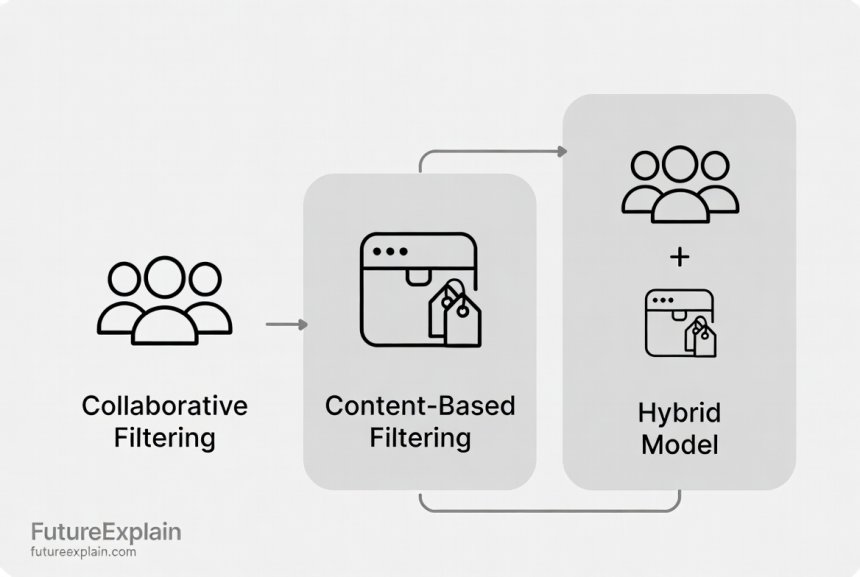
There are three main types of AI recommendation systems[reference:14]:
- Collaborative Filtering: Recommends items based on the behavior of similar users (e.g., "people who bought X also bought Y").
- Content-Based Filtering: Recommends items similar to those a user has liked in the past, based on product attributes (e.g., genre, color, brand).
- Hybrid Models: Combine both approaches for greater accuracy, which is what major platforms like Amazon and Netflix use[reference:15].
The Business Impact of AI Recommendations
The numbers are compelling. Companies using AI product recommendations see an average 22.66% increase in conversion rates[reference:16]. Beyond direct sales, they improve average order value through cross-selling and upselling, and enhance customer loyalty by making shopping easier and more relevant.
Implementing Recommendations on Your Site
You don't need to build a system from scratch. Many options are available:
- Platform-Native Tools: Shopify, WooCommerce, and BigCommerce have built-in or app-based recommendation engines.
- Third-Party Services: Tools like Nosto, Barilliance, or Adobe Commerce offer advanced personalization.
- Custom Solutions: For large businesses, using cloud AI services (like AWS Personalize or Google Recommendations AI) provides maximum flexibility.
Start by implementing simple "frequently bought together" suggestions on product pages, then expand to personalized homepage sections as you collect more customer data.
Measuring Success
Track metrics like Click-Through Rate (CTR) on recommendations, Conversion Rate from recommended products, and Average Order Value (AOV). These will show you the direct ROI of your recommendation system.
4. Integrating AI Across Your E-commerce Workflow
The true power of AI is realized when these three areas work together. An AI-generated product image can be automatically analyzed to suggest tags for the description. That description, rich with keywords, helps the recommendation engine understand the product better. A unified data strategy is key.
Consider building a central product information management (PIM) system where AI tools can read and write data. This ensures consistency and allows for automated workflows—for example, when a new product is added, AI can generate a draft description and initial images, which are then reviewed by a human.
5. Ethical and Responsible Use of AI in E-commerce
As you adopt AI, it's crucial to use it ethically to maintain customer trust. Key considerations include:
- Transparency: Be clear when customers are interacting with AI, such as through a chatbot, or when viewing AI-generated imagery[reference:17].
- Bias Mitigation: Regularly audit your AI systems. Ensure recommendation algorithms don't unfairly exclude certain products or customer groups, and that image generators represent diversity appropriately[reference:18].
- Data Privacy: Be transparent about the customer data you collect to power recommendations and comply with regulations like GDPR.
- Human Oversight: AI is a tool, not a replacement for human judgment. Always have a final review step for AI-generated content and decisions.
For a deeper dive into this critical topic, read our guide on How to Use AI Responsibly.
6. The Future of AI in E-commerce
The technology is evolving rapidly. Near-future trends include:
- Hyper-Personalization: AI will create unique storefronts for every single visitor in real-time.
- Multimodal AI: Systems that combine text, image, and voice to offer richer shopping assistants, like searching for products with a photo or a spoken description.
- AI for Video: Generating short, personalized product demonstration videos.
- Sustainable AI: Tools that help optimize inventory and logistics to reduce waste.
Staying informed about these trends will help you prepare. Our article on the Future of Artificial Intelligence explores this further.
Conclusion
AI for e-commerce is no longer a luxury; it's a practical toolkit for staying competitive. By leveraging AI for product images, descriptions, and recommendations, you can dramatically improve efficiency, reduce costs, and create a more engaging shopping experience. The key is to start small, choose the right tools for your needs, maintain ethical standards, and always keep the human element in the loop. The future of online retail is intelligent, personalized, and automated—and with this guide, you're equipped to be a part of it.
Further Reading
Share
What's Your Reaction?
 Like
1240
Like
1240
 Dislike
12
Dislike
12
 Love
340
Love
340
 Funny
45
Funny
45
 Angry
8
Angry
8
 Sad
5
Sad
5
 Wow
210
Wow
210


















Thank you for including a section on ethics. It's often overlooked in tech guides.
I'm using Snapshot for my Shopify store and it integrated seamlessly. The bulk edit feature is a game-changer.
The point about bias in AI images is so real. We need more diversity in training data.
As a student studying digital marketing, this article is a fantastic case study on applied AI. Bookmarked!
The explanation of collaborative vs. content-based filtering was the clearest I've ever read. Finally understand how those "recommended for you" sections work.
Clear, calm, and educational – just as promised. More articles like this, please!