
AI for Agriculture: Crop Yield Prediction & Ushr Calculator Case
This guide demystifies how Artificial Intelligence is transforming agriculture, focusing on two powerful applications: predicting crop yields and calculating religious agricultural obligations like Ushr. We explain the technology in simple terms, showing how AI models analyze satellite data, weather patterns, and soil health to forecast harvests with remarkable accuracy—helping farmers plan better and reduce waste. You'll also learn how AI can automate complex religious calculations, such as determining the Ushr (one-tenth or one-twentieth charity on land produce) based on irrigation methods and crop type. Through real-world case studies and a step-by-step implementation guide, we provide a clear, practical roadmap for farmers and agribusinesses looking to adopt these technologies responsibly, addressing common challenges like cost, data privacy, and the vital integration of traditional knowledge.

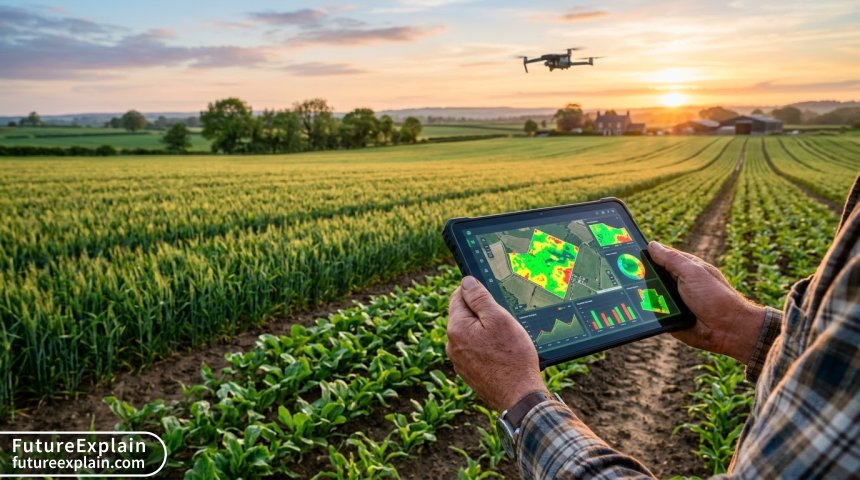
For thousands of years, farming has been guided by the sun, the soil, and generations of hard-earned wisdom. Today, a new tool is joining the farmer’s shed: Artificial Intelligence. AI in agriculture isn't about replacing the farmer's intuition; it's about augmenting it with powerful, data-driven insights. From predicting the exact bushels a field will produce to handling precise religious or financial calculations, AI is helping to cultivate a new era of precision, sustainability, and informed decision-making on the farm.
This guide is for everyone curious about this quiet revolution—whether you're a farmer, a student, a tech enthusiast, or a professional in the agri-business sector. We'll break down complex concepts into simple ideas, explore real-world case studies, and provide a practical look at how these technologies work and how they can be implemented.
The Seeds of Change: Why AI in Agriculture Matters Now
Agriculture faces a monumental challenge: produce significantly more food to feed a growing global population, but do so using less land, less water, and fewer chemicals, all while adapting to the unpredictable impacts of climate change[citation:5]. This is where AI steps in. By analyzing vast amounts of data that the human brain simply cannot process at scale, AI identifies patterns, makes predictions, and recommends actions that can lead to more efficient and sustainable outcomes.
The global market for AI in agriculture is a testament to its growing importance, projected to expand from $1.7 billion in 2023 to $4.7 billion by 2028[citation:2]. This growth is driven by the tangible benefits AI offers, which we will explore in detail.
How AI Predicts the Future of Your Fields
Crop yield prediction is one of the most impactful applications of agricultural AI. Imagine knowing months before harvest how much your field will produce. This isn't crystal-ball gazing; it's sophisticated data science. AI models, particularly a type called machine learning, are trained on historical and real-time data to forecast future yields with surprising accuracy.
The Data That Feeds the AI
An AI model for yield prediction is only as good as the data it consumes. Modern systems integrate multiple streams of information:
- Satellite and Drone Imagery: Cameras and sensors capture detailed images of fields. Specialized algorithms analyze these images to calculate vegetation indices—measurements of plant health, density, and growth stage[citation:1][citation:9].
- Weather and Climate Data: Historical weather patterns, real-time forecasts, and long-term climate models are crucial inputs. AI assesses how factors like temperature, rainfall, and the frequency of extreme events influence crop development[citation:10].
- Soil Sensor Data: IoT (Internet of Things) sensors placed in the ground provide constant readings on soil moisture, nutrient levels (like nitrogen and potassium), temperature, and pH balance[citation:1].
- Farm Management Data: Information on planting dates, seed varieties used, irrigation schedules, and past fertilization practices adds critical context.
Advanced platforms pioneered by companies like SatYield use a technique called data fusion, merging high-resolution spatial data from satellites like Sentinel-2 with other sensor data. This creates a rich, new dataset that allows for observing the growth of specific crops at a very granular, 10-meter resolution, significantly enhancing prediction accuracy[citation:9].
The AI Models at Work
Once the data is collected, different AI models get to work. Two common types are:
- Regression Models: These are powerful for yield prediction. Models like Random Forest Regressor or LightGBM analyze all the input variables (weather, soil health, imagery) to output a numerical forecast—for example, "42 bushels per acre." Recent research has shown such models achieving exceptional performance, with R² scores (a measure of accuracy) as high as 0.92[citation:10].
- Convolutional Neural Networks (CNNs): These are exceptionally good at analyzing images. A CNN can be trained to scrutinize drone photos of corn cobs, for instance, to automatically count kernels, providing a highly accurate, ground-level yield assessment[citation:4][citation:10].
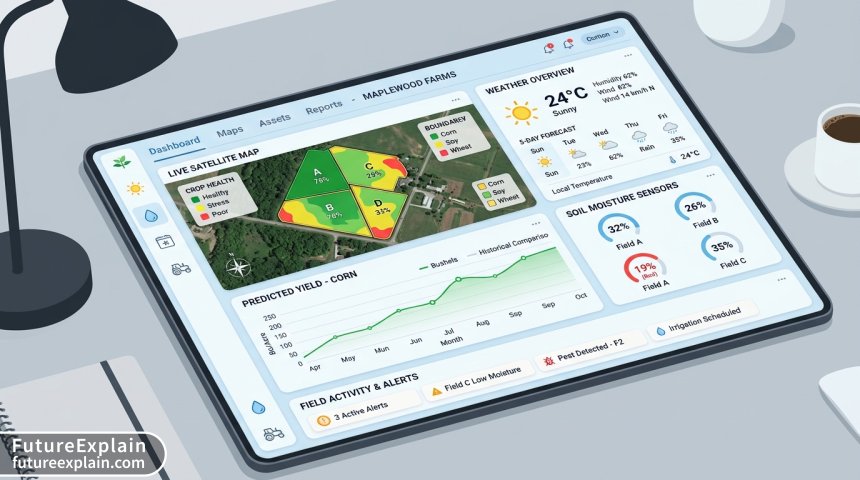
Visuals Produced by AI
From Black Box to Clear Insights: The Role of Explainable AI (XAI)
A major hurdle for AI adoption in agriculture has been the "black box" problem. A farmer might receive a prediction but have no idea why the AI made it. Was it due to low soil nitrogen? An upcoming dry spell? This lack of transparency breeds distrust.
This is where Explainable AI (XAI) comes in. Techniques like SHAP (SHapley Additive exPlanations) help illuminate the AI's decision-making process. For example, a SHAP analysis can show a farmer that the yield prediction was most heavily influenced by July's higher-than-average temperatures, followed by a slight nitrogen deficiency in the south corner of the field[citation:10]. This transparent insight is actionable—the farmer now knows to focus on irrigation and targeted fertilization.
Research emphasizes that XAI is transformative for agriculture. By elucidating the rationale behind predictions, it builds essential trust with farmers and agronomists, enabling them to make informed, confident decisions based on the AI's output[citation:10].
Case Study: AI in Action on Real Farms
Research from the field shows both the promise and the practical challenges of AI adoption. A three-year study published in late 2024 followed several farms in India integrating AI tools[citation:6].
- Organic Orchard: This farm used an AI disease-detection app to support its organic practices. The owner would upload photos of infected plants, and the AI would diagnose issues and recommend organic treatment options. The key to success was integration. The farmer didn't blindly follow the app; he combined its suggestions with traditional knowledge, like using oilseed cake to address nitrogen deficiencies flagged by the AI. He noted, "We already know [from experience], and we get confirmation through the app, and we feel that we are going in the right direction"[citation:6].
- Crop Farm: This farm used AI-based weather apps to navigate increasingly unpredictable rainfall. The technology helped them time fertilization and protect harvested wheat from sudden rain. However, they faced a significant barrier: poor internet connectivity in their remote village, which affected the app's reliability. Their solution was a hybrid approach, falling back on traditional weather signs when the technology faltered[citation:6].
These cases highlight a crucial lesson: Successful AI adoption in agriculture is rarely about technology alone. It's about blending new digital tools with deep traditional knowledge and adapting to local infrastructure constraints.
Beyond Bushels: AI and the Ushr Calculator Case
AI's application in agriculture extends beyond agronomy into the realm of religious and financial compliance. A prime example is the calculation of Ushr (also spelled Usher), an Islamic obligation on agricultural produce.
Ushr is a form of charity amounting to one-tenth (10%) of a crop's yield if the land is irrigated by natural means (rain, rivers, springs). If irrigation requires artificial effort and cost (like tube wells or purchased water), the rate is half of that, or one-twentieth (5%)[citation:3]. The calculation is based on the total produce, without deducting farming expenses.
For a farmer managing large, varied fields, calculating Ushr manually can be complex. This is a perfect task for a simple AI-powered tool or algorithm.
How an AI-Powered Ushr Calculator Would Work
- Data Input: The farmer or system inputs key variables: Crop Type (e.g., Wheat), Total Harvested Produce (e.g., 10,000 kg), and Irrigation Method (Natural or Artificial).
- Automated Calculation: The AI model applies the correct rule:
- IF Irrigation = Natural, THEN Ushr = Total Produce × 0.10
- IF Irrigation = Artificial, THEN Ushr = Total Produce × 0.05
- Clear Output: The system displays a simple result: "Ushr Due: 1,000 kg of Wheat."
This can be integrated into broader farm management software. For instance, if the farm's AI yield prediction module forecasts a harvest of 10,500 kg of wheat from a rain-fed field, it could automatically generate an estimate of the Ushr obligation (1,050 kg) well before harvest, aiding in financial and logistical planning.
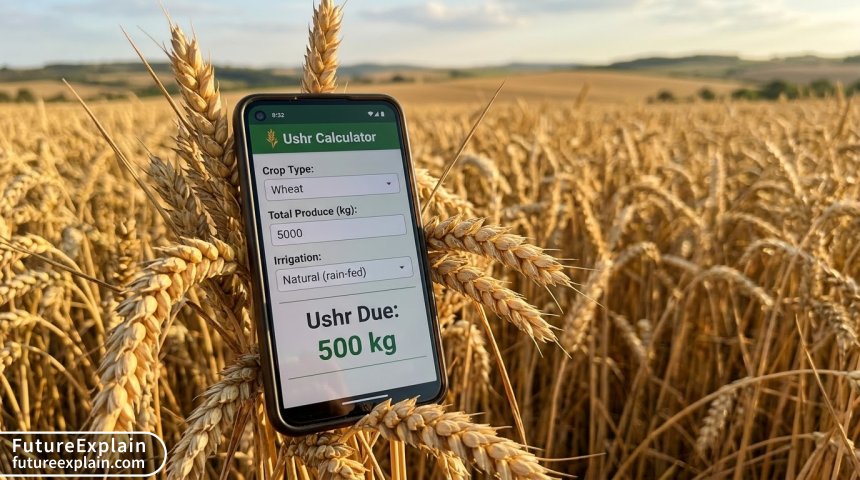
Visuals Produced by AI
A Realistic Guide to Getting Started with Agricultural AI
Adopting AI can feel daunting, but a stepwise approach makes it manageable. Here is a practical roadmap:
Step 1: Define Your Core Problem
Don't seek "AI" for its own sake. Start with a specific challenge. Is it unpredictable yields? Rising water costs? Disease outbreaks? Pinpointing the problem guides your search for a solution.
Step 2: Start with Data Awareness
You don't need a full sensor network on day one. Begin by digitally recording what you already know: planting/harvest dates, inputs used, and final yields. Even a well-maintained spreadsheet is a data foundation. Explore free satellite imagery tools to get a bird's-eye view of your land.
Step 3: Explore Accessible Tools
Many solutions are now user-friendly:
- Freemium Mobile Apps: Numerous apps offer AI-driven services like plant disease identification from a photo or hyper-local weather forecasts.
- Vendor Platforms: Companies like Farmonaut or Crop Analytica offer cloud-based platforms where you can subscribe to specific services, such as yield monitoring or irrigation scheduling, without heavy upfront investment in hardware[citation:1][citation:7].
- Government/Cooperative Programs: Look for initiatives like Microsoft's FarmBeats for Students or local agricultural extension programs that may offer training and support[citation:8].
Step 4: Pilot on a Small Scale
Choose one field or one problem. Implement a single AI tool and measure the results against your traditional practice for a full season. This reduces risk and provides clear learning.
Step 5: Build Knowledge and Evaluate
Use the pilot phase to learn. Does the tool save time? Reduce input costs? Increase yield? Was the data clear and actionable? Also, critically assess the challenges noted in industry reports, such as the high initial investment for small farms, data privacy concerns, and the need for technical training[citation:2].
The Future Farm: Emerging Trends
The evolution of agricultural AI is moving in exciting directions:
- Hyper-Local, On-Device AI: To combat connectivity issues, AI models are being miniaturized to run directly on smartphones or edge devices in the field, providing insights without constant internet access.
- Generative AI for Knowledge: Imagine speaking to an AI assistant in your local dialect: "What's wrong with these leaves?" or "Read me today's soil report." Generative AI can make technology accessible through natural conversation, bridging the digital literacy gap[citation:8].
- AI for Regenerative Agriculture: AI is increasingly used to model and promote practices that improve soil carbon, biodiversity, and long-term farm resilience, aligning productivity with environmental health[citation:8].
Conclusion: Cultivating a Collaborative Future
Artificial Intelligence in agriculture is not a futuristic fantasy; it's a practical set of tools available today. From providing foresight on crop yields with increasing accuracy to handling precise calculations like Ushr, AI's role is to be a reliable partner in decision-making. The most successful applications, as seen in real-world cases, come from a collaborative approach—where the farmer's irreplaceable field knowledge and intuition are enhanced by AI's ability to analyze hidden patterns in vast datasets.
The path forward involves starting small, focusing on specific problems, and choosing tools that offer clarity and actionable insights, not just raw data. By doing so, farmers and the agricultural industry can navigate the challenges of the 21st century, working towards a future that is both productive and sustainable.
Further Reading
To continue your exploration of AI and technology in the agricultural sector, consider these related articles from FutureExplain:
- AI for Agriculture: Smart Farming & Crop Management – A deeper look at the broader ecosystem of smart farming technologies.
- AI for Climate Tech: Using Models to Monitor Environment – Explore how AI is used to tackle larger environmental and climate challenges.
- Case Study: Small Business Automates Customer Onboarding – See the principles of automation and AI applied in a different business context.
Share
What's Your Reaction?
 Like
1621
Like
1621
 Dislike
12
Dislike
12
 Love
305
Love
305
 Funny
28
Funny
28
 Angry
5
Angry
5
 Sad
8
Sad
8
 Wow
421
Wow
421














The internal links to other articles are helpful. I just read the "AI for Climate Tech" piece after this. It's good to see a blog that connects the dots between different applications, showing how it's all part of a bigger picture for the planet.
Could the author elaborate on the "carbon footprint tracking" mentioned as part of sustainable farming tech[citation:1]? How exactly does AI measure that, and is it accessible for a medium-sized farm looking to enter carbon credit markets?
Great follow-up question, Leo. AI models estimate carbon impact by analyzing data on fuel use from farm machinery, fertilizer application rates (which relate to nitrous oxide emissions), and soil health trends from sensors/satellites. Simpler platforms provide estimates, while more advanced ones seek certification for carbon credits. It's a complex but growing field we plan to cover in more detail.
I appreciated the calm, non-hyped tone. So many articles make it sound like AI will solve everything overnight. This one honestly discusses challenges like internet access and integration problems. That realistic perspective is more helpful for planning.
The hybrid approach in the case studies is the key takeaway. In Japan, we have centuries-old farming techniques. The most successful projects here use AI to validate and refine that traditional wisdom, not replace it. Respect for the existing knowledge is paramount.
I work for an ag-tech startup. The "Future Trends" section is spot on. The demand for on-device AI in remote areas and generative AI for natural language queries is what we're building right now. The future is making the tech invisible and just giving the farmer the answer they need.
As a student in agricultural science, this was the clearest explanation of AI for yield prediction I've found. The breakdown of regression models vs. CNNs, and especially the SHAP explanation, made complex topics click. Saved for my thesis reference!