Predictions for AI in 2026: Realistic Trends to Watch
This article explores seven key, realistic trends set to define artificial intelligence in 2026. Moving beyond hype, we focus on the tangible shifts experts from IBM, MIT, Microsoft, and beyond are predicting. We delve into the rise of collaborative 'super agents' that act as teammates, the critical industry pivot towards energy and computational efficiency, and the emerging synergy between AI and quantum computing. The analysis also covers the growing influence of open-source models, the complex global regulatory landscape, and AI's expanding role as a proactive tool in customer service and scientific discovery. Designed for beginners, business owners, and curious professionals, this guide separates fleeting trends from foundational changes that will create new opportunities and challenges in the year ahead.

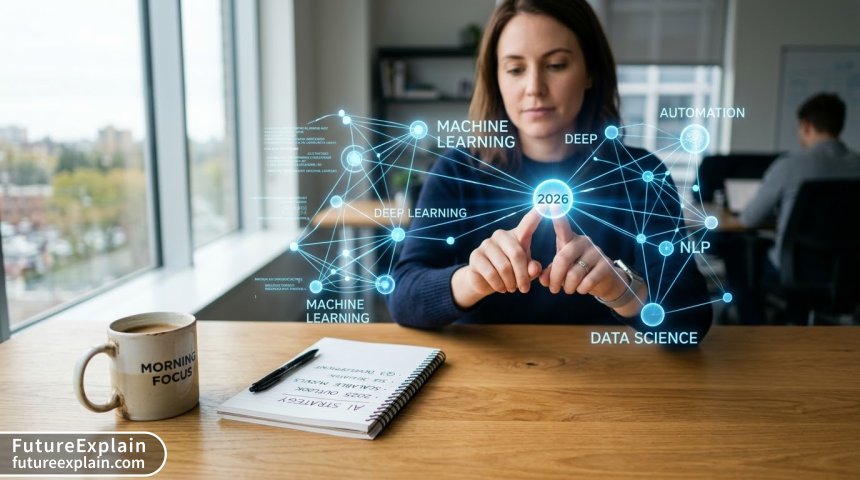
The landscape of artificial intelligence moves at a breathtaking pace. What felt like science fiction a year ago is now a routine tool, and the horizon of what’s possible continues to expand. For beginners, business owners, and professionals alike, this constant change can be both exciting and overwhelming.
This article cuts through the noise. Instead of fantastical predictions, we focus on seven realistic, expert-backed trends that are set to define AI in 2026. Drawing on analysis from leading research institutions and industry pioneers, we will explore the shift from tools to teammates, the growing focus on efficiency and infrastructure, and the emerging technologies that will begin to reshape problem-solving itself.
Our goal is to provide you with a clear, grounded understanding of what to expect, so you can prepare, adapt, and find opportunity in the year ahead.
1. The Great Agent Evolution: From Assistants to Teammates
The most significant and tangible shift in 2026 will be the evolution of AI from a tool you use to a teammate you collaborate with. The era of single-purpose chatbots and coding copilots is giving way to sophisticated "AI agents" that can plan, reason, and execute multi-step tasks across different applications.
The Rise of the "Super Agent" and Orchestration
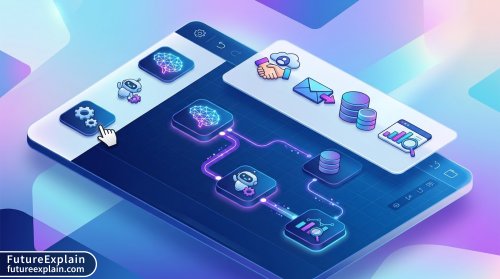
Experts predict the emergence of what some are calling "super agents" or multi-agent systems[citation:1]. Imagine not having a separate AI for email, research, and data analysis, but a unified assistant that can context-switch between all these tasks. As Chris Hay, a Distinguished Engineer at IBM, notes, "We’ve moved past the era of single-purpose agents"[citation:1].
This shift turns users into orchestrators. Your role changes from executing every minor task to defining goals and validating outcomes. As Kevin Chung of Writer explains, AI is shifting "from individual usage to team and workflow orchestration," coordinating work across entire projects and departments[citation:1]. This won't replace human judgment but will amplify it, allowing small teams to achieve what previously required much larger resources[citation:6].
Agents in the Workplace: New Management Skills
With AI agents acting as team members, a new set of skills becomes essential. Richard Socher, CEO of You.com, frames it clearly: everyone will need to learn management skills[citation:4]. This means delegating tasks with clear instructions, building trust in the agent's outputs, understanding its limitations, and knowing when to step in. It's the transition from a "copilot" model to managing an autonomous entity that requires oversight and guidance.
Successful companies will be those that design workflows for human-agent collaboration. Microsoft’s Aparna Chennapragada emphasizes that the future "belongs to those who elevate the human role, not eliminate it"[citation:6]. This could mean a three-person team, supported by AI, launching a campaign that once required ten people, with humans focusing on creative strategy and emotional intelligence while agents handle execution and data-heavy tasks.
A Practical Note on Integration: While the vision is compelling, experts caution that integrating multi-agent systems is complex. It requires robust "orchestration logic, state management, [and] error handling across agents"[citation:7]. The winning strategy isn't to use AI for everything, but to identify clear, high-value workflows where agentic collaboration makes a tangible difference.

Visuals Produced by AI
2. The Efficiency Imperative: Smarter, Not Just Bigger
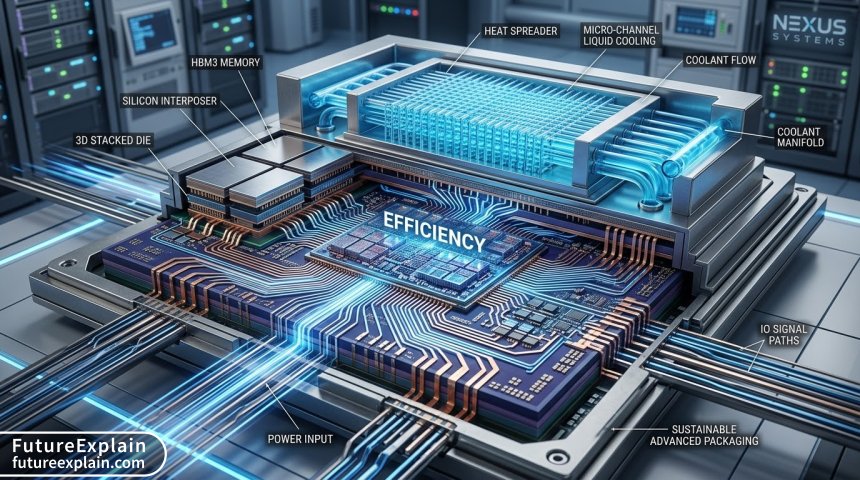
For years, progress in AI was synonymous with scale: larger models, more parameters, and immense computing power. In 2026, a major trend will be the pursuit of efficiency. As demand for computational power collides with real-world constraints like energy supply, the industry's strategy is shifting[citation:4].
Hardware and Energy: The New Bottlenecks
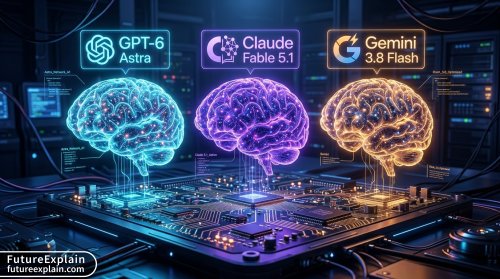
The massive energy demand of AI data centers is becoming a critical bottleneck for deployment[citation:4]. This reality is forcing a painful but necessary reckoning. Kaoutar El Maghraoui, a Principal Research Scientist at IBM, predicts that "2026 will be the year of frontier versus efficient model classes"[citation:1]. Alongside the massive, powerful models, we will see a rise of smaller, hardware-aware models optimized to run well on more modest, efficient accelerators.
The hardware race is also diversifying. While powerful GPUs remain essential, innovation is flourishing in areas like specialized AI chips (ASICs), chiplet designs, and techniques like analog inference[citation:1]. The goal is to get more intelligence out of every watt of power consumed.
Smarter Infrastructure and "The Digital Assembly Line"
Efficiency isn't just about chips; it's about smarter software architecture. Mark Russinovich of Microsoft Azure describes a future of "flexible, global AI systems" and linked AI "superfactories" that dynamically route workloads to maximize the use of every computational cycle[citation:6].
At the application level, this leads to concepts like the "digital assembly line"[citation:7]. Instead of monolithic AI processing a whole task, workflows will be broken down. Different specialized, efficient agents or models will handle the parts they do best. For example, a document processing pipeline might use one agent to extract text, another to understand tables, and a third to analyze images, all orchestrated for speed and accuracy[citation:1]. This modular approach reduces cost and improves results.
Visuals Produced by AI
3. The Open-Source Surge and Global AI Development
The playing field for advanced AI is leveling. 2025 was a landmark year for open-source models, particularly from Chinese labs like DeepSeek, which released powerful "reasoning models" that shocked the global community[citation:3]. This trend will accelerate in 2026.
The "DeepSeek Moment" and Its Aftermath
The success of DeepSeek's R1 model created an "aspirational benchmark" for what a relatively small team could achieve[citation:3]. It proved that top-tier AI performance was not the exclusive domain of giant American tech firms. This has spurred a near-unanimous embrace of open-source strategies by Chinese AI firms, earning them significant goodwill and trust in the global developer community[citation:3].
The practical result? Expect more Silicon Valley applications to be quietly built on top of Chinese-origin open models like Alibaba's Qwen or Zhipu's GLM[citation:3]. For developers and businesses, this means more choice, greater customizability, and potentially lower costs, accelerating innovation worldwide.
No Moat: The Era of Fast Followers
This open-source momentum underscores a broader trend: the erosion of sustainable competitive advantage (or "moats") for AI labs[citation:2]. When one lab demonstrates a new capability, others can often replicate it surprisingly quickly. As Jakob Nielsen observes, "any advantage for an AI lab was temporary" in 2025, and this "fast-follower" dynamic will hold in 2026[citation:2].
For users, this is a double-edged sword. It means you should avoid locking yourself into long-term contracts with a single provider based on a temporary lead. The "best" model may change every few months. The core implication for businesses is that competitive advantage will increasingly come from how you use and integrate AI (the systems and workflows), not merely which model's API you call[citation:1][citation:7].
4. Quantum Computing and AI: A Collaborative Frontier
Quantum computing has long been a future promise, but 2026 is poised to be a turning point. IBM has stated that 2026 will mark the first time a quantum computer can outperform a classical computer on a specific, useful problem[citation:1]. This milestone, known as "quantum advantage," will begin to unlock new possibilities.
Hybrid Computing and Scientific Discovery
The real power won't come from quantum alone, but from its integration with AI and classical supercomputing—a hybrid approach[citation:1][citation:6]. AI can identify patterns, supercomputers run vast simulations, and quantum computing can model molecular and material interactions with far greater accuracy than classical systems can achieve.
This synergy will have its first major impacts in fields like drug development, materials science, and logistics optimization[citation:1]. Peter Lee of Microsoft Research envisions AI not just summarizing research but actively joining the discovery process: "AI will generate hypotheses, use tools and apps that control scientific experiments, and collaborate with both human and AI research colleagues"[citation:6].
Beyond Theory: Early Practical Tools
We are already moving "past theory" into practical application[citation:1]. Tools are emerging to help developers work in this new paradigm. For instance, IBM's Qiskit Code Assistant can help generate quantum code automatically[citation:1]. While these are early days, 2026 will see these tools mature and their application areas grow, moving from research labs toward more tangible industry pilots.
5. Regulation, Trust, and the Legal Reckoning
As AI becomes more powerful and woven into daily life, the calls for oversight and accountability grow louder. 2026 will be a year of intense regulatory struggle and landmark legal cases that begin to define the boundaries of responsibility.
The Regulatory Tug-of-War
In the United States, a significant conflict is brewing between federal and state governments over who gets to regulate AI[citation:3]. With potential for a patchwork of state laws, and an executive branch seeking to limit them, businesses may face a complex and uncertain compliance landscape. The European Union, meanwhile, continues to roll out its comprehensive AI Act, creating a very different regulatory environment[citation:4].
This isn't just red tape; it's a fundamental debate about safety, bias, and democratic control. As UNC professor Tori Ekstrand notes, there are deep concerns about whether regulation alone "can and will preserve democratic norms" in the face of AI's growing power[citation:5].
Security, Compliance, and Building Trust
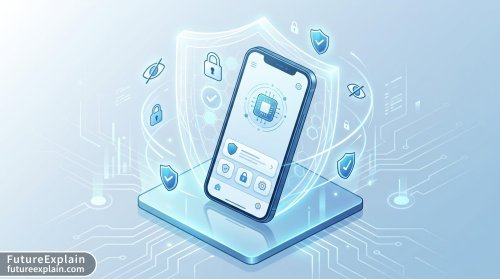
For organizations, this makes security and compliance central pillars of AI strategy, not afterthoughts[citation:4]. Vasu Jakkal of Microsoft Security stresses that as AI agents join the workforce, they must have security protections "similar to humans," with clear identity, access limits, and data management to prevent them from becoming risk vectors[citation:6].
Building trustworthy AI will require "embedding ethical principles directly into systems"[citation:4]. This means automated policy enforcement, continuous audits, and transparent documentation (like model cards) will shift from best practices to business necessities.
6. AI Gets Proactive: Concierges, Shopping, and Beyond
AI's role is evolving from reactive to proactive. Instead of waiting for a command or a question, AI systems will begin to anticipate needs and take initiative within carefully defined boundaries.
The Proactive Customer Concierge
Customer service is a prime example. The scripted chatbot that asks "How can I help you?" is being replaced by agents that understand enterprise context. A delivery delay? The AI could proactively reschedule it and issue a credit before the customer even complains[citation:7]. Salesforce anticipates AI will drive hundreds of billions in online purchases, acting as a hyper-knowledgeable, always-available personal shopper[citation:3].
However, this autonomy requires rigorous design. Experts warn of "massive failure modes" if not properly constrained[citation:7]. Successful systems will need clear rules, confidence scoring to know when to escalate to a human, and full audit trails for every action taken.
Amplifying Expertise in Specialized Fields
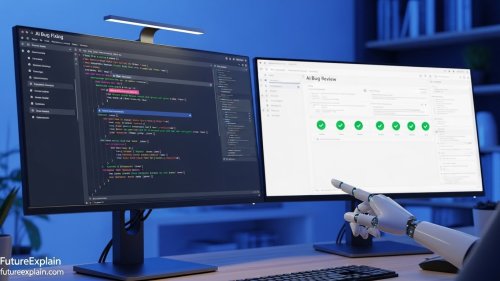
This proactive, assistive role will expand into specialized domains. In healthcare, AI is moving beyond diagnostics into areas like treatment planning and symptom triage, helping to bridge the global gap in access to medical expertise[citation:6]. In software development, "repository intelligence" will allow AI to understand the full context and history of a codebase, suggesting not just code snippets but architectural improvements and pre-emptively catching errors[citation:6].
7. The Human Factor: Upskilling and Cultural Adaptation
Ultimately, the success of all these technological trends hinges on people. The most critical trend for 2026 may be the focus on human adaptation.
The Shrinking Skill Half-Life and Management Shift
The half-life of professional skills is shrinking dramatically; some estimates suggest it's now as short as four years[citation:7]. What you learned about AI six months ago might already be outdated. Continuous, hands-on learning is no longer a luxury but a core professional requirement.
As discussed, work is shifting from task execution to orchestration and management—of both people and AI agents. This requires a cultural shift within organizations. Aditya Ganjam of Conviva points out that thriving companies will be those that invest in "cultures of experimentation, curiosity and resilience" as much as in the tools themselves[citation:4].
Democratization of Creation
Finally, the barrier to creating with AI continues to fall. Kevin Chung highlights the "democratization of AI agent creation," where the ability to design and deploy intelligent systems moves into the hands of business users closest to real problems[citation:1]. In education, as noted by UNC's Paul Wolff, AI is shifting from optional experiment to a "core expectation," with leading institutions integrating it responsibly into teaching and learning[citation:5].
Conclusion: A Year of Integration and Impact
The year 2026 will be less about breathtaking new announcements and more about the hard, necessary work of integration, efficiency, and responsibility. The trends point to a maturation of the AI ecosystem: agents that collaborate, infrastructure that conserves, models that are accessible, and a legal framework that begins to take shape.
For you, the key takeaways are to focus on the human skills of orchestration and critical thinking, to design workflows that leverage AI as a teammate, to prioritize security and ethical use, and to embrace continuous learning. The companies and individuals who understand that AI's greatest potential lies in amplifying human ingenuity, not replacing it, will be the ones to define the future.
Further Reading on FutureExplain:
- AI Agents Explained: What They Are and Why They Matter – A perfect primer to understand the core technology behind the "teammate" trend.
- Cost Optimization for AI: Saving Money on Inference – A practical guide to the efficiency imperative discussed here.
- Legal Landscape for AI (2025 Update): What Creators Must Know – Essential background for navigating the upcoming regulatory shifts of 2026.