AI for Supply Chain: Inventory, Forecasting, and Optimization
This guide demystifies how Artificial Intelligence is transforming supply chain management. We break down the core applications of AI in inventory control, demand forecasting, and logistical optimization, moving beyond the hype to provide a clear, practical understanding. You'll learn how machine learning models analyze complex data—from sales history to weather patterns—to predict demand more accurately, optimize stock levels in real-time, and plan efficient delivery routes. The article includes a realistic assessment of implementation challenges, a step-by-step roadmap for getting started, and an overview of the types of AI tools available for businesses of different sizes. Designed for managers, business owners, and beginners, this resource equips you with the knowledge to evaluate AI's potential for your operations and begin planning a responsible, effective integration.

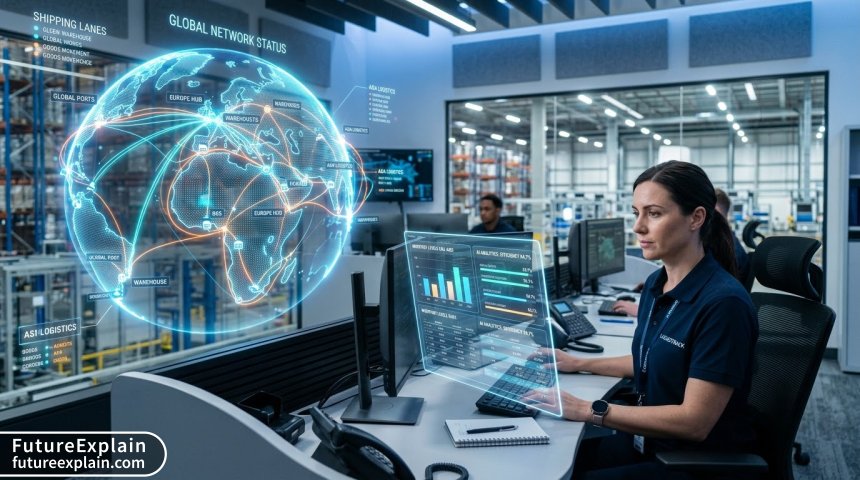
Introduction: The New Intelligence in Logistics
For decades, supply chain management has been a complex dance of guesswork, spreadsheets, and reactive problem-solving. Managers balanced inventory levels against projected demand, planned routes based on static maps, and hoped that unforeseen events—a storm, a port delay, a sudden trend on social media—wouldn't unravel their careful plans. This traditional approach often led to two costly extremes: excessive inventory that tied up capital or stockouts that lost sales and disappointed customers.
Artificial Intelligence is fundamentally rewriting this script. It's not just about automating manual tasks; it's about injecting a new layer of predictive and prescriptive intelligence into every link of the chain. At its core, AI in supply chain uses machine learning models to analyze vast, diverse datasets—far beyond what any human team could process—to find patterns, predict outcomes, and recommend optimal actions. This transforms the supply chain from a cost center prone to disruption into a strategic, resilient, and adaptive asset.
This guide is designed for business owners, operations managers, and curious beginners. We will move past the buzzwords to explain, in clear terms, how AI is concretely applied to three critical areas: inventory management, demand forecasting, and logistical optimization. We'll explore how it works, the tangible benefits, the practical challenges of getting started, and what the future holds. Whether you're considering your first AI project or looking to deepen your understanding, this article will provide a comprehensive and grounded perspective.
Demystifying AI's Role: More Than Just Fancy Automation
Before diving into applications, it's crucial to distinguish between traditional automation and AI-driven intelligence. Basic automation follows fixed rules: "If inventory level drops below X, reorder Y." AI, particularly machine learning (ML), learns from data to create its own, evolving rules. It can answer complex questions: "Given current sales velocity, seasonal trends, upcoming local events, and supplier lead times, what is the optimal quantity to reorder next Tuesday to maximize profit while minimizing risk of overstock?"
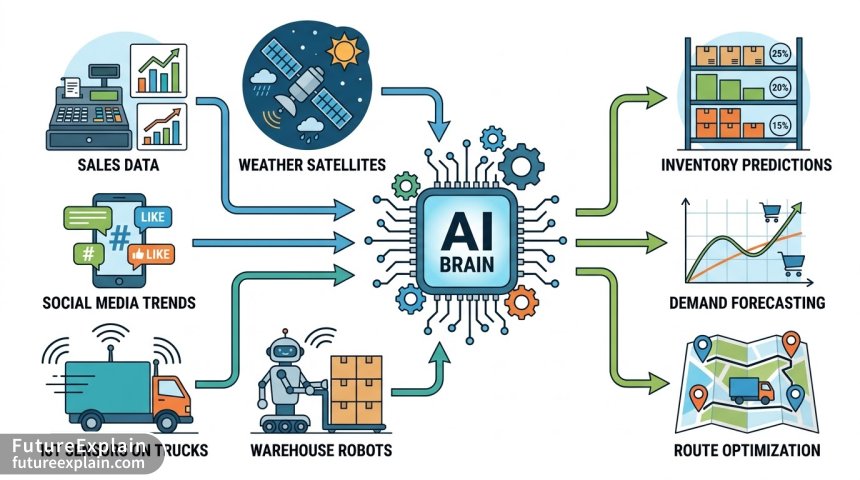
The fuel for this intelligence is data. An AI system for supply chain might ingest and analyze:
- Historical Data: Sales records, past order volumes, seasonal cycles.
- External Data: Weather forecasts, economic indicators, social media sentiment, news events (e.g., port strikes).
- Real-time Data: GPS feeds from trucks, IoT sensor readings from warehouse shelves, live point-of-sale (POS) transactions.
- Market Data: Competitor pricing, raw material commodity prices, geopolitical risk indices.
By finding correlations within this data soup, ML models can move from descriptive analytics ("what happened") to predictive ("what will happen") and prescriptive ("what should we do about it") insights. This capability is what makes AI a game-changer, enabling a shift from reactive firefighting to proactive, strategic management.
Core Application 1: AI-Powered Demand Forecasting
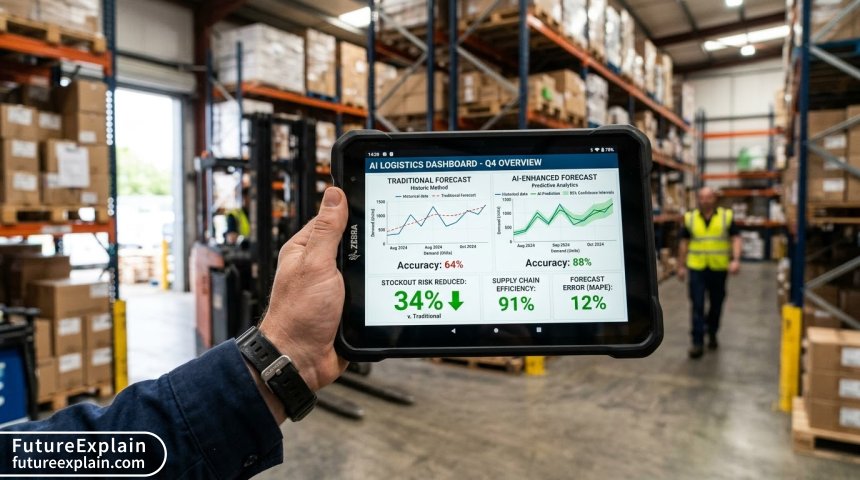
Accurate demand forecasting is the holy grail of supply chain management. Under-forecast, and you lose sales and customer goodwill. Over-forecast, and you're stuck with expensive, unsold inventory. Traditional methods often rely on simple extrapolations of past sales, which fail to account for a multitude of influencing factors.
AI radically improves forecast accuracy by building multivariate models. These models don't just look at last year's sales for the same week; they simultaneously analyze dozens, even hundreds, of potential demand signals.
- Advanced Time-Series Analysis: ML models like Facebook's Prophet or various Long Short-Term Memory (LSTM) neural networks excel at decomposing time-series data. They can separate baseline trends, seasonal patterns (weekly, monthly, yearly), and holidays, and then project them forward with greater nuance than simple moving averages.
- Incorporating External Drivers: This is where AI truly shines. A model can learn, for example, that a spike in online mentions of a product category (detected via natural language processing) often precedes a sales increase by 10 days. Or that a forecast of rainy weather in a region reduces foot traffic to brick-and-mortar stores but increases e-commerce sales for certain home-related products. By quantifying the impact of these external factors, the forecast becomes dynamically responsive to the real world.
The Critical Foundation: Data Readiness A common pitfall, glossed over in much of the hype, is the assumption of perfect data. AI models are only as good as the data they're trained on. Before any forecasting project, a business must audit its data for: Completeness: Do you have consistent historical sales data for all SKUs? How do you handle missing data points from system outages or legacy records? Granularity: Is your data at the right level (e.g., daily store-SKU level vs. weekly regional level)? Finer granularity often yields better models but requires more computational power. Relevance: Which external data sources are truly predictive for your business? Experimentation is key—social media sentiment might be crucial for fashion retail but negligible for industrial parts. Investing time in data cleansing and structuring is the unglamorous but essential first step toward successful AI forecasting.
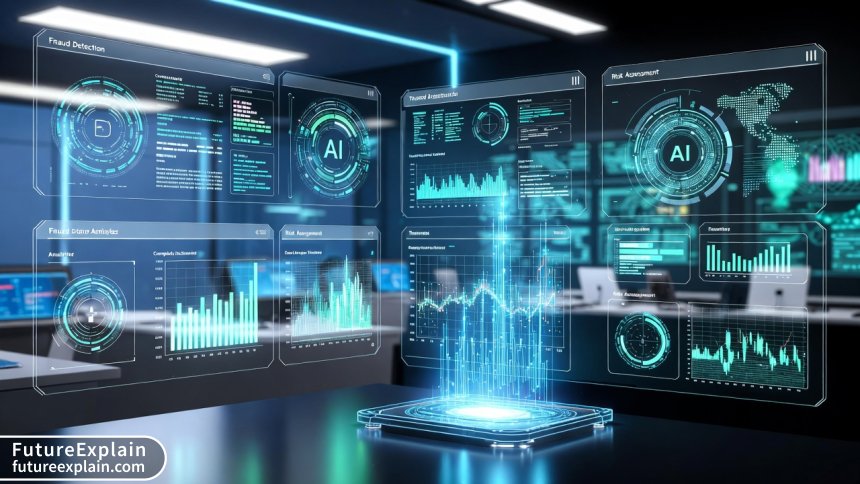
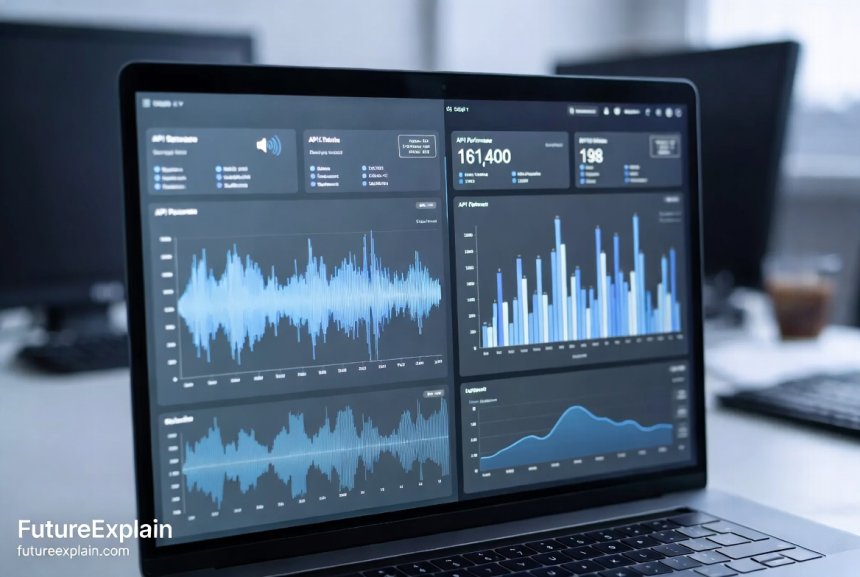
Visuals Produced by AI
The result is a forecast that is not a single, static number, but a probabilistic range with confidence intervals. A business can see that the AI is 90% confident demand will be between 1,200 and 1,400 units, and 70% confident it will be between 1,250 and 1,350. This allows for more nuanced and risk-informed planning. Companies like Amazon and Walmart have used these techniques for years, but now the tools and platforms are becoming accessible to mid-sized businesses through cloud-based AI services.
Core Application 2: Intelligent Inventory Optimization
Once you have a smarter forecast, the next logical step is to align your inventory with it. AI-driven inventory optimization moves beyond simple min/max stock level rules to a dynamic, multi-echelon model that considers the entire network.
Key AI capabilities here include:
- Dynamic Safety Stock Calculation: Instead of a fixed safety stock based on a historical average, AI continuously recalculates optimal safety stock levels for each product at each location (warehouse, store). It factors in real-time variability in supplier lead times, forecast uncertainty, and desired service levels. If a key supplier's reliability drops, the AI system can automatically recommend increasing safety stock for dependent items.
- Multi-Echelon Inventory Optimization (MEIO): This is a sophisticated technique where AI optimizes inventory across the entire supply network—from central warehouses to regional distribution centers to retail stores. The goal is to position the right inventory at the right node to minimize total costs (holding, transportation, stockouts) while meeting service-level agreements. It answers complex questions like, "Should we hold more slow-moving inventory at a central hub or push it out to regional DCs?"
- Prescriptive Replenishment: AI doesn't just flag when stock is low; it recommends specific purchase orders or transfer orders. It can batch orders intelligently to qualify for supplier volume discounts or optimize container loads. It can also suggest "demand-shaping" actions, like running a promotion on a overstocked item to balance inventory levels.
For businesses with thousands of SKUs, this AI-driven approach can lead to dramatic reductions in capital tied up in inventory (often 20-30%) while simultaneously improving in-stock rates. It turns inventory from a static asset into a fluid, strategically deployed resource.
Core Application 3: Logistics and Network Optimization
The final leg of the journey is getting the product to the customer efficiently. AI optimizes logistics—the planning, execution, and monitoring of transportation.
- Route and Load Optimization: Classic vehicle routing problems are supercharged with AI. Modern systems don't just calculate the shortest distance; they optimize for a blend of factors: real-time traffic and road conditions, driver hours-of-service regulations, fuel costs, time-window constraints for delivery, and even the carbon footprint. AI can dynamically re-route fleets in response to accidents or delays.
- Warehouse Management: Inside the warehouse, AI and robotics work hand-in-hand. Computer vision systems can track inventory on shelves, guide autonomous mobile robots (AMRs) to picking locations, and optimize the layout of the warehouse itself by placing fast-moving items in the most accessible spots. Machine learning algorithms can also sequence and batch pick lists to minimize a worker's travel path through the aisles.
- Predictive Maintenance for Assets: AI can analyze data from sensors on trucks, forklifts, and conveyor belts to predict equipment failures before they happen. This shift from scheduled maintenance to condition-based maintenance reduces costly unplanned downtime in critical logistics operations.
- Freight Procurement and Rate Forecasting: AI platforms can analyze historical freight market data, current capacity tightness, and economic indicators to predict future shipping rates. This allows shippers to time their freight procurement contracts more advantageously or choose between carriers and modes (truck, rail, ocean) more strategically.
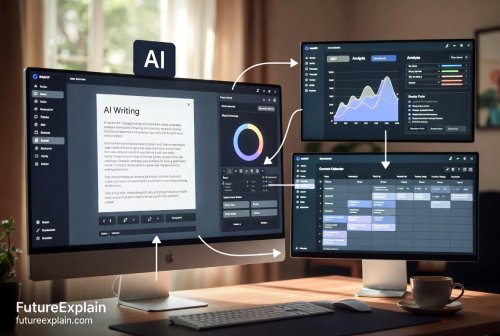
Visuals Produced by AI
A Realistic Roadmap: Implementing AI in Your Supply Chain
The promise of AI is compelling, but where do you start without getting overwhelmed? A phased, pragmatic approach is essential. Phase 1: Assess and Prepare (Months 1-3)
- Identify a High-Impact, Contained Pilot: Don't try to boil the ocean. Choose a specific, painful problem with clear metrics. Examples: Reducing stockouts for your top 20 SKUs, optimizing delivery routes for your busiest depot, or improving the accuracy of your 4-week demand forecast for a key product category.
- Conduct a Data Audit: As discussed earlier, map the data needed for your pilot. Identify gaps, owners, and quality issues. This phase often involves IT and business teams working closely together.
- Build Business Alignment: Ensure key stakeholders understand the pilot's goals, the expected resources, and what success looks like. Address concerns about job roles changing.
- Select Your Tooling Approach: Options range from:
- AI-Native Platforms: Dedicated solutions like O9 Solutions, Kinaxis, or Blue Yonder offer extensive, pre-built supply chain AI modules. Powerful but can be expensive and require process adaptation.
- ERP & SCM Bolt-ons: Major vendors like SAP, Oracle, and Microsoft are embedding AI capabilities (e.g., SAP's "Johanna" AI, Microsoft Dynamics 365 Supply Chain Insights) directly into their platforms. Good for integration but may be less cutting-edge.
- Low-Code/No-Code and Cloud AI Services: Tools like Aible, or using Google Cloud's Vertex AI or AWS SageMaker with pre-built templates, allow for more custom, agile development without a large data science team. Ideal for experimentation and SMBs.
- Run a Parallel Test: For your pilot scope, run the AI's recommendations in parallel with your current process for a set period. Compare the outcomes based on your pre-defined metrics (e.g., forecast error rate, inventory turnover).
- Analyze Pilot Results: Did the AI deliver value? What were the unexpected challenges? Use these lessons to refine your approach.
- Develop an Integration Plan: How will the AI's outputs (e.g., a forecast file, a recommended order list) feed into your existing procurement or warehouse management systems? This often requires API development or middleware.
- Plan for Change Management: Roll out training for planners, buyers, and logistics managers. Their roles evolve from data crunchers to AI overseers and exception handlers—a more strategic function.
Navigating Challenges and Ethical Considerations
Adoption is not without its hurdles. Being aware of them is the first step to mitigation.
- Data Silos and Quality: Legacy systems often create data barriers. Investment in data integration platforms or a modern data warehouse may be a necessary prerequisite.
- Cost and Talent: While cloud services have reduced cost, sophisticated implementations remain an investment. There's also a shortage of talent that understands both supply chain and data science. Partnering with consultants or using managed services can bridge this gap initially.
- Explainability and Trust: Some complex AI models are "black boxes." If a system recommends a drastic cut in inventory for a key product, planners need to understand the "why" to trust it. The field of Explainable AI (XAI) is crucial here, and vendors are increasingly providing reasoning for their recommendations.
Ethical Risks in the Supply Chain: AI can inadvertently perpetuate or amplify human biases if not carefully designed. A sourcing algorithm trained on historical data might favor large, established suppliers, systematically excluding innovative small or minority-owned businesses. A forecasting model might deprioritize low-volume products essential to a niche customer base or region, effectively algorithmic redlining. Mitigating this requires deliberate effort: auditing training data for representation, building fairness constraints into models, and maintaining human oversight for high-stakes decisions like supplier selection.
The Future: Autonomous and Self-Healing Supply Chains
The trajectory points toward increasingly autonomous systems. The concept of the "self-healing" or "cognitive" supply chain is emerging. In this vision, an AI control tower would not only predict a disruption (e.g., a typhoon shutting down a factory) but would automatically execute a pre-defined or dynamically generated response. It could simultaneously: re-route in-transit shipments, source from alternate suppliers, adjust production schedules at other plants, and update customer communications—all within minutes of the disruption being detected.
This level of autonomy requires immense data integration, robust simulation capabilities ("digital twins" of the supply chain), and extremely high levels of trust in the AI. While still largely aspirational for most, elements of it are being built today by leading companies. For everyone else, the journey starts with a single, well-chosen pilot project that delivers tangible value and builds the foundation for a more intelligent, resilient future.
Conclusion
AI in supply chain management is not a distant future concept; it's a present-day toolkit for building resilience, efficiency, and competitive advantage. The journey from reactive to intelligent operations begins with understanding the core applications in forecasting, inventory, and logistics. Success hinges on a pragmatic approach: starting with a focused pilot, prioritizing data readiness, carefully selecting tools that match your business size and technical maturity, and proactively managing the organizational change it brings. By demystifying the technology and focusing on business outcomes, companies of all scales can harness AI to navigate an increasingly complex and volatile global marketplace.
Further Reading
- AI Agents Explained: What They Are and Why They Matter - Understand how autonomous AI agents could manage future supply chains.
- Case Study: Small Business Automates Customer Onboarding - See a practical example of automation delivering business value.
- Predictions for AI in 2026: Realistic Trends to Watch - Explore where AI and supply chain technology are headed next.