No-Code AI Product Ideas You Can Build This Month (2025)
This comprehensive guide presents 10 actionable no-code AI product ideas specifically tailored for 2025's technology landscape. Each idea includes detailed implementation steps using platforms like Bubble, Glide, and Softr, complete with revenue models, target audiences, and estimated build times. We cover everything from AI-powered content repurposing tools and personalized learning platforms to niche market research assistants and automated compliance checkers. The article provides realistic cost breakdowns, monetization strategies, and validation frameworks to help beginners launch profitable AI products without writing a single line of code. Special focus is given to 2025's emerging AI capabilities including multimodal models, real-time processing, and enhanced personalization features.


Introduction: The No-Code AI Revolution in 2025
The year 2025 marks a significant turning point in artificial intelligence accessibility. What was once the exclusive domain of PhDs and senior engineers is now available to anyone with an idea and internet connection. The no-code AI movement has matured, with platforms becoming more sophisticated while simultaneously becoming easier to use. This democratization of AI technology creates unprecedented opportunities for entrepreneurs, small business owners, and creative thinkers to build valuable products without writing a single line of code.
In this comprehensive guide, we'll explore 10 profitable no-code AI product ideas specifically tailored for 2025's technology landscape. Each idea includes not just the concept, but detailed implementation steps, revenue models, target audiences, and estimated build times. We'll cover the specific AI capabilities that make these ideas viable today – from GPT-5's enhanced reasoning to Claude 3.5's superior coding abilities, and the multimodal models that can process images, audio, and video with increasing sophistication.
What makes 2025 particularly exciting for no-code AI builders is the convergence of three key trends: more powerful AI models available via API, more intuitive no-code platforms with AI-specific components, and a market that's increasingly comfortable paying for AI-powered solutions. The barrier to entry has never been lower, while the potential rewards have never been higher.
The 2025 No-Code AI Landscape: What's Changed
Before diving into specific product ideas, it's crucial to understand what makes 2025 different from previous years. The no-code AI ecosystem has evolved significantly, with several key developments that expand what's possible without coding:
- Advanced Model Availability: Access to state-of-the-art models like GPT-5, Claude 3.5, and Gemini 2.0 through simple API calls
- Multimodal Integration: No-code platforms now support image generation, audio processing, and video analysis alongside text
- Reduced Costs: API pricing has become more competitive, with many models offering free tiers sufficient for MVP testing
- Improved Platform Capabilities: Platforms like Bubble, Glide, and Softr have added dedicated AI components and templates
- Market Validation: Customers across industries now understand and value AI solutions, reducing education requirements
These developments mean that ideas which were technically challenging or economically unviable in 2024 are now accessible to no-code builders. The playing field has been leveled, allowing solo entrepreneurs and small teams to compete with much larger organizations.
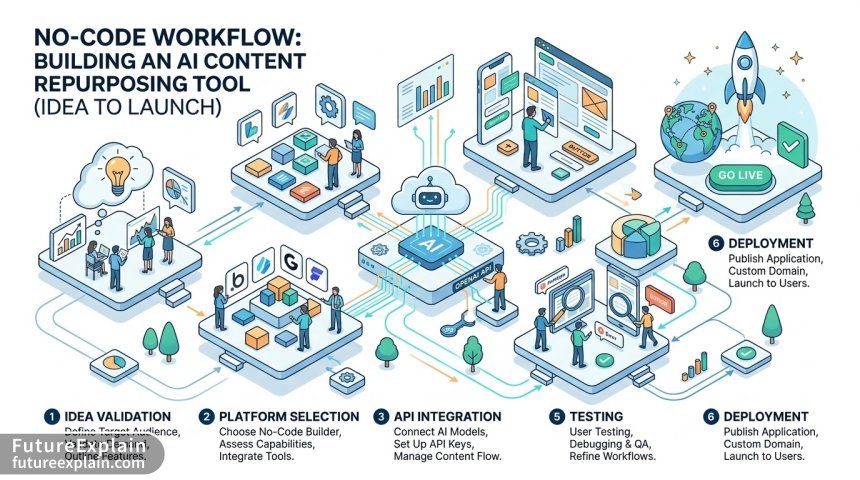
Idea 1: AI-Powered Content Repurposing Suite
The Concept
Create a tool that takes a single piece of content (like a blog post, video, or podcast) and automatically repurposes it into multiple formats for different platforms. For example: turn a YouTube video into a blog post, Twitter threads, LinkedIn articles, Instagram captions, and newsletter content.
Why It Works in 2025
Content creators and marketers are overwhelmed by the need to maintain presence across multiple platforms. 2025's AI models excel at understanding context, maintaining brand voice, and adapting content for different audiences and formats. The latest multimodal models can even analyze video content and extract key points for text-based repurposing.
Implementation Steps
- Choose a no-code platform: Bubble.io is ideal for this due to its workflow capabilities and API integrations
- Integrate OpenAI's GPT-4 (or GPT-5 when available) for content rewriting
- Add Whisper API for audio transcription from videos/podcasts
- Create templates for each output format (Twitter thread, LinkedIn post, etc.)
- Build a simple dashboard where users can upload content and select output formats
- Implement a scheduling feature to space out repurposed content
Revenue Model
- Freemium: Free for 5 repurposing tasks/month
- Basic: $19/month for 50 tasks
- Pro: $49/month for 200 tasks + advanced formatting
- Agency: $199/month for white-label usage
Estimated Build Time: 3-4 weeks
This includes platform learning curve, API integration, template creation, and basic testing.
Idea 2: Personalized Learning Path Creator
The Concept
Build a platform that creates customized learning paths based on a user's current knowledge, goals, and learning style. The AI assesses skill gaps, recommends resources (videos, articles, exercises), and adjusts the path based on progress.
Why It Works in 2025
The demand for continuous learning has never been higher, but generic courses often miss individual needs. 2025's AI can analyze learning patterns, recommend resources from across the web, and create truly personalized educational experiences. With remote work becoming permanent, professionals need tailored upskilling solutions.
Implementation Steps
- Platform choice: Glide works well for data-intensive apps with beautiful interfaces
- Integrate multiple AI services: OpenAI for assessment, Pinecone or similar for resource matching
- Create assessment questionnaires to establish baseline knowledge
- Build a resource database or connect to existing learning platforms via API
- Implement progress tracking and adaptive path adjustment
- Add social features for accountability (optional)
Revenue Model
- Individual: $29/month for personalized learning paths
- Team: $15/user/month for organizations (minimum 5 users)
- Course Creator: $99/month for educators to create and sell paths
- Certification: One-time fees for verified completion certificates
Estimated Build Time: 4-5 weeks
The complexity comes from creating the adaptive learning algorithm and sourcing/curating quality learning resources.
Idea 3: Niche Market Research Assistant
The Concept
Develop a tool that helps entrepreneurs and small businesses conduct market research for specific niches. The AI analyzes competitor websites, social media presence, customer reviews, and market trends to provide actionable insights.
Why It Works in 2025
Traditional market research is expensive and time-consuming. 2025's AI can process vast amounts of data from multiple sources, identify patterns humans might miss, and present findings in understandable formats. With economic uncertainty, businesses need data-driven decisions more than ever but have smaller budgets for traditional research firms.
Implementation Steps
- Use Softr for its strong data visualization capabilities
- Integrate web scraping APIs (like ScrapingBee or ScraperAPI) with ethical considerations
- Connect to social media APIs (Twitter, Reddit, etc.) for sentiment analysis
- Implement natural language processing to analyze reviews and forum discussions
- Create customizable report templates
- Build alert systems for market changes
Revenue Model
- Pay-per-report: $49 for a single market analysis
- Monthly subscription: $79/month for 3 reports + monitoring
- Enterprise: Custom pricing for continuous monitoring of multiple niches
- API access: $199/month for developers to integrate into their workflows
Estimated Build Time: 5-6 weeks
This requires careful handling of data collection to respect terms of service and privacy regulations.
Idea 4: Automated Compliance Checker for Small Businesses
The Concept
Create a tool that helps small businesses ensure compliance with regulations (GDPR, CCPA, industry-specific rules) by analyzing their websites, privacy policies, and data practices, then recommending fixes.
Why It Works in 2025
Regulatory complexity is increasing globally, and small businesses often lack legal resources. AI in 2025 can understand regulatory language, compare it against business practices, and provide specific, actionable recommendations. With fines increasing for non-compliance, this represents a significant risk mitigation service.
Implementation Steps
- Platform: Bubble for complex logic and document handling
- Integrate document analysis APIs (Azure Form Recognizer or similar)
- Build a database of regulations with regular updates
- Create assessment workflows for different business types
- Implement secure document upload and storage
- Add collaboration features for businesses and their advisors
Revenue Model
- One-time audit: $199 for comprehensive compliance check
- Monthly monitoring: $49/month for continuous compliance checking
- Agency partnership: Revenue share with legal/consulting firms
- White-label: $299/month for other firms to resell under their brand
Estimated Build Time: 6-7 weeks
Regulatory expertise is crucial, so partnering with a legal professional is recommended despite the no-code build.
Idea 5: AI-Powered Mental Wellness Journal
The Concept
Develop a private journaling app that uses AI to detect mood patterns, identify stressors, and suggest evidence-based coping strategies, all while maintaining strict privacy standards.
Why It Works in 2025
Mental health awareness has increased, but access to professionals remains limited. 2025's AI can analyze journal entries with nuance, recognizing patterns over time and providing personalized suggestions. Crucially, modern AI can do this while maintaining user privacy through on-device processing or encrypted cloud analysis.
Implementation Steps
- Use Adalo for its strong mobile app capabilities
- Implement sentiment analysis with careful ethical considerations
- Build pattern recognition for mood tracking
- Create a library of evidence-based coping strategies (partner with mental health professionals)
- Implement end-to-end encryption for user data
- Add export functionality for sharing with professionals (with user consent)
Revenue Model
- Freemium: Free basic journal, paid features for analysis ($9.99/month)
- One-time purchase: $49.99 for lifetime access (app store model)
- Corporate wellness: $5/user/month for employee programs
- Professional integration: Therapists pay for client monitoring features
Estimated Build Time: 4-5 weeks
Ethical considerations are paramount. Include clear disclaimers that this isn't a replacement for professional care.
Idea 6: Sustainable Business Practice Optimizer
The Concept
Build a tool that helps businesses analyze their operations for environmental impact and suggests specific, actionable improvements with ROI calculations for sustainability investments.
Why It Works in 2025
Sustainability has moved from nice-to-have to business imperative. Consumers and investors demand action, but businesses struggle with implementation. 2025's AI can process operational data, calculate carbon footprints, and model the financial impact of green initiatives. This bridges the gap between environmental goals and business practicality.
Implementation Steps
- Platform: Webflow with Memberstack for complex member areas
- Integrate data analysis APIs for processing operational metrics
- Build calculators for carbon footprint, waste reduction, energy savings
- Create industry-specific templates (restaurants, offices, manufacturing, etc.)
- Implement reporting for sustainability certifications
- Add benchmarking against industry standards
Revenue Model
- Small business: $79/month for assessment and recommendations
- Enterprise: $499/month for detailed analysis and tracking
- Consultant tool: $199/month for sustainability consultants
- Certification preparation: One-time fees for B Corp or similar certification support
Estimated Build Time: 5-6 weeks
Accuracy in calculations is crucial, so consulting with sustainability experts during development is recommended.
Idea 7: AI-Driven Local Service Marketplace
The Concept
Create a hyper-local service marketplace where AI matches customers with providers based on detailed requirements, reviews, availability, and past performance data.
Why It Works in 2025
Existing marketplaces (TaskRabbit, Thumbtack) use basic matching algorithms. 2025's AI can understand nuanced service requests, predict job completion success rates, and optimize scheduling. For local services, quality matching is everything, and AI can significantly improve outcomes for both customers and providers.
Implementation Steps
- Use Bubble for its two-sided marketplace capabilities
- Implement natural language processing for service request understanding
- Build reputation systems with AI-enhanced review analysis
- Create scheduling optimization algorithms
- Add secure payment processing with escrow features
- Implement messaging with AI-assisted communication templates
Revenue Model
- Commission: 10-15% per completed transaction
- Provider subscription: $29/month for premium placement
- Enterprise: Custom pricing for businesses needing regular services
- Insurance/verification: Additional fees for background-checked providers
Estimated Build Time: 8-10 weeks
Marketplaces require critical mass, so growth strategy is as important as the build itself.
Idea 8: Personalized Nutrition and Meal Planning Assistant
The Concept
Develop an app that creates personalized meal plans based on dietary restrictions, health goals, budget, cooking skill, and even ingredient availability at local stores.
Why It Works in 2025
Nutrition is highly personal, but most meal planning tools offer generic solutions. 2025's AI can balance complex constraints (allergies, preferences, nutrients, budget) while suggesting recipes users will actually enjoy and can realistically prepare. Integration with grocery delivery APIs makes the planning-to-execution seamless.
Implementation Steps
- Platform: Glide for beautiful mobile-first design
- Integrate nutrition database APIs (USDA or similar)
- Build constraint-based recipe recommendation engine
- Connect to grocery store APIs for availability and pricing
- Create meal prep scheduling and shopping list generation
- Add progress tracking for health goals
Revenue Model
- Subscription: $14.99/month for personalized plans
- Family plan: $24.99/month for multiple household members
- Professional: $49/month for nutritionists to use with clients
- Grocery affiliate: Commission on orders placed through app
Estimated Build Time: 5-6 weeks
Nutritional accuracy is important, so consider partnering with or consulting a registered dietitian.
Idea 9: AI-Enhanced Remote Team Culture Builder
The Concept
Build a platform that helps remote teams maintain culture and connection through AI-suggested activities, conversation starters, recognition systems, and virtual team building exercises tailored to team dynamics.
Why It Works in 2025
Remote work is permanent for many organizations, but maintaining culture remotely remains challenging. 2025's AI can analyze team interactions, suggest activities that match team personalities, and facilitate connections that happen naturally in offices. This addresses a real pain point for distributed organizations of all sizes.
Implementation Steps
- Use Softr for team-based applications with member management
- Implement team dynamics analysis (with proper privacy controls)
- Build a library of remote team activities with AI matching
- Create recognition and appreciation systems
- Integrate with common work tools (Slack, Teams, etc.)
- Add analytics for managers on team engagement
Revenue Model
- Per team: $99/month for teams up to 25 people
- Enterprise: $8/user/month for larger organizations
- Consultant version: $199/month for remote work consultants
- White-label: $499/month for HR platforms to rebrand
Estimated Build Time: 4-5 weeks
Privacy considerations are crucial since this involves analyzing team interactions.
Idea 10: Automated Business Process Documentation Tool
The Concept
Create a tool that observes how employees complete tasks (with consent) and automatically generates process documentation, training materials, and optimization suggestions.
Why It Works in 2025
Most businesses have poor documentation, leading to knowledge loss and inefficiency. 2025's AI can analyze screen recordings (with privacy controls), understand workflows, and create clear documentation. This solves a universal business problem that's particularly acute in small and medium businesses without dedicated process teams.
Implementation Steps
- Platform: Bubble for complex workflow and permission systems
- Implement screen recording (browser-based, with explicit user control)
- Build AI analysis of workflows to identify steps and decisions
- Create automated documentation generation
- Add version control for process updates
- Implement training module creation from documented processes
Revenue Model
- Per user: $29/user/month for documentation features
- Team: $199/month for up to 10 users
- Enterprise: Custom pricing for larger deployments
- Process consulting: Add-on services for optimization analysis
Estimated Build Time: 6-8 weeks
Privacy and consent mechanisms must be robust and transparent.
Choosing Your No-Code Platform: 2025 Comparison
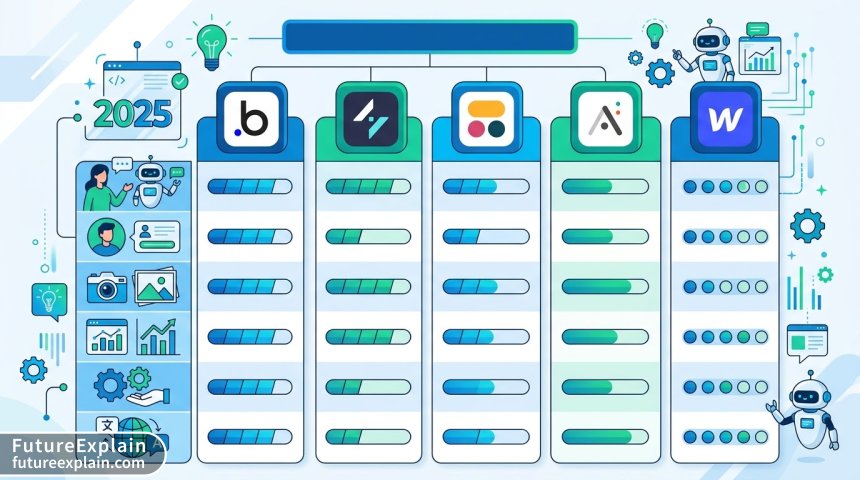
Selecting the right platform is crucial for your AI product's success. Here's how the major players stack up for AI applications in 2025:
- Bubble.io: Best for complex logic, API integrations, and data-heavy applications. Strongest overall for AI products but steepest learning curve.
- Glide: Excellent for mobile-first applications and beautiful interfaces. Great when design is as important as functionality.
- Softr: Ideal for data visualization and member-based applications. Strongest when your app revolves around displaying analyzed data.
- Adalo: Best for pure mobile apps destined for app stores. Strong design capabilities with relatively easy learning curve.
- Webflow + Memberstack: Perfect for content-heavy applications with member areas. Best when marketing the product is as important as building it.
Monetization Strategies That Work in 2025
Beyond the specific revenue models for each idea, several monetization trends are particularly effective for no-code AI products in 2025:
- Hybrid Models: Combine subscription with usage-based pricing or transaction fees
- Vertical-Specific Pricing: Different pricing for different industries (healthcare pays more than education)
- API-as-a-Product: Offer your AI functionality via API for other developers
- White-Label Solutions: Let other businesses rebrand your product
- Professional Services: Offer implementation or customization services
The key is to start simple (often with a single pricing tier) and expand as you understand what customers value most.
Legal and Ethical Considerations
Building AI products, even with no-code tools, comes with responsibilities:
- Data Privacy: Comply with GDPR, CCPA, and other regulations. Be transparent about data usage.
- AI Bias: Actively work to identify and mitigate bias in your AI recommendations.
- Intellectual Property: Ensure you have rights to training data and that outputs don't infringe copyrights.
- Medical/Legal Disclaimers: When appropriate, clearly state limitations (e.g., "not medical advice").
- Transparency: Be clear about when users are interacting with AI versus humans.
These considerations aren't just ethical – they're increasingly required by regulations like the EU AI Act and similar legislation emerging globally.
Validation Framework: From Idea to First Customer
Before building anything, validate your idea:
- Problem Validation: Confirm the problem exists and people will pay to solve it
- Solution Validation: Test if your proposed solution addresses the problem
- MVP Creation: Build the minimum version that delivers core value
- Early Adopter Search: Find and onboard your first 10-20 paying customers
- Iterate Based on Feedback: Use feedback to improve before scaling
Many no-code builders skip validation and build products nobody wants. Don't make this mistake – validation saves time and resources in the long run.
Cost Breakdown and Profitability Timeline
Here's a realistic financial picture for a no-code AI product in 2025:
- Platform Costs: $29-99/month depending on platform and scale
- API Costs: $50-500/month depending on usage (start with free tiers)
- Other Tools: $50-200/month for email, analytics, etc.
- Total Monthly Burn: $150-800 in early stages
- Break-even Point: Typically 20-50 paying customers at $20-50/month
- Time to Profitability: 3-6 months with consistent customer acquisition
The beauty of no-code is that these costs are predictable and scale with revenue, unlike traditional development with large upfront investments.
Common Pitfalls and How to Avoid Them
Based on analysis of hundreds of no-code AI projects, here are the most common failure points:
- Over-engineering: Building too many features before validating core value
- Underestimating Marketing: Assuming "build it and they will come"
- Ignoring API Costs: Not modeling how costs scale with usage
- Poor UX: Making the AI interaction confusing or intimidating
- Lack of Focus: Trying to serve too many customer types at once
Each of these is avoidable with proper planning and continuous user feedback.
Getting Started: Your 30-Day Launch Plan
Here's a step-by-step plan to go from idea to launched product in 30 days:
- Days 1-5: Validate your idea with potential customers
- Days 6-10: Choose platform and build core MVP
- Days 11-15: Integrate AI APIs and test functionality
- Days 16-20: Refine UX and fix major issues
- Days 21-25: Onboard beta testers and collect feedback
- Days 26-30: Implement feedback, set pricing, and launch
This aggressive timeline is possible because no-code platforms dramatically reduce development time. The constraint forces focus on what matters most.
Conclusion: Your No-Code AI Journey Starts Now
The opportunities in no-code AI have never been more accessible or potentially rewarding. The 10 ideas presented here represent just the beginning – each can be adapted, combined, or serve as inspiration for your unique creation. Remember that success comes not from having the most technically sophisticated product, but from solving a real problem for a specific group of people.
2025's AI capabilities combined with mature no-code platforms create a perfect storm of opportunity. The barriers that once prevented non-technical people from building AI products have largely disappeared. What remains is the hard work of understanding customer needs, building with empathy, and consistently delivering value.
Your no-code AI product journey starts with a single step: choosing one idea and beginning validation today. The tools are available, the market is ready, and the only missing ingredient is your unique perspective and commitment to execution.
Visuals Produced by AI