Building an AI-Powered Content Workflow for Bloggers (2025 Update)
This comprehensive guide walks you through building a complete AI-powered content workflow for blogging in 2025. Starting with content ideation and research using AI tools, we cover every stage of the content creation process including writing assistance, SEO optimization, multimedia creation, and distribution automation. You'll learn how to integrate multiple AI tools into a seamless workflow, maintain quality standards, implement ethical practices, and measure performance. The guide includes practical templates, tool recommendations for 2025, and step-by-step implementation strategies for both solo bloggers and content teams. Whether you're starting fresh or optimizing an existing workflow, this updated 2025 approach will help you create better content faster while maintaining authenticity and quality.


Introduction: The Evolution of Content Creation
The blogging landscape has transformed dramatically since the early 2020s. What began as simple AI writing assistants has evolved into comprehensive ecosystems that can handle every aspect of content creation. In 2025, successful bloggers aren't just using AI tools—they're building sophisticated workflows that leverage multiple AI technologies in harmony. This guide will walk you through creating a complete AI-powered content workflow that balances efficiency with quality, automation with authenticity.
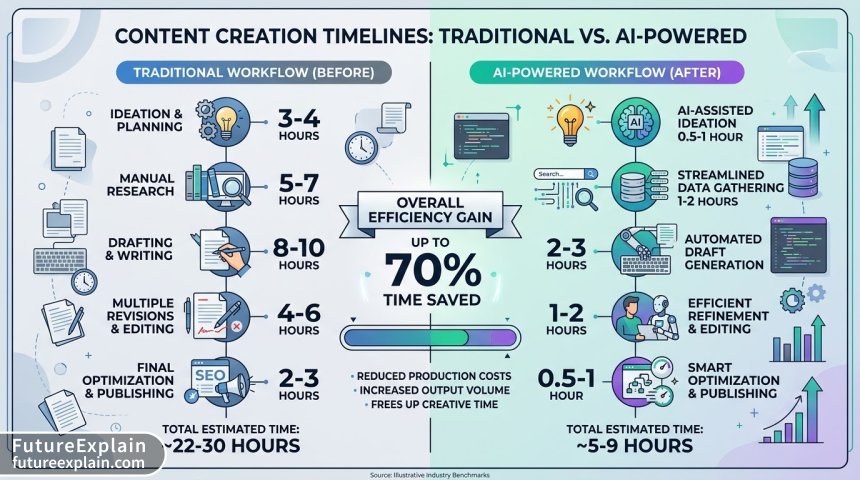
The key shift in 2025 is moving from using AI for individual tasks to creating integrated systems. According to recent industry analysis, bloggers who implement complete AI workflows report 60-80% time savings on content creation while maintaining or improving content quality. However, the most successful implementations aren't about replacing human creativity—they're about augmenting it with intelligent tools at every stage.
Understanding the Modern Content Workflow
Before diving into specific tools and processes, let's define what we mean by an "AI-powered content workflow." Unlike simple automation, a true workflow involves:
- Multiple connected processes working in sequence
- Intelligent handoffs between different AI tools
- Quality checkpoints at every stage
- Performance feedback loops for continuous improvement
- Scalable architecture that grows with your audience
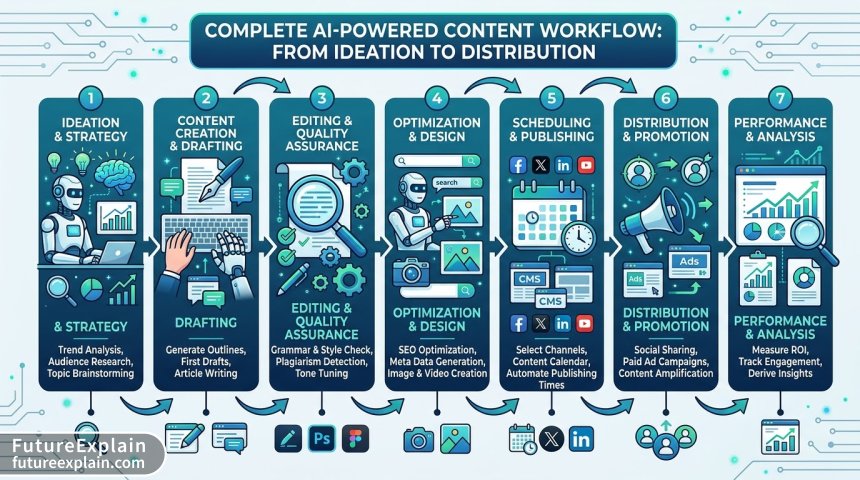
In 2025, the most effective workflows typically follow this high-level structure: Ideation → Research → Outline → Draft → Enhance → Optimize → Create Multimedia → Publish → Distribute → Analyze. Each of these stages can be enhanced with specific AI tools, which we'll explore in detail.
Stage 1: AI-Powered Content Ideation and Research
The foundation of any successful content strategy begins with strong ideas backed by solid research. In 2025, AI tools have transformed this traditionally time-consuming phase into a strategic advantage.
Finding Content Opportunities with AI
Modern AI tools can analyze search trends, social media conversations, and competitor content to identify gaps in your niche. Tools like BuzzSumo's AI features and SEMrush's Content Marketing Platform now include predictive analytics that can forecast which topics will gain traction. These tools don't just provide keyword suggestions—they analyze user intent, content saturation, and emerging trends specific to your audience.
Audience Research Automation
Understanding your audience is crucial, and AI tools now automate much of this research. Sentiment analysis tools can process thousands of comments, reviews, and social media posts to identify pain points, preferences, and unmet needs. Tools like Brandwatch and Talkwalker offer AI-powered insights that go beyond basic demographics to reveal psychological drivers and content preferences.
Creating an Integrated Research Dashboard
The most successful bloggers in 2025 don't use research tools in isolation. They create integrated dashboards that combine data from multiple sources. Using tools like Zapier or Make (formerly Integromat), you can connect your keyword research tools, social listening platforms, and competitor analysis into a single dashboard. This integration allows for cross-referencing insights and identifying patterns that single tools might miss.
Stage 2: AI-Assisted Content Planning and Outlining
With your research complete, the next stage involves structuring your content effectively. AI tools have become particularly sophisticated in this area, moving beyond basic templates to intelligent outlining systems.
Intelligent Content Outliners
Tools like Surfer SEO and Clearscope have evolved from simple keyword density checkers to full-fledged content architects. They now analyze top-performing content on your target topics and suggest optimal structure, including recommended sections, heading hierarchies, and even paragraph length distributions. These tools consider not just SEO factors but also readability, engagement patterns, and content consumption preferences.
Content Calendar Automation
AI-powered content calendars like CoSchedule and Asana's AI features now offer predictive scheduling. They analyze your historical performance data to recommend optimal publishing times, suggest content mixes based on audience engagement patterns, and even forecast resource requirements. These systems can automatically adjust your calendar based on real-time trends and performance metrics.
Visuals Produced by AI
Stage 3: AI-Enhanced Writing and Drafting
This is where most bloggers start with AI, but in 2025, the approach has matured significantly. The goal isn't to have AI write entire articles but to enhance your writing process at multiple points.
Writing Assistance Tools
Modern AI writing assistants have moved beyond simple text generation. Tools like Jasper's 2025 platform, Writesonic, and Copy.ai now offer context-aware writing assistance that understands your brand voice, content goals, and audience preferences. They can help with:
- Overcoming writer's block with intelligent prompts
- Expanding on key points with relevant examples
- Maintaining consistent tone throughout long-form content
- Generating multiple versions of key sections for A/B testing
- Adapting content for different audience segments
The Collaborative Writing Process
The most effective approach in 2025 involves a collaborative back-and-forth with AI tools. Start by writing your core ideas and arguments, then use AI to:
- Expand on technical points with clear explanations
- Generate relevant examples and case studies
- Identify and fill content gaps
- Improve readability and flow
- Add transitional elements between sections
This collaborative approach maintains your unique voice while leveraging AI's ability to enhance structure, clarity, and comprehensiveness.
Quality Assurance Checkpoints
One common concern with AI-assisted writing is quality degradation. To address this, implement mandatory quality checkpoints:
- Originality Verification: Use tools like Originality.ai or Copyscape to ensure content uniqueness
- Fact-Checking Automation: Tools like Factiverse or FullFact can automatically verify claims against trusted sources
- Consistency Checking: AI tools can ensure brand voice, terminology, and style remain consistent
- Readability Optimization: Automated analysis of sentence structure, paragraph length, and vocabulary level
Stage 4: SEO and Technical Optimization
Creating great content isn't enough—it needs to be discoverable. AI has revolutionized SEO optimization, moving from keyword stuffing to intelligent content enhancement.
Real-Time SEO Optimization
Tools like Frase and MarketMuse now offer real-time optimization suggestions as you write. They analyze search intent, competitor strategies, and evolving search algorithms to provide specific recommendations for:
- Optimal keyword placement and density
- Related terms and semantic SEO opportunities
- Content structure for featured snippets
- Internal linking strategies
- Meta description optimization
Technical SEO Automation
Beyond content, AI tools can automate technical SEO tasks:
- Automated site audits that identify and prioritize issues
- Intelligent internal linking based on content relevance
- Performance optimization suggestions for page speed
- Structured data generation for rich snippets
- Mobile optimization analysis and recommendations
Stage 5: Multimedia Content Creation
Modern blogging requires more than text. AI tools now make it practical for individual bloggers to create professional-quality multimedia content.
AI Image Generation and Editing
Tools like Midjourney, DALL-E 3, and Stable Diffusion have made custom imagery accessible. The key in 2025 is developing a consistent visual style that matches your brand. Create style guides for your AI image generation, including:
- Color palette specifications
- Composition preferences
- Style consistency parameters
- Brand element integration
Video and Audio Content
AI has dramatically lowered barriers for video and audio content creation:
- Text-to-video tools like Synthesia and Pictory for creating explainer videos
- AI voiceovers that can match your brand tone
- Automatic transcription and subtitle generation
- Podcast editing automation for cleaner audio
Visuals Produced by AI
Stage 6: Publishing and Distribution Automation
Creating content is only half the battle—getting it seen requires strategic distribution. AI tools now optimize both timing and targeting.
Intelligent Publishing Systems
Modern CMS platforms like WordPress with AI plugins or dedicated platforms like Ghost Pro offer AI-powered publishing features:
- Optimal publishing time prediction based on audience activity
- Automatic A/B testing of headlines and featured images
- Smart content recommendations for related posts
- Automated social media excerpt generation
Cross-Platform Distribution
AI tools can automatically adapt your content for different platforms:
- Transform blog posts into LinkedIn articles with appropriate formatting
- Create Twitter threads from key points
- Generate Instagram carousels from data-rich sections
- Adapt content for newsletter formats
- Create platform-optimal summaries for social sharing
Platform-Specific Optimization
Each social platform has unique algorithms and audience preferences. AI tools now offer platform-specific optimization:
- LinkedIn: Professional tone optimization, industry-specific terminology
- Twitter/X: Hashtag optimization, thread structure suggestions
- Instagram: Visual style matching, caption length optimization
- Facebook: Engagement prediction, group-specific formatting
- TikTok: Trend integration, hook optimization
Stage 7: Performance Analysis and Optimization
The most sophisticated AI workflows include closed-loop systems that use performance data to improve future content.
AI-Powered Analytics
Tools like Google Analytics 4 with AI features and dedicated content analytics platforms provide insights beyond basic metrics:
- Content performance prediction before publishing
- Audience engagement pattern analysis
- Conversion path optimization
- Lifetime value prediction for content topics
- Churn risk analysis for subscriber retention
Continuous Improvement Systems
Set up systems that automatically use performance data to refine your workflow:
- Track which content types perform best with different audience segments
- Analyze which AI tools contribute most to engagement metrics
- Identify workflow bottlenecks through process mining
- Automate A/B testing of different AI-assisted approaches
- Create feedback loops between performance data and content planning
Integrated Performance Dashboards
Create unified dashboards that combine data from multiple sources:
- Website analytics (Google Analytics, Plausible)
- Social media performance (Buffer, Hootsuite Insights)
- Email marketing metrics (Mailchimp, ConvertKit)
- SEO performance (Ahrefs, SEMrush)
- Revenue tracking (affiliate platforms, ad networks)
AI tools can correlate data across these platforms to provide holistic insights about what content drives not just traffic, but meaningful business outcomes.
Building Your Custom AI Workflow: Step-by-Step
Now that we've explored each stage, let's build your custom workflow. The exact configuration will depend on your niche, audience, and resources, but this framework applies to most blogging scenarios.
Step 1: Audit Your Current Process
Before implementing AI tools, document your current workflow:
- Map each step from ideation to publication
- Time each task to identify bottlenecks
- Note pain points and quality issues
- Identify repetitive tasks suitable for automation
- Document tool usage and costs
Step 2: Select Your Core Tool Stack
Based on your audit, select tools for each workflow stage. Consider:
- Budget: Balance free vs paid tools based on your needs
- Integration capabilities: Tools that work well together
- Learning curve: Time required to become proficient
- Scalability: Will the tools grow with your audience?
Step 3: Design Your Workflow Architecture
Create a visual diagram of your proposed workflow:
- Define clear handoffs between tools
- Establish quality checkpoints
- Set success metrics for each stage
- Create contingency plans for tool failures
Step 4: Implement Gradually
Don't try to implement everything at once:
- Start with one stage (usually research or outlining)
- Test thoroughly before moving to the next stage
- Document everything for troubleshooting
- Gather feedback from early implementations
Step 5: Optimize Based on Performance
After implementation, continuously refine:
- Track time savings and quality metrics
- Identify new bottlenecks
- Experiment with alternative tools or approaches
- Regularly review and update your workflow
Ethical Considerations and Best Practices
As AI becomes more integrated into content creation, ethical considerations become increasingly important. Following best practices protects both your audience and your reputation.
Transparency and Disclosure
Be transparent about your AI usage:
- Clearly disclose AI assistance in your content
- Explain how AI enhances but doesn't replace your expertise
- Maintain editorial control and final approval
- Ensure factual accuracy through human verification
Quality Maintenance
AI tools should enhance, not diminish, content quality:
- Maintain consistent brand voice and perspective
- Ensure depth and originality in analysis
- Preserve personal anecdotes and unique insights
- Balance efficiency with authenticity
Legal and Copyright Considerations
Stay informed about evolving legal landscapes:
- Understand tool terms regarding content ownership
- Respect copyright and fair use principles
- Disclose affiliate relationships transparently
- Comply with platform-specific AI content policies
Building Trust with Your Audience
Successful bloggers in 2025 understand that audience trust is their most valuable asset. Implement these trust-building practices:
- Value Transparency: Clearly label AI-generated sections vs human-written content
- Maintain Consistency: Ensure AI-enhanced content aligns with your established expertise
- Human Oversight: Always have final editorial control by a human expert
- Error Correction: Quickly correct any AI-generated inaccuracies
- Community Engagement Use AI to enhance, not replace, genuine audience interaction
Cost-Benefit Analysis: Is the Investment Worth It?
Implementing a comprehensive AI workflow requires investment—both financial and in learning time. Let's analyze the potential returns.
Initial Investment
Typical costs for a complete AI workflow in 2025:
- Writing/editing tools: $30-100/month
- SEO/research tools: $50-200/month
- Multimedia creation: $20-100/month
- Workflow automation: $20-50/month
- Learning/implementation time: 20-40 hours initially
Potential Returns
Well-implemented AI workflows typically deliver:
- 60-80% reduction in content creation time
- 20-40% increase in content output
- 15-30% improvement in engagement metrics
- 25-50% better SEO performance
- Scalability to handle audience growth without proportional time increases
Calculating Your ROI
To determine if AI workflow investment makes sense for you:
- Calculate your current content creation costs (time × hourly rate)
- Estimate potential time savings from automation
- Project increased revenue from more/better content
- Consider qualitative benefits (reduced stress, creative freedom)
- Calculate payback period for tool investments
Advanced Techniques for 2025
Once you've mastered the basics, consider these advanced techniques that leading bloggers are implementing in 2025.
Personalized Content at Scale
AI tools now enable true personalization for different audience segments:
- Dynamic content adaptation based on reader behavior
- Personalized content recommendations within articles
- Adaptive difficulty levels for technical content
- Localized examples and references for global audiences
Predictive Content Strategy
Move from reactive to predictive content planning:
- AI-powered trend forecasting in your niche
- Competitor strategy prediction and counter-planning
- Seasonal content optimization based on historical data
- Audience growth modeling and content capacity planning
Interactive and Adaptive Content
Create content that adapts to reader interaction:
- Interactive tutorials with AI-guided assistance
- Adaptive learning paths for educational content
- Personalized case studies based on reader inputs
- Dynamic content updates based on real-time data
Common Pitfalls and How to Avoid Them
Even with the best tools, AI workflow implementation can encounter challenges. Here's how to avoid common pitfalls.
Over-Automation
Problem: Removing too much human touch, making content generic.
Solution: Maintain human oversight at key creative decision points.
Tool Overload
Problem: Using too many disconnected tools, creating complexity.
Solution: Start with an integrated platform, add specialized tools only when necessary.
Quality Dilution
Problem: AI-generated content lacks depth or originality.
Solution: Use AI for enhancement, not replacement, of core insights.
Technical Debt
Problem: Complex integrations become difficult to maintain.
Solution: Document everything and plan for regular system reviews.
Future Trends: What's Next After 2025?
The AI content creation landscape continues to evolve rapidly. Here are trends to watch and prepare for:
Integrated Content Ecosystems
Expect more comprehensive platforms that handle the entire workflow in one integrated system, reducing the need for multiple tool integrations.
Voice and Conversational Content
As voice interfaces become more prevalent, AI tools will better support audio-first content creation and optimization.
Real-Time Content Adaptation
Content that automatically adapts based on real-time audience feedback and engagement metrics.
Cross-Reality Content
Tools for creating content that works across traditional web, VR, AR, and mixed reality environments.
Getting Started: Your 30-Day Implementation Plan
Ready to build your AI-powered workflow? Follow this 30-day implementation plan:
Week 1: Foundation and Planning
- Day 1-2: Audit current workflow and identify priorities
- Day 3-4: Research and select initial tools (start with 1-2)
- Day 5-7: Set up basic integrations and test with simple content
Week 2-3: Core Implementation
- Day 8-14: Implement and test your chosen tools
- Day 15-21: Create workflow documentation
- Day 22-24: Train yourself or your team on the new system
Week 4: Optimization and Scaling
- Day 25-27: Run a complete content cycle with the new workflow
- Day 28-29: Gather feedback and identify improvements
- Day 30: Plan next optimization phase
Conclusion: The Future is Augmented, Not Automated
Building an AI-powered content workflow in 2025 isn't about replacing human creativity—it's about augmenting it. The most successful bloggers will be those who can effectively combine their unique insights, experiences, and voice with the power of AI tools. By implementing the structured approach outlined in this guide, you can create content more efficiently while maintaining—or even enhancing—quality and authenticity.
Remember that the goal isn't perfection from day one. Start small, learn continuously, and iterate based on performance. The AI tools available in 2025 are powerful, but they're most effective when guided by human strategy and creativity. Your unique perspective combined with intelligent augmentation creates content that neither humans nor AI could produce alone.
As you build your workflow, keep the focus on your audience. Every tool, every process, every automation should ultimately serve their needs better. With that guiding principle and the practical strategies in this guide, you're well-positioned to thrive in the evolving world of AI-enhanced content creation.
Further Reading
Share
What's Your Reaction?
 Like
0
Like
0
 Dislike
0
Dislike
0
 Love
0
Love
0
 Funny
0
Funny
0
 Angry
0
Angry
0
 Sad
0
Sad
0
 Wow
0
Wow
0