
How to Fine-Tune Responsibly: Data, Labels, and Overfitting
This comprehensive guide explores responsible fine-tuning practices for AI models, focusing on three critical pillars: ethical data collection and preparation, systematic labeling methodologies, and robust overfitting prevention strategies. We cover practical techniques for ensuring data quality while respecting privacy, creating reliable labeling workflows that minimize bias, and implementing regularization methods that maintain model generalization. The article includes real-world case studies, step-by-step implementation guidelines, and ethical considerations for deploying fine-tuned models in production environments. Perfect for developers, data scientists, and AI practitioners looking to build more reliable, fair, and effective AI systems.


How to Fine-Tune Responsibly: Data, Labels, and Overfitting
In the rapidly evolving landscape of artificial intelligence, fine-tuning pre-trained models has become a cornerstone of practical AI development. However, with great power comes great responsibility. The process of adapting powerful foundation models to specific tasks carries significant ethical, technical, and practical implications that every developer must consider. This comprehensive guide explores the responsible practices surrounding fine-tuning, focusing on three critical pillars: ethical data handling, systematic labeling methodologies, and robust overfitting prevention strategies.
Fine-tuning, when done irresponsibly, can amplify biases, compromise privacy, create brittle systems, and lead to unintended consequences. Conversely, when approached with care and consideration, it enables the creation of specialized, efficient, and fair AI systems that genuinely benefit users. This guide provides practical, actionable advice for navigating this complex terrain, whether you're fine-tuning language models for customer service, adapting vision models for medical applications, or customizing audio models for accessibility tools.
Understanding the Responsibility in Fine-Tuning
Before diving into technical specifics, it's crucial to understand why responsibility matters in fine-tuning. Unlike training models from scratch, fine-tuning builds upon existing knowledge encoded in pre-trained models. This means you inherit not just capabilities but also potential limitations, biases, and ethical considerations from the base model. Your responsibility extends beyond just achieving good performance metrics—it encompasses ensuring fairness, transparency, safety, and alignment with ethical principles.
The responsibility framework for fine-tuning operates at multiple levels. At the data level, you must ensure your training data respects privacy, represents diverse perspectives, and avoids harmful stereotypes. At the labeling level, you need consistent, unbiased annotation processes that don't introduce new prejudices. At the technical level, you must prevent overfitting that could make your model brittle and unreliable in real-world scenarios. Each of these dimensions requires careful attention and specific strategies.
Ethical Data Collection and Preparation
Data Sourcing with Integrity
The foundation of responsible fine-tuning begins with ethical data collection. Your training data shapes what the model learns, making its quality and origin critically important. Start by asking fundamental questions about your data sources: Where does this data come from? Do you have proper rights to use it? Does it represent the populations who will be affected by the model? Are there privacy considerations?
For commercial applications, always prioritize data obtained through transparent consent mechanisms. When using publicly available datasets, verify the licensing terms and attribution requirements. The rise of synthetic data generation offers promising alternatives, but remember that synthetic data must itself be carefully validated to avoid reinforcing existing biases. Recent studies from Google Research and MIT highlight that poorly validated synthetic data can amplify biases present in the original training distributions, making thorough validation essential.
Diversity in training data isn't just an ethical consideration—it's a technical requirement for robust models. Ensure your dataset includes appropriate representation across relevant demographic dimensions, geographical regions, linguistic variations, and use-case scenarios. However, avoid "token diversity" where you add minimal samples from underrepresented groups; instead, aim for meaningful representation that enables the model to learn genuine patterns.
Data Quality Assessment Framework
Establishing a systematic data quality assessment framework is essential for responsible fine-tuning. This involves multiple validation steps:
- Completeness Checks: Identify missing values, incomplete records, or truncated data that could introduce noise into your training process.
- Consistency Validation: Ensure data follows consistent formats, units, and conventions across the entire dataset.
- Accuracy Verification: Where possible, validate data against trusted sources or through expert review.
- Relevance Assessment: Filter out irrelevant data that doesn't contribute to your specific fine-tuning objectives.
- Bias Detection: Use statistical methods to identify potential biases in representation, language, or outcomes.
Implement automated validation pipelines that can scale with your dataset size. Tools like Great Expectations, Deequ, or custom validation scripts can help maintain consistent quality standards throughout your fine-tuning workflow.
Privacy-Preserving Data Preparation
When working with sensitive data—whether personal information, proprietary business data, or confidential materials—implement privacy-preserving techniques from the outset. Differential privacy methods can add carefully calibrated noise to your training data, protecting individual privacy while maintaining useful statistical properties. Federated learning approaches enable model training across decentralized data sources without centralizing sensitive information.
For text data, consider techniques like named entity redaction, where personally identifiable information (PII) is removed or masked. For image data, facial blurring or object removal tools can protect privacy. Always follow data minimization principles: collect and use only the data strictly necessary for your fine-tuning objectives.

Visuals Produced by AI
Systematic Labeling Methodologies
Designing Effective Annotation Guidelines
Label quality directly impacts model performance and fairness. Begin by creating comprehensive annotation guidelines that leave minimal room for subjective interpretation. These guidelines should include:
- Clear definitions of each label category with multiple examples
- Edge case handling instructions
- Quality control procedures
- Disagreement resolution protocols
- Regular guideline review and update schedules
Involve domain experts in guideline creation, especially for specialized tasks like medical diagnosis, legal document analysis, or technical support. Test your guidelines with a small pilot annotation round before full deployment, refining based on annotator feedback and inter-annotator agreement metrics.
Managing Annotator Bias and Diversity
Annotator composition significantly influences label quality and fairness. Research shows that annotator demographics can affect labeling outcomes, particularly for subjective tasks involving sentiment, toxicity, or cultural context. To mitigate this:
- Recruit annotators from diverse backgrounds relevant to your application domain
- Provide comprehensive training that addresses potential biases
- Implement blind annotation processes where appropriate
- Use consensus mechanisms for ambiguous cases
For critical applications, consider having multiple independent annotations for each data point, using statistical methods to identify and resolve systematic biases. Platforms like Label Studio, Prodigy, or custom annotation interfaces can help manage these workflows efficiently.
Active Learning for Efficient Labeling
Active learning techniques can dramatically reduce labeling costs while improving model performance. Instead of labeling your entire dataset upfront, active learning intelligently selects the most informative samples for annotation. This approach is particularly valuable when:
- Annotation costs are high (e.g., requiring medical experts)
- The data distribution has long tails with rare but important examples
- You're uncertain about which data points will most improve your model
Implement active learning by starting with a small seed set of labeled data, training an initial model, using the model's uncertainty estimates to select the next batch for labeling, and iterating. This creates a virtuous cycle where each labeling round provides maximum learning value.
Quality Control and Continuous Improvement
Establish robust quality control mechanisms throughout your labeling pipeline:
- Inter-Annotator Agreement: Measure consistency between different annotators using metrics like Cohen's Kappa, Fleiss' Kappa, or Krippendorff's Alpha.
- Expert Review: Have domain experts review a subset of annotations, particularly for challenging or high-stakes cases.
- Automated Consistency Checks: Implement rule-based validations to catch obvious errors or inconsistencies.
- Feedback Loops: Create mechanisms for annotators to flag ambiguous guidelines or problematic data points.
Regularly audit your labeled dataset for emerging biases or quality issues, especially if your data sources or application contexts evolve over time.
Overfitting Prevention Strategies
Understanding Overfitting in Fine-Tuning Context
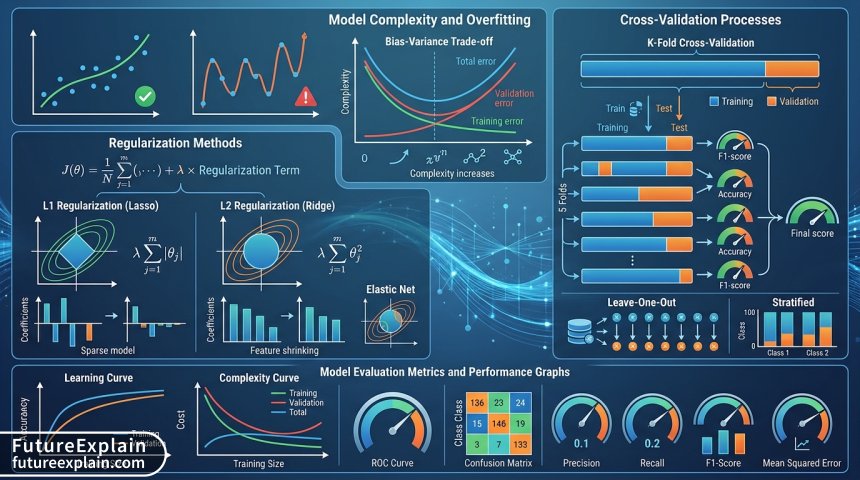
Overfitting occurs when a model learns patterns specific to your training data that don't generalize to real-world scenarios. In fine-tuning, this risk is particularly acute because you're working with smaller datasets than the original pre-training. The model can easily "memorize" your fine-tuning examples rather than learning transferable patterns.
Signs of overfitting include excellent performance on training data but poor performance on validation data, sudden performance degradation when encountering slightly different inputs, and models that are excessively sensitive to small input variations. Early detection is crucial for implementing corrective measures.
Regularization Techniques for Fine-Tuning
Regularization methods add constraints to your training process to prevent overfitting. For fine-tuning, consider these approaches:
- Weight Decay (L2 Regularization): Penalizes large parameter values, encouraging simpler models that generalize better.
- Dropout: Randomly "drops out" neurons during training, preventing co-adaptation and forcing the network to learn redundant representations.
- Early Stopping: Monitors validation performance and stops training when it begins to degrade, preventing the model from over-optimizing to training data.
- Layer-wise Learning Rate Decay: Applies different learning rates to different layers, often using smaller rates for earlier layers that contain more general knowledge.
The optimal regularization strategy depends on your specific model architecture, dataset size, and task complexity. Implement systematic experiments to identify the best combination for your use case.
Cross-Validation and Evaluation Strategies
Proper evaluation methodology is your first defense against overfitting. Standard train-validation-test splits can be insufficient for fine-tuning, especially with limited data. Consider these enhanced approaches:
- Nested Cross-Validation: For hyperparameter tuning and model selection, use nested cross-validation to avoid optimistic bias in performance estimates.
- Time-Based Splits: For temporal data, ensure your validation and test sets come from later time periods than your training data.
- Domain-Based Splits: If your application will encounter diverse domains, ensure your splits represent this diversity appropriately.
- Adversarial Validation: Train a classifier to distinguish between training and validation data—if it can do so easily, your splits may not be representative.
Beyond standard accuracy metrics, include robustness tests, fairness assessments, and real-world simulation in your evaluation protocol. Recent research presented at NeurIPS 2024 emphasizes the importance of "stress testing" fine-tuned models with out-of-distribution examples and adversarial perturbations to assess true generalization capability.
Visuals Produced by AI
Data Augmentation for Improved Generalization
Data augmentation artificially expands your training dataset by creating modified versions of existing examples. This technique is particularly valuable for fine-tuning with limited data. Effective augmentation strategies include:
- Text Data: Synonym replacement, back-translation, random insertion/deletion, or style transfer
- Image Data: Rotation, cropping, color jittering, or mixing images
- Audio Data: Speed variation, background noise addition, or pitch shifting
- Tabular Data: SMOTE (Synthetic Minority Over-sampling Technique) for imbalanced datasets
The key principle is that augmentations should preserve the semantic meaning of the original data while introducing useful variation. Start with simple augmentations and gradually increase complexity, monitoring validation performance at each stage.
Monitoring and Maintaining Fine-Tuned Models
Continuous Performance Monitoring
Responsible fine-tuning doesn't end when you deploy your model. Implement comprehensive monitoring to detect performance degradation, emerging biases, or changing data patterns. Key monitoring dimensions include:
- Accuracy Metrics: Track precision, recall, F1-score, or task-specific metrics over time
- Fairness Indicators: Monitor performance disparities across demographic groups or input categories
- Data Drift Detection: Identify when input data distributions change significantly from training data
- Concept Drift Detection: Detect when the relationship between inputs and outputs evolves
Establish alert thresholds that trigger investigation or retraining. Automated monitoring pipelines should integrate with your existing MLOps infrastructure for seamless operation.
Responsible Retraining Strategies
When monitoring indicates the need for retraining, approach it with the same responsibility as initial fine-tuning. Consider these guidelines:
- Version Control: Maintain detailed records of each model version, including training data, hyperparameters, and performance metrics
- Gradual Updates: For critical applications, consider gradual rollout strategies rather than immediate full replacement
- A/B Testing: Compare new model versions against current production models with proper statistical controls
- Rollback Planning: Always have tested rollback procedures in case new models underperform or exhibit unexpected behavior
Regular retraining should incorporate new data while preserving valuable knowledge from previous training cycles. Techniques like elastic weight consolidation or memory-aware synapses can help prevent catastrophic forgetting in continual learning scenarios.
Case Studies: Responsible Fine-Tuning in Practice
Healthcare Diagnostic Assistant
A medical technology company fine-tuned a vision transformer for skin lesion classification. Their responsible approach included:
- Collaborating with dermatologists from diverse geographical regions to ensure representative training data
- Implementing differential privacy during training to protect patient confidentiality
- Using extensive data augmentation to handle limited rare-condition examples
- Establishing rigorous validation with independent medical experts
- Creating clear documentation of model limitations and appropriate use cases
The resulting model achieved high accuracy while maintaining strong privacy protections and clearly communicated its appropriate scope of use.
Multilingual Customer Support Chatbot
A global e-commerce platform fine-tuned a language model for customer support across 12 languages. Their responsible practices included:
- Balanced data collection across all supported languages and regional dialects
- Native speaker annotation with comprehensive guidelines for cultural nuance
- Regularization techniques specifically tuned for low-resource languages
- Continuous monitoring for translation quality and cultural appropriateness
- Transparent reporting of performance variations across language groups
This approach resulted in more equitable service quality while respecting linguistic and cultural diversity.
Ethical Considerations and Compliance
Regulatory Compliance Framework
As AI regulation evolves globally, ensure your fine-tuning practices comply with relevant frameworks:
- GDPR (EU): Data protection, right to explanation, and privacy by design principles
- AI Act (EU): Risk-based classification and corresponding requirements
- State-level regulations (US): Emerging requirements from California, Colorado, and other states
- Sector-specific regulations: Healthcare (HIPAA), finance (various compliance requirements), etc.
Maintain thorough documentation of your data sources, labeling processes, and model development decisions. This documentation is essential not just for compliance but also for building trust with users and stakeholders.
Transparency and Explainability
Responsible fine-tuning requires transparency about what your model can and cannot do. Implement explainability techniques appropriate to your model type and application context:
- Feature Importance: Identify which input features most influence predictions
- Attention Visualization: For transformer models, visualize attention patterns to understand focus areas
- Counterfactual Explanations: Show how small input changes would affect predictions
- Confidence Calibration: Ensure prediction confidence scores accurately reflect true likelihood
Provide clear documentation about your model's capabilities, limitations, and appropriate use cases. This transparency builds user trust and enables informed decision-making.
Building a Responsible Fine-Tuning Culture
Technical practices alone are insufficient without the supporting organizational culture. Foster responsibility through:
- Education and Training: Regular workshops on ethical AI, bias detection, and responsible practices
- Multidisciplinary Teams: Include ethicists, domain experts, and diverse perspectives in development processes
- Clear Accountability: Define responsibility for different aspects of the fine-tuning lifecycle
- Incentive Alignment: Reward responsible practices and thorough validation, not just performance metrics
- External Review: Seek third-party audits or ethical reviews for high-stakes applications
Creating a culture of responsibility ensures that ethical considerations are integrated throughout your development process, not treated as an afterthought.
Practical Implementation Checklist
Use this checklist as a starting point for your responsible fine-tuning projects:
- Data Phase:
- [ ] Verify data provenance and usage rights
- [ ] Implement privacy-preserving techniques where needed
- [ ] Ensure diverse and representative data collection
- [ ] Establish data quality validation pipelines
- Labeling Phase:
- [ ] Create comprehensive annotation guidelines
- [ ] Train diverse annotators on bias awareness
- [ ] Implement quality control and inter-annotator agreement metrics
- [ ] Consider active learning for efficient annotation
- Training Phase:
- [ ] Apply appropriate regularization techniques
- [ ] Use robust cross-validation strategies
- [ ] Implement data augmentation where beneficial
- [ ] Monitor for signs of overfitting throughout training
- Evaluation Phase:
- [ ] Test on diverse validation sets including edge cases
- [ ] Assess fairness across relevant demographic dimensions
- [ ] Evaluate robustness to adversarial inputs
- [ ] Document model limitations and appropriate use cases
- Deployment Phase:
- [ ] Implement continuous monitoring for performance and fairness
- [ ] Establish responsible retraining procedures
- [ ] Create transparent documentation for users
- [ ] Plan for regular ethical reviews and updates
Conclusion
Responsible fine-tuning represents a fundamental shift in how we approach AI model development. It moves beyond pure performance optimization to consider the broader impact of our systems on users, society, and the environment. By implementing ethical data practices, systematic labeling methodologies, and robust overfitting prevention strategies, we can create AI systems that are not just powerful but also trustworthy, fair, and aligned with human values.
The journey toward responsible AI is ongoing, with new challenges and best practices emerging continually. Stay informed about developments in the field, participate in ethical AI communities, and regularly review and update your practices. Remember that responsibility in fine-tuning is not a constraint on innovation but rather a foundation for sustainable, impactful AI development that earns and maintains public trust.
As you embark on your fine-tuning projects, let this guide serve as a roadmap for navigating the complex terrain of ethical AI development. The choices you make in data collection, labeling, and model training will shape not just your immediate results but also the long-term trajectory of AI's role in society. Choose responsibility, and build AI systems that genuinely enhance human capabilities while respecting human dignity and diversity.
Further Reading
Share
What's Your Reaction?
 Like
1542
Like
1542
 Dislike
23
Dislike
23
 Love
345
Love
345
 Funny
67
Funny
67
 Angry
12
Angry
12
 Sad
8
Sad
8
 Wow
289
Wow
289


















The multilingual case study was particularly interesting. Handling cultural nuances in labeling is something we struggle with in our global customer support system.
Sophie, we've found that having native speakers from each region review annotations helps tremendously. Also, creating region-specific annotation guidelines for culturally sensitive content.
I'd love to see more examples of responsible retraining strategies. We're dealing with concept drift in our production models and it's challenging to update responsibly.
Carlos, we've been using A/B testing with gradual rollouts for retraining. Start with 1% traffic, monitor closely, then gradually increase if performance meets thresholds. This has helped us catch issues before they affect all users.
The regulatory compliance section is timely. With all the new AI regulations coming out, it's becoming essential to bake compliance into the development process from the start.
Great article! One question: How do you handle the trade-off between model performance and fairness metrics? In our experience, optimizing for one often hurts the other.
Raj, excellent question. This is indeed a challenging trade-off. We've had success with multi-objective optimization techniques and Pareto frontier analysis. Sometimes, small performance decreases can lead to significant fairness improvements. The key is establishing clear priorities based on your application context.
The active learning section was eye-opening. We've been labeling entire datasets upfront without considering efficiency. This could save us significant time and resources on our next project.
I appreciate the emphasis on building a responsible culture, not just technical practices. In my experience, organizational buy-in is often the biggest challenge in implementing ethical AI practices.
Fatima, you've highlighted a critical point. Technical practices alone aren't enough without organizational support. We've found success by starting with small, visible wins that demonstrate both ethical and business value. Regular education sessions with leadership have also been key.