
Building Chatbots That Hand Off Smoothly to Humans
This comprehensive guide explores the art and science of building AI chatbots that can smoothly hand off conversations to human agents when needed. We'll cover why handoffs are crucial for customer satisfaction, different triggering mechanisms for escalation, and practical implementation patterns using both no-code platforms and custom development. You'll learn about context preservation techniques, user experience considerations, and how to measure handoff success. The article includes real-world examples, common pitfalls to avoid, and step-by-step guidance for creating seamless transitions between automated and human support.

Why Chatbot Handoffs Matter More Than Ever
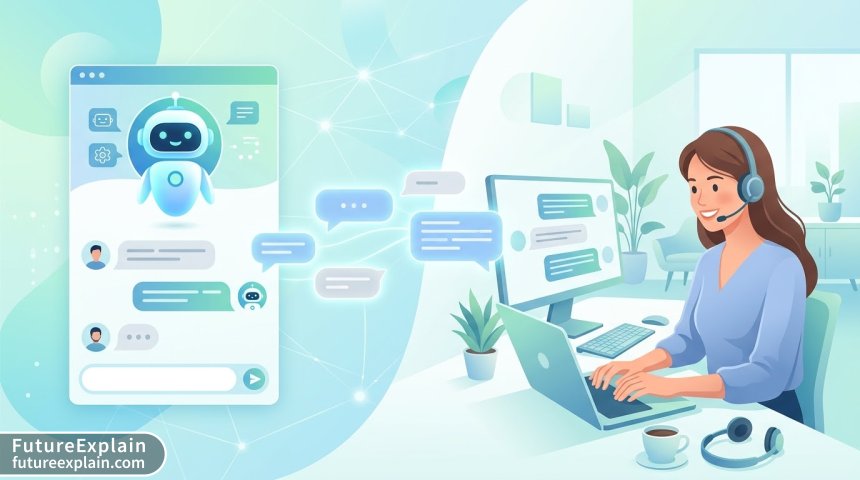
In today's customer service landscape, chatbots have become ubiquitous. From answering simple queries to guiding users through complex processes, AI-powered conversational agents handle millions of interactions daily. However, even the most sophisticated chatbots have limitations. There are moments when human intervention becomes necessary—when emotions run high, when questions become too complex, or when users simply prefer speaking with a person. The quality of the transition from bot to human can make or break the customer experience.
Poor handoffs frustrate users, forcing them to repeat information and restart conversations. Smooth handoffs, on the other hand, create seamless experiences where users feel understood and supported throughout their journey. Research shows that companies implementing effective handoff strategies see 40-60% higher customer satisfaction scores compared to those with disjointed bot-human transitions. The handoff moment represents a critical touchpoint where automation meets human empathy, and getting it right builds trust in both your technology and your brand.
Understanding Handoff Triggers: When to Pass to Humans
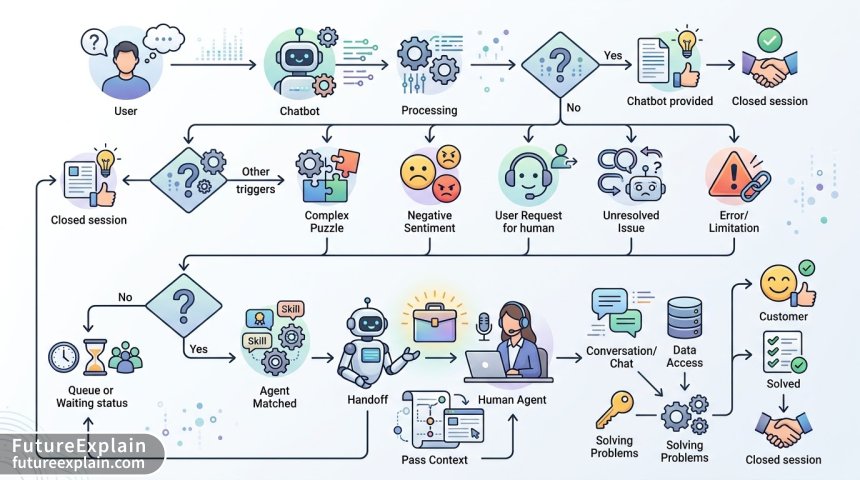
The first step in building effective handoff systems is understanding when transitions should occur. Handoff triggers can be categorized into several types:
- Explicit User Requests: When a user directly asks for a human agent, says "speak to a person," or uses phrases indicating frustration.
- Intent Recognition Failure: When the chatbot fails to understand user intent after multiple attempts or when confidence scores drop below a threshold.
- Emotional Detection: When sentiment analysis detects frustration, anger, or confusion in the user's messages.
- Complexity Thresholds: When questions require multi-step reasoning, personal judgment, or access to systems the chatbot can't reach.
- Process Limitations: When users reach points in workflows that require human authorization or verification.
- Time-Based Escalation: When conversations exceed a certain duration without resolution.
Industry data suggests optimal handoff timing occurs when chatbot confidence scores fall below 70% for intent recognition, or when sentiment analysis detects negative emotions with 80% confidence. These thresholds balance automation efficiency with human touch necessity.
Visuals Produced by AI
Designing the Handoff Experience: UX Considerations
The user experience during handoff significantly impacts perceived service quality. A well-designed handoff should feel like a natural progression rather than a failure of the system. Key UX principles include:
Transparency and Setting Expectations
Users should never be surprised by a handoff. Best practice involves the chatbot acknowledging its limitations and explaining why a human agent is being brought in. For example: "I'm having trouble accessing that specific account information. Let me connect you with Sarah from our support team who can help you directly." This approach maintains trust while setting clear expectations.
Minimizing Friction in the Transition
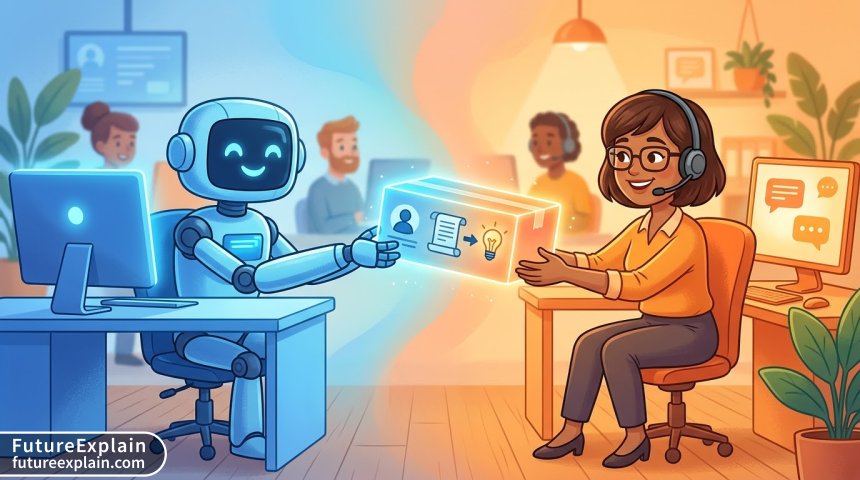
The handoff process should require minimal effort from users. Avoid asking them to repeat information already provided to the chatbot. Design systems that preserve conversation history, user context, and any authentication already completed. The ideal handoff feels like the human agent has been listening the whole time and simply joins the conversation.
Managing Wait Times Gracefully
If human agents aren't immediately available, the chatbot should manage expectations about wait times and potentially offer alternatives. Phrases like "Our team members are currently assisting other customers. You're next in queue with an estimated 3-minute wait. Would you like me to continue helping while you wait, or would you prefer a callback?" demonstrate consideration for the user's time.
Technical Implementation Patterns
Implementing smooth handoffs requires both architectural planning and technical execution. Let's explore several implementation patterns, from simple to sophisticated.
Pattern 1: The Direct Transfer Approach
The simplest handoff pattern involves direct transfer when specific triggers occur. This approach works well for explicit requests and clear intent failures. Implementation typically involves:
- Setting up webhook endpoints that detect handoff triggers
- Creating agent assignment logic (round-robin, skills-based, or availability-based)
- Establishing a messaging bridge between the chatbot platform and your agent dashboard
- Implementing context passing through shared session storage or database records
Many popular chatbot platforms like Dialogflow, Microsoft Bot Framework, and Rasa include built-in handoff capabilities that can be configured with minimal coding. For instance, Dialogflow's Human Agent Handoff feature allows you to transfer conversations to live agents on Dialogflow Messenger with preserved context.
Pattern 2: The Context-Preserving Bridge
More sophisticated implementations focus on preserving the full conversation context during handoff. This pattern involves:
- Storing the complete conversation history in a structured format
- Extracting key entities and intent classifications
- Generating a summary for the human agent
- Passing authentication tokens or user identifiers
Effective context preservation typically includes these data structures: user profile information, conversation transcript with timestamps, identified intents with confidence scores, extracted entities (dates, amounts, product names), sentiment analysis results, and any files or images shared during the conversation. This comprehensive context enables human agents to provide personalized, efficient support.
Visuals Produced by AI
Pattern 3: The Collaborative Hybrid Model
Some advanced implementations use a collaborative approach where chatbots and humans work together simultaneously. In this model:
- The chatbot remains active during human-agent conversations
- AI suggests responses or provides information to the human agent
- The human can choose to use automated responses or craft their own
- Over time, the system learns from human corrections and improvements
This pattern requires more complex architecture but offers significant benefits in agent training and continuous improvement of the chatbot. It's particularly effective for complex domains where human expertise complements AI capabilities.
Building with Popular Platforms
Let's examine handoff implementation across different popular chatbot development platforms.
Implementing Handoffs with Rasa
Rasa, an open-source conversational AI platform, provides flexible handoff capabilities through custom actions and integrations. A typical implementation involves:
# Example Rasa custom action for handoff
class ActionHandoffToHuman(Action):
    def name(self) -> Text:
        return "action_handoff_to_human"

    async def run(self, dispatcher, tracker, domain):
        # Check if handoff conditions are met
        if self.should_handoff(tracker):
            # Store conversation context
            context = self.prepare_context(tracker)
            agent_id = self.assign_agent(context)

            # Inform user
            dispatcher.utter_message(
                text="I'm connecting you with a human specialist who can help you better."
            )

            # Transfer to human agent system
            self.transfer_to_agent(tracker.sender_id, agent_id, context)

        return []
The Rasa approach emphasizes flexibility, allowing developers to integrate with any agent dashboard or customer service platform through REST APIs or WebSocket connections.
Dialogflow's Built-in Handoff Features
Dialogflow offers native handoff capabilities through its Human Agent Handoff feature. Configuration involves:
- Enabling the handoff feature in Dialogflow ES or CX settings
- Configuring handoff messages and transfer logic
- Setting up the agent interface (Dialogflow Messenger, custom implementation, or integration with live chat platforms)
- Defining when handoffs should occur based on intent, parameters, or fulfillment responses
Dialogflow's strength lies in its seamless integration with Google Cloud services and relatively quick setup time for basic handoff scenarios.
Building Custom Handoff Systems
For organizations needing complete control, building custom handoff systems offers maximum flexibility. A minimal custom handoff system might include:
- A conversation state management service
- A handoff decision engine evaluating multiple triggers
- An agent routing and assignment service
- A real-time messaging bridge between chatbot and agent interfaces
- A context preservation layer with structured data storage
Custom implementations allow for sophisticated features like predictive handoffs (anticipating when users will need human help based on behavioral patterns) and dynamic routing based on agent expertise, current workload, and conversation complexity.
Context Preservation Strategies
Preserving conversation context is arguably the most critical aspect of smooth handoffs. Users become frustrated when forced to repeat information. Effective context preservation involves multiple strategies:
Structured Data Capture
Throughout the chatbot conversation, systematically capture and structure key information:
- User identification and authentication status
- Extracted entities (dates, product names, account numbers)
- User intent and sub-intents with confidence scores
- Conversation history with message types and timestamps
- Attachments or files shared
- Previous steps completed in workflows
Intelligent Summarization
Human agents don't need to read every message in a long conversation. Implement summarization techniques that highlight:
- The user's primary issue or request
- Key information already provided
- Steps already attempted
- Current point of frustration or confusion
- Suggested next steps based on conversation analysis
Modern natural language processing techniques, including transformer-based models specifically trained for conversation summarization, can generate concise, informative summaries for human agents.
Secure Context Transfer
When transferring context between systems (especially between different security zones), implement secure transfer protocols:
- Encrypt sensitive information during transfer and at rest
- Implement proper authentication between chatbot and agent systems
- Comply with data protection regulations (GDPR, CCPA, etc.)
- Provide agents with appropriate access controls based on their role and the conversation sensitivity
Agent Experience and Training
Smooth handoffs require well-prepared human agents. The agent experience should include:
Comprehensive Agent Dashboard
Design agent interfaces that present handoff context clearly and efficiently. Key dashboard elements include:
- Conversation summary panel highlighting key information
- Full transcript with chatbot and user messages clearly distinguished
- Quick-action buttons for common responses or information retrieval
- Integration with relevant backend systems (CRM, knowledge base, billing systems)
- Notes section for agent observations and follow-up requirements
Agent Training for Handoff Conversations
Train agents to handle handoff conversations effectively:
- Acknowledge what the chatbot has already done or learned
- Use the provided context to avoid asking repetitive questions
- Understand common frustration points that lead to handoffs
- Know when and how to transition users back to the chatbot for efficiency
- Provide feedback on handoff triggers to improve the chatbot over time
Measuring Handoff Success
To improve your handoff system, you need to measure its effectiveness. Key metrics include:
- Handoff Rate: Percentage of conversations requiring human intervention
- First Contact Resolution after Handoff: Whether issues are resolved in the same interaction
- Customer Satisfaction (CSAT) for Handoff Conversations: Separate scores for handoff vs. bot-only conversations
- Context Utilization Rate: How often agents use the provided context vs. asking for repetition
- Average Handling Time with Context: Comparison of resolution times with and without preserved context
- Handoff-to-Resolution Ratio: Percentage of handoffs that lead to successful resolution
Industry benchmarks show successful implementations achieve: handoff rates of 15-25% (depending on complexity), CSAT scores for handoff conversations within 10% of human-only conversations, and context utilization rates above 80%. Tracking these metrics helps identify improvement opportunities.
Common Pitfalls and How to Avoid Them
Even well-intentioned handoff implementations can encounter problems. Common pitfalls include:
The "Black Hole" Handoff
Users get transferred but never connected to an agent, or wait times are excessive. Solution: Implement queue management with realistic wait time estimates and offer callback options.
Context Loss During Transfer
Agents receive conversations without sufficient context. Solution: Implement comprehensive context capture and test handoffs thoroughly before deployment.
Over-Escalation
Too many conversations get handed off unnecessarily, overwhelming human agents. Solution: Fine-tune handoff triggers and implement escalation confirmation steps.
Under-Escalation
Users who need human help can't get it, leading to frustration. Solution: Implement multiple handoff request mechanisms and regularly review failed conversations.
Agent Resistance
Human agents may resist or bypass the handoff system. Solution: Involve agents in design, provide proper training, and demonstrate how handoffs make their jobs easier.
Future Trends in Chatbot-Human Collaboration
The future of chatbot-human handoffs is moving toward even more seamless integration:
- Predictive Handoffs: AI that anticipates when users will need human help before they ask
- Real-time Agent Assist: AI providing suggestions to human agents during conversations
- Dynamic Role Switching: Systems where chatbots and humans can seamlessly take over different parts of conversations based on expertise
- Emotion-Aware Routing: Matching users with agents based on emotional state and agent personality
- Continuous Learning Systems: Chatbots that learn from human-agent interactions to handle similar future situations autonomously
Getting Started with Your First Handoff Implementation
If you're building your first chatbot with handoff capabilities, follow this step-by-step approach:
- Start Simple: Implement explicit handoff triggers first (when users directly ask for humans)
- Choose Your Platform: Select a chatbot platform with built-in handoff support if you're new to this
- Design the Conversation Flow: Map out where handoffs might occur in your dialogue trees
- Implement Basic Context Preservation: Start with user identification and the last few messages
- Set Up Agent Notifications: Ensure human agents know when they receive handoff conversations
- Test Thoroughly: Conduct extensive testing with different handoff scenarios
- Measure and Iterate: Implement basic metrics and refine based on real usage
Conclusion
Building chatbots that hand off smoothly to humans is both an art and a science. It requires understanding user psychology, designing thoughtful experiences, and implementing robust technical systems. The most successful implementations view handoffs not as failures of automation but as strategic design decisions that leverage the strengths of both AI and human intelligence.
Remember that every handoff represents an opportunity to build trust with your users. When done well, these transitions demonstrate that your organization values both efficiency and empathy, technology and human connection. As conversational AI continues to evolve, the ability to create seamless bridges between automated and human support will remain a critical differentiator for customer experience excellence.
Further Reading: