AI in HR & Recruiting: Screening, Bias, and Fairness
This comprehensive guide explores how artificial intelligence is transforming HR and recruiting processes, with particular focus on managing algorithmic bias and ensuring fairness. We examine the current state of AI in talent acquisition, from resume screening to video interview analysis, while addressing the critical ethical considerations. The article provides a practical 5-step framework for auditing AI hiring systems for bias, compares leading AI recruitment tools and their fairness features, and offers actionable strategies for implementing ethical AI in HR that complies with evolving regulations like the EU AI Act. Real-world case studies demonstrate successful bias mitigation, and we outline a complete implementation roadmap for organizations of all sizes seeking to leverage AI while maintaining diversity, equity, and inclusion goals.


Introduction: The AI Revolution in Human Resources
The human resources landscape is undergoing a profound transformation, with artificial intelligence emerging as both a powerful tool and a significant challenge. According to recent industry surveys, over 65% of organizations now use some form of AI in their hiring processes, with adoption rates accelerating by approximately 30% annually. This technological shift promises unprecedented efficiency in talent acquisition—reducing time-to-hire by up to 70% in some implementations—while simultaneously raising critical questions about fairness, bias, and ethical implementation.
The intersection of AI and HR represents a particularly sensitive domain where algorithmic decisions can significantly impact people's careers and livelihoods. Unlike other business applications, HR AI systems make judgments about human potential, capability, and fit—decisions that carry substantial ethical weight and legal implications. As organizations increasingly rely on these systems for resume screening, video interview analysis, skills assessment, and candidate ranking, understanding how to implement AI responsibly has become not just a competitive advantage but a legal and moral imperative.
This comprehensive guide explores the current state of AI in HR and recruiting, with particular emphasis on the critical issues of bias and fairness. We'll examine how these systems work, where bias can emerge (sometimes in surprisingly subtle ways), and provide practical frameworks for implementing AI in HR that enhances rather than undermines diversity, equity, and inclusion goals. Whether you're an HR professional considering AI adoption, a business leader concerned about compliance, or simply interested in the future of work, this article will provide the insights needed to navigate this complex landscape responsibly.
How AI is Currently Used in HR and Recruiting
Artificial intelligence has permeated nearly every aspect of the talent acquisition lifecycle, creating what industry analysts call "the augmented recruiter." Understanding these applications is essential before we can effectively address their potential biases. The current AI applications in HR fall into several distinct categories, each with its own implementation challenges and fairness considerations.
Resume Screening and Candidate Ranking
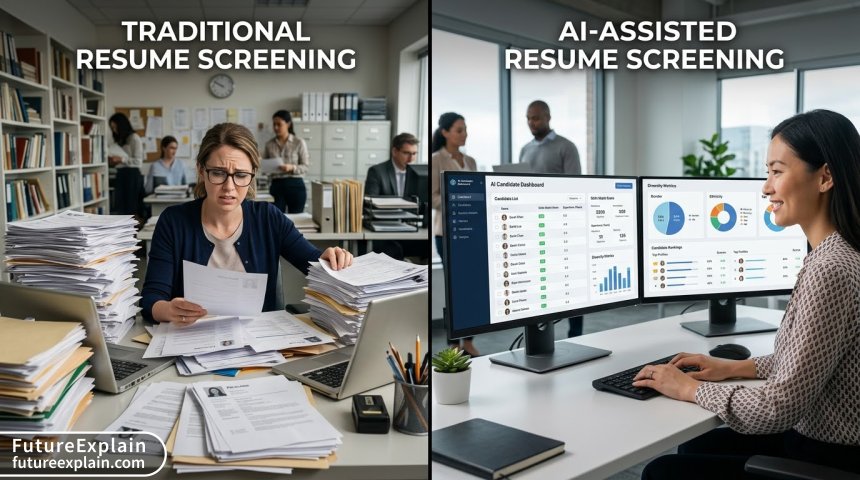
Perhaps the most widespread application of AI in HR is automated resume screening. Traditional manual screening processes typically review only 20-30% of applications thoroughly due to volume constraints, leading to potentially qualified candidates being overlooked. AI systems, by contrast, can process 100% of applications using natural language processing (NLP) to extract skills, experience, and qualifications. These systems typically use machine learning models trained on historical hiring data to identify patterns associated with successful hires.
However, this training approach creates the first major fairness challenge: if historical hiring data contains human biases (conscious or unconscious), the AI system will learn and potentially amplify these patterns. Research from the National Institute of Standards and Technology (NIST) has shown that some resume screening algorithms can disadvantage candidates with non-traditional career paths, gaps in employment (often correlated with caregiving responsibilities), or degrees from less prestigious institutions—even when these factors don't correlate with job performance.
Video Interview Analysis
A more recent and controversial application involves AI analysis of video interviews. These systems use computer vision and audio analysis to assess candidates' facial expressions, tone of voice, word choice, and even micro-expressions. Proponents argue they can reduce interview bias by focusing on consistent, measurable indicators rather than subjective "gut feelings." Companies like HireVue and Pymetrics have developed sophisticated platforms that claim to predict cultural fit and job performance based on these behavioral signals.
The fairness concerns here are substantial. Research from the AI Now Institute at New York University has raised alarms about potential demographic bias in these systems. Facial analysis algorithms have historically shown lower accuracy for people with darker skin tones, and speech recognition systems can disadvantage non-native speakers or those with regional accents. Furthermore, the very concept of measuring "cultural fit" through behavioral signals risks encoding existing organizational homogeneity into the hiring process.
Skills Assessment and Gamification
An increasingly popular approach uses AI-powered games and simulations to assess cognitive abilities, problem-solving skills, and job-specific competencies. These tools aim to provide more objective measures of capability than traditional resumes or interviews. Platforms like Arctic Shores and Toggl Hire present candidates with interactive challenges that generate thousands of data points about their approach to problems, resilience, and learning agility.
While these methods can reduce certain types of bias (such as educational pedigree bias), they introduce new fairness considerations. The design of games and simulations may favor candidates familiar with particular interfaces or gaming conventions. Additionally, the algorithms that interpret performance data must be carefully validated to ensure they're measuring job-relevant skills rather than extraneous factors. A 2023 study in the Journal of Applied Psychology found that some gamified assessments showed significant age correlation, potentially disadvantaging older applicants.
Chatbots and Candidate Engagement
AI-powered chatbots handle initial candidate interactions, schedule interviews, answer frequently asked questions, and provide status updates. These systems improve candidate experience through 24/7 availability and consistent communication while freeing HR staff for higher-value tasks. Tools like Mya and Olivia automate these interactions using natural language processing.
The fairness considerations here center on accessibility and language. Chatbots must be designed to understand diverse communication styles, accommodate candidates with disabilities, and avoid making assumptions based on language patterns. Poorly designed chatbots might misinterpret non-standard grammar or colloquial expressions as lack of professionalism, potentially disadvantaging candidates from different cultural or educational backgrounds.
Predictive Analytics for Retention and Development
Beyond hiring, AI systems analyze employee data to predict turnover risk, identify high-potential employees, and recommend development opportunities. These systems use machine learning to detect patterns in employee behavior, performance metrics, and engagement indicators that precede voluntary departures or signal readiness for advancement.
The bias risks in predictive analytics are particularly insidious because they can create self-reinforcing cycles. If historical promotion data reflects biased human decisions, the AI may learn to recommend similar candidates, perpetuating existing disparities. Furthermore, the indicators used to predict turnover (such as decreased email activity or late arrivals) might correlate with caregiving responsibilities or health issues rather than actual disengagement, potentially disadvantaging already vulnerable employees.
The Bias Problem: Understanding How AI Can Discriminate
To effectively address bias in AI hiring systems, we must first understand how and where discrimination can enter these systems. Bias in AI is rarely the result of malicious intent but rather emerges from subtle technical and design decisions throughout the development pipeline. Research from organizations like the Algorithmic Justice League and Partnership on AI has identified several distinct categories of bias that can affect HR systems.
Data Bias: Garbage In, Garbage Out
The most fundamental source of bias lies in the training data. AI systems learn patterns from historical data, and if that data reflects past discrimination, the AI will likely perpetuate it. This phenomenon, known as "historical bias," is particularly problematic in HR contexts where decades of employment discrimination may be encoded in hiring records.
For example, if a company has historically hired fewer women for technical roles (a common pattern in many industries), an AI trained on this data may learn to deprioritize female candidates for similar positions in the future—even if the historical pattern resulted from biased human decisions rather than actual performance differences. A landmark 2018 study by researchers at Carnegie Mellon University found that Google's ad system showed high-paying job ads to men more frequently than women, demonstrating how historical data patterns can encode societal biases.
Algorithmic Design Bias
Even with perfectly balanced data, bias can emerge from how algorithms are designed and optimized. Many machine learning systems are designed to maximize accuracy or efficiency, which can inadvertently disadvantage minority groups. For instance, if an algorithm is optimized to identify the "best" candidates based on historical top performers, and those performers come predominantly from one demographic group, the system may develop features that disproportionately favor that group.
This type of bias is particularly challenging because it's mathematically subtle. An algorithm might achieve 90% overall accuracy while performing significantly worse for specific demographic groups—a phenomenon known as "disparate impact." The algorithm designers might not notice this disparity if they only monitor overall performance metrics. Research from MIT's Computer Science and Artificial Intelligence Laboratory has shown that facial recognition systems from major tech companies had error rates up to 34% higher for dark-skinned women compared to light-skinned men, despite high overall accuracy rates.
Measurement Bias
Bias can also enter through what we choose to measure and how we measure it. In HR contexts, this often manifests as using proxy measures that correlate with demographics. For example, using "college prestige" as a predictor of job performance might disadvantage candidates from less affluent backgrounds who couldn't afford elite universities, even if their actual capabilities are equivalent.
Another common measurement bias involves using convenience metrics that are easy to collect but not necessarily valid predictors. For instance, some video interview analysis systems measure "communication clarity" based on speech patterns that might correlate with native language or regional dialect rather than actual communication effectiveness. A 2022 study published in the Proceedings of the National Academy of Sciences found that several commercial speech analysis tools showed significant bias against speakers with certain accents, even when controlling for content quality.
Interaction and Feedback Loop Bias
Once deployed, AI systems can create self-reinforcing bias cycles through their interactions with users. If an AI system consistently recommends candidates from certain demographics, HR professionals may come to trust those recommendations more, creating a feedback loop that amplifies initial biases. This phenomenon, known as "automation bias," occurs when humans over-rely on algorithmic recommendations, even in the face of contradictory evidence.
Additionally, candidate behavior can be influenced by the AI system itself. If candidates perceive (correctly or incorrectly) that an AI system favors certain types of resumes or interview responses, they may adapt their behavior accordingly, potentially disadvantaging those who are less aware of these patterns or less willing to "game the system." This creates a form of algorithmic gatekeeping that can exclude authentic candidates in favor of those who understand how to perform for the algorithm.
Deployment Context Bias
Finally, bias can emerge from how and where AI systems are deployed. An algorithm that works fairly in one context might produce biased results in another due to demographic differences in the applicant pool or variations in job requirements. For example, a personality assessment algorithm validated on office workers in North America might perform poorly and unfairly when applied to factory workers in Southeast Asia due to cultural differences in communication styles and value expressions.
This context sensitivity is often overlooked in AI deployment. Companies frequently purchase off-the-shelf AI tools without considering whether they've been validated on populations similar to their applicant pool. According to research from the Center for Democracy and Technology, fewer than 30% of companies using AI hiring tools conduct any validation studies specific to their own applicant demographics.
Regulatory Landscape: Legal Frameworks for AI in HR
The growing awareness of algorithmic bias in hiring has prompted regulatory responses worldwide. Understanding these legal frameworks is essential for any organization implementing AI in HR, as non-compliance can result in significant legal liability, reputational damage, and financial penalties.
The EU AI Act and Its Implications
The European Union's Artificial Intelligence Act, which became fully applicable in 2025, represents the most comprehensive regulatory framework for AI systems to date. Under this legislation, AI systems used in employment, worker management, and access to self-employment are classified as "high-risk" applications. This classification triggers stringent requirements including:
- Implementation of risk management systems throughout the AI lifecycle
- Use of high-quality datasets to minimize risks and discriminatory outcomes
- Detailed documentation of the system's logic, capabilities, and limitations
- Human oversight measures to ensure proper monitoring
- High level of robustness, security, and accuracy
- Registration in an EU database for high-risk AI systems
Organizations using AI in HR within the EU must conduct conformity assessments, maintain technical documentation, and ensure human oversight of automated decisions. Crucially, the AI Act requires that these systems be designed and developed in such a way that natural persons can oversee their functioning. This means HR professionals must have the ability to understand, intervene, and correct algorithmic decisions—a requirement that has significant implications for system design and training.
United States Regulations and Guidelines
In the United States, AI hiring systems are subject to existing employment discrimination laws, particularly Title VII of the Civil Rights Act of 1964 and the Americans with Disabilities Act (ADA). The Equal Employment Opportunity Commission (EEOC) has issued guidance clarifying that existing anti-discrimination laws apply to algorithmic hiring systems just as they do to human decisions.
Key legal principles from U.S. regulation include:
- Disparate Treatment: Intentional discrimination based on protected characteristics remains illegal whether performed by humans or algorithms.
- Disparate Impact: Even neutral algorithms that disproportionately disadvantage protected groups may be illegal unless the employer can demonstrate business necessity and lack of alternatives.
- Reasonable Accommodation: AI systems must accommodate disabilities, which may require alternative formats or assessment methods.
- Transparency Requirements: Several states, including Illinois and Maryland, have passed laws requiring disclosure when AI is used in hiring and, in some cases, providing candidates with explanations of algorithmic decisions.
The EEOC's 2023 guidance specifically addresses algorithmic fairness, stating that employers are responsible for their AI tools' compliance with anti-discrimination laws, regardless of whether the tools are developed in-house or purchased from vendors. This "employer liability" principle means companies cannot avoid responsibility by claiming they didn't understand how their AI systems work.
Global Regulatory Variations
Beyond the EU and US, various countries have implemented or proposed regulations specifically addressing AI in employment:
- Canada: The Artificial Intelligence and Data Act (AIDA) proposes requirements for "high-impact" AI systems including those used in employment, with particular focus on bias assessment and mitigation.
- United Kingdom: While not creating new AI-specific laws, the UK's Equality Act 2010 applies to algorithmic decisions, and the Information Commissioner's Office has issued detailed guidance on AI and data protection in employment contexts.
- Brazil: The Brazilian General Data Protection Law (LGPD) includes provisions relevant to automated decision-making in employment, requiring transparency and the ability to request human review.
- China: Regulations on Algorithmic Recommendation Management require transparency about how algorithms work and provide users with options to turn off algorithmic recommendations—provisions that apply to employment platforms.
The regulatory landscape is evolving rapidly, with new proposals emerging regularly. Organizations implementing AI in HR must adopt a proactive compliance strategy that includes ongoing monitoring of regulatory developments in all jurisdictions where they operate. This is particularly challenging for multinational companies that must navigate conflicting or overlapping requirements across different legal systems.
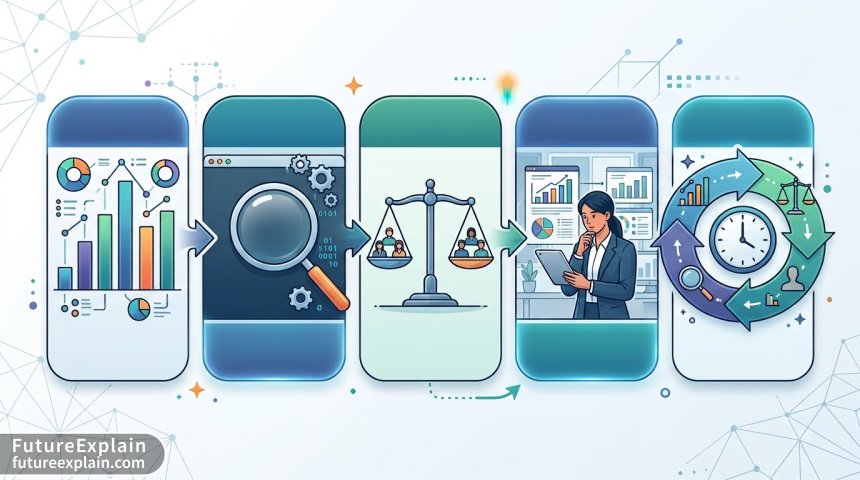
Practical Framework: 5-Step Bias Audit for AI Hiring Systems
To help organizations implement AI in HR responsibly, we've developed a comprehensive 5-step bias audit framework based on best practices from leading researchers, compliance experts, and organizations that have successfully implemented fair AI systems. This framework provides a practical, actionable approach to identifying and mitigating bias at every stage of the AI lifecycle.
Step 1: Data Assessment and Bias Detection
Begin by thoroughly examining the data used to train and operate your AI system. This involves both statistical analysis and contextual understanding of how the data was collected and what it represents.
Key Actions:
- Analyze training data for representation across protected characteristics (where legally permissible to collect this data)
- Identify potential proxy variables that might correlate with protected characteristics
- Assess data quality issues like missing values that might disproportionately affect certain groups
- Document the data collection process and any potential sampling biases
Practical Tool: Use disparity metrics to quantify potential bias in your data. Common metrics include: - Demographic parity differences - Equal opportunity differences - Predictive parity gaps
For example, if you're using historical hiring data, calculate the selection rates for different demographic groups in that historical data. Significant disparities (typically measured using the "four-fifths rule" or more sophisticated statistical tests) indicate potential bias in the training data that the AI system might learn.
Step 2: Algorithm Transparency and Documentation
Document exactly how your AI system makes decisions, to the extent possible given proprietary algorithms. This documentation, sometimes called an "algorithmic impact assessment" or "model card," should include:
- The system's intended use and limitations
- Performance metrics across different demographic groups
- Key factors influencing decisions and their relative weights
- Known biases and mitigation strategies implemented
- Testing methodology and results
Practical Tool: Create a standardized documentation template that includes: 1. System purpose and scope 2. Data sources and characteristics 3. Algorithm description (without revealing trade secrets) 4. Performance metrics by subgroup 5. Fairness testing results 6. Limitations and caveats 7. Maintenance and monitoring procedures
This documentation serves multiple purposes: it helps internal stakeholders understand the system, supports regulatory compliance, and provides transparency to candidates when required by law.
Step 3: Outcome Testing and Validation
Test your AI system's outcomes for disparate impact using both historical data and controlled experiments. This involves comparing selection rates, scores, or recommendations across different demographic groups.
Key Actions:
- Conduct regular audits of system outcomes by demographic group
- Use statistical tests to identify significant disparities
- Test the system with synthetic or anonymized data representing diverse profiles
- Validate that the system's predictions actually correlate with job performance
Practical Tool: Implement an A/B testing framework where some applications are processed through the AI system and others through traditional methods (or a different AI configuration). Compare outcomes to identify any disproportionate impacts. This approach, while resource-intensive, provides the most direct evidence of how the system performs in practice.
Step 4: Human Oversight and Intervention Mechanisms
Ensure meaningful human oversight of AI decisions, particularly for high-stakes determinations like hiring or promotion recommendations. Human oversight should be substantive, not just ceremonial.
Key Actions:
- Design clear procedures for human review of AI recommendations
- Provide HR staff with training on interpreting AI outputs and identifying potential bias
- Implement override mechanisms with documented justifications
- Establish escalation procedures for disputed algorithmic decisions
Practical Tool: Create a "human-in-the-loop" dashboard that highlights cases where: 1. The AI's confidence score is below a threshold 2. The recommendation contradicts other available information 3. The candidate profile includes factors the AI might not properly weigh 4. Random samples for quality assurance
This dashboard should provide HR professionals with the context needed to make informed decisions about whether to accept, modify, or reject the AI's recommendation.
Step 5: Continuous Monitoring and Improvement
Bias auditing is not a one-time activity but an ongoing process. Implement systems to continuously monitor for bias as your AI system operates and as your applicant pool evolves.
Key Actions:
- Establish regular review cycles (quarterly at minimum)
- Monitor for concept drift—changes in how features relate to outcomes over time
- Track feedback from candidates and hiring managers
- Update the system as new fairness techniques emerge
Practical Tool: Develop a fairness monitoring dashboard that tracks key metrics over time, including: - Selection rates by demographic group - Performance correlation for hired candidates - Candidate satisfaction scores - Appeal or challenge rates - Algorithmic confidence scores distribution
Set up automated alerts for when metrics exceed predefined fairness thresholds, triggering immediate investigation.
Comparative Analysis: AI Recruitment Tools and Their Fairness Approaches
The market for AI recruitment tools has expanded dramatically, with different vendors taking varied approaches to fairness and bias mitigation. Understanding these differences is crucial for selecting tools that align with your organization's fairness goals and compliance requirements.
Major AI Recruitment Platforms Comparison
1. HireVue - Primary Technology: Video interview analysis with natural language processing and computer vision - Fairness Features: Regular bias audits, demographic parity reporting, options to turn off facial analysis - Known Concerns: Historical issues with facial analysis accuracy across demographics; now offers "audio-only" mode - Compliance: EEOC compliance framework, GDPR documentation available
2. Pymetrics - Primary Technology: Neuroscience-based games assessing cognitive and emotional traits - Fairness Features:Known Concerns: Game design may favor certain cultural backgrounds; ongoing validation required - Compliance: EU AI Act readiness framework, regular third-party audits
3. Eightfold.ai - Primary Technology: Talent intelligence platform with deep learning for skills matching - Fairness Features: Bias detection in job descriptions, anonymized screening options, diversity analytics - Known Concerns: Relies heavily on resume data which may contain historical biases - Compliance:
4. Ideal - Primary Technology: Resume screening and candidate ranking with explainable AI - Fairness Features: Bias alerts, customizable fairness thresholds, transparent scoring - Known Concerns: Limited video interview capabilities; primarily text-based - Compliance: ADA accessibility features, transparency reports
5. SeekOut - Primary Technology: Talent sourcing with diversity-focused search capabilities - Fairness Features: Diversity search filters, bias-free job description tools, inclusion analytics - Known Concerns: Sourcing rather than assessment focused; limited behavioral prediction - Compliance: Integration with compliance monitoring tools
6. Harver - Primary Technology: Pre-employment assessments with situational judgment tests - Fairness Features: Cultural adaptability assessments, localization for different regions - Known Concerns: May not translate well across all cultural contexts without adaptation - Compliance: Regional compliance adaptations available
7. XOR.ai - Primary Technology: Conversational AI for recruitment automation - Fairness Features: Multi-language support, accessibility features, bias monitoring in conversations - Known Concerns: Chatbot may misinterpret non-standard language patterns - Compliance: Data privacy compliance across multiple regions
8. Textio - Primary Technology: Augmented writing for job descriptions with bias detection - Fairness Features: Gender-neutral language suggestions, inclusive phrasing recommendations - Known Concerns: Limited to job description optimization only - Compliance: Integration with ATS systems for continuous improvement
Selecting the Right Tool: A Decision Framework
Choosing an AI recruitment tool requires balancing multiple factors including fairness considerations, compliance needs, and organizational context. We recommend the following decision framework:
Step 1: Define Your Fairness Priorities What specific bias risks are most relevant to your organization? Consider your industry, applicant demographics, historical patterns, and diversity goals. Different tools address different types of bias, so align your priorities with vendor capabilities.
Step 2: Evaluate Transparency and Auditability Can the vendor provide detailed documentation of their fairness testing? Are they willing to undergo independent audits? Do they offer transparency into how their algorithms work (to the extent possible without revealing trade secrets)?
Step 3: Assess Customization and Control Can you adjust fairness parameters to align with your specific context and values? Does the tool allow you to turn off certain features (like facial analysis) if you have concerns? How much control do you have over the decision criteria?
Step 4: Review Compliance Features Does the tool support compliance with relevant regulations in your operating regions? Does it provide documentation needed for regulatory reporting? Are there features specifically designed to meet legal requirements like those in the EU AI Act?
Step 5: Consider Implementation Support What training and support does the vendor provide for ensuring fair use? Do they offer guidance on interpreting results and identifying potential bias? Is there ongoing support for monitoring and improvement?
Implementation Roadmap: Deploying Fair AI in Your Organization
Successfully implementing AI in HR while managing bias risks requires careful planning and execution. Based on case studies from organizations that have navigated this transition successfully, we've developed a phased implementation roadmap.
Phase 1: Preparation and Assessment (Months 1-2)
Before introducing any AI tools, establish the foundation for responsible implementation.
Key Activities:
- Conduct a current-state assessment of your hiring processes and identify pain points
- Establish a cross-functional implementation team including HR, legal, IT, and diversity specialists
- Define clear objectives and success metrics aligned with business goals and fairness principles
- Review existing data quality and identify gaps that need addressing before AI implementation
- Develop a governance framework specifying roles, responsibilities, and decision-making processes
Critical Deliverable: AI Ethics Charter documenting your organization's principles, commitments, and governance structure for AI in HR.
Phase 2: Tool Selection and Pilot Design (Months 3-4)
Select appropriate tools and design controlled pilots to test their effectiveness and fairness.
Key Activities:
- Evaluate potential tools using the decision framework outlined above
- Conduct proof-of-concept testing with historical data to identify potential bias issues
- Design pilot programs with clear success criteria and fairness metrics
- Develop training materials for HR staff who will use the system
- Establish monitoring protocols for the pilot phase
Critical Deliverable: Pilot implementation plan with specific fairness evaluation criteria and contingency plans.
Phase 3: Limited Pilot Implementation (Months 5-7)
Run controlled pilots to gather real-world data on system performance and fairness.
Key Activities:
- Implement the AI system for a limited set of roles or locations
- Run parallel processes (AI-assisted and traditional) for comparison
- Collect detailed data on outcomes, candidate experience, and HR efficiency
- Conduct bias audits using the 5-step framework on pilot data
- Interview candidates and hiring managers about their experiences
Critical Deliverable: Comprehensive pilot evaluation report with quantitative fairness analysis and qualitative feedback.
Phase 4: Refinement and Scaling (Months 8-12)
Based on pilot results, refine the system and processes before broader implementation.
Key Activities:
- Analyze pilot data to identify necessary adjustments to the system or processes
- Refine algorithms, interfaces, or procedures based on findings
- Develop full implementation plan including change management strategy
- Create comprehensive training programs for all users
- Establish ongoing monitoring and maintenance procedures
Critical Deliverable: Refined implementation plan with updated fairness safeguards based on pilot learnings.
Phase 5: Full Implementation and Continuous Improvement (Month 13+)
Roll out the system more broadly while maintaining rigorous fairness monitoring.
Key Activities:
- Implement the refined system across targeted roles or locations
- Monitor fairness metrics continuously using the dashboard developed in Phase 1
- Conduct regular bias audits (at least quarterly initially, then semi-annually)
- Update training and procedures based on ongoing learnings
- Stay informed about regulatory developments and update compliance accordingly
Critical Deliverable: Ongoing fairness monitoring dashboard with regular review cycles and improvement initiatives.
Case Studies: Lessons from Real-World Implementations
Examining how organizations have successfully (and unsuccessfully) implemented AI in HR provides valuable lessons for others embarking on this journey.
Case Study 1: Global Technology Company - Successful Bias Mitigation
A Fortune 500 technology company implemented AI resume screening for technical roles while achieving measurable improvements in diversity hiring.
Challenge: The company faced overwhelming application volumes (200,000+ annually for technical roles) with a hiring process that showed demographic disparities, particularly for women and underrepresented minorities in engineering positions.
Solution: They implemented a customized AI screening tool with several key fairness features: 1. Anonymized screening: Removed names, photos, and educational institutions from initial screening 2. Skills-based matching: Focused on technical skills and project experience rather than pedigree 3. Continuous calibration: Regularly updated the algorithm based on performance data of hired candidates 4. Human oversight: Required human review of all AI-rejected candidates with certain experience patterns
Results: After 18 months: - Time-to-screen reduced by 65% - Hiring of women in technical roles increased by 24% - Hiring of underrepresented minorities increased by 18% - Quality of hire (based on first-year performance reviews) improved by 12% - Candidate satisfaction scores increased significantly
Key Lesson: Combining AI efficiency with thoughtful human oversight and continuous calibration created a system that improved both fairness and effectiveness.
Case Study 2: Retail Chain - Learning from Early Mistakes
A national retail chain faced backlash after implementing an AI video interview system that showed demographic disparities.
Challenge: The company implemented an off-the-shelf video interview analysis tool to handle high-volume seasonal hiring. After the first hiring cycle, internal analysis revealed that candidates with certain accents and speech patterns received consistently lower scores, despite no correlation with actual job performance.
What Went Wrong: 1. Inadequate testing: The company didn't test the system with their specific applicant demographics before full implementation 2. Over-reliance on vendor claims: They accepted the vendor's fairness claims without independent verification 3. Lack of monitoring: No system was in place to detect disparate impacts after implementation 4. Poor communication: Candidates weren't properly informed about how the AI system worked
Corrective Actions Taken: 1. Suspended use of the problematic features (facial and speech analysis) 2. Implemented a comprehensive bias audit of all AI hiring tools 3. Developed internal expertise in algorithmic fairness 4. Created candidate communication guidelines explaining AI use 5. Established regular fairness monitoring protocols
Key Lesson: Independent testing and ongoing monitoring are essential, especially when using third-party AI tools. Vendor claims should be verified, not taken at face value.
Case Study 3: Healthcare Network - Phased Approach Success
A large healthcare network successfully implemented AI across multiple hiring categories using a carefully phased approach.
Challenge: The network needed to hire thousands of clinical and non-clinical staff annually across diverse locations with varying applicant demographics. They wanted to improve efficiency while ensuring fairness across all demographic groups.
Solution: They implemented a phased approach: 1. Phase 1: AI for non-clinical administrative roles only 2. Phase 2: Expanded to clinical support roles after 6 months of successful operation 3. Phase 3: Implemented for specialized clinical roles after 12 months 4. Phase 4: Full implementation after 18 months
At each phase, they: - Conducted pre-implementation bias testing with role-specific data - Trained hiring managers on the system's proper use and limitations - Established role-specific fairness metrics and monitoring protocols - Collected feedback from candidates and hiring managers
Results: - Successful implementation across all hiring categories - No significant disparate impact detected in any demographic group - Hiring efficiency improved by 40% overall - Candidate diversity maintained or improved across all categories
Key Lesson: A phased, role-specific implementation allows for learning and adjustment, reducing risks while building organizational capability gradually.
Future Trends: The Evolving Landscape of AI in HR
As AI technology continues to advance and regulatory frameworks mature, several trends are shaping the future of AI in HR and recruiting.
Trend 1: Explainable AI (XAI) for HR Decisions
The demand for transparency in algorithmic decisions is driving development of explainable AI systems specifically designed for HR contexts. These systems don't just provide recommendations but also explain the reasoning behind those recommendations in terms understandable to HR professionals and candidates.
Future systems will likely provide: - Natural language explanations of why a candidate was ranked a certain way - Visualizations showing which factors contributed most to the decision - Comparative analysis showing how similar candidates were evaluated - "What-if" scenarios showing how changing certain factors would affect the evaluation
This transparency serves multiple purposes: it builds trust with candidates, supports regulatory compliance, and helps HR professionals make better-informed decisions about when to accept or override algorithmic recommendations.
Trend 2: Federated Learning for Privacy-Preserving AI
Privacy concerns and data protection regulations are driving interest in federated learning approaches for HR AI. Instead of centralizing training data from multiple organizations, federated learning allows models to be trained across decentralized devices or servers holding local data samples.
In HR contexts, this could enable: - Collaborative improvement of AI models without sharing sensitive employee data - Development of more robust and fair models trained on diverse datasets - Compliance with data localization requirements in different jurisdictions - Reduced privacy risks compared to centralized data approaches
While still emerging, federated learning represents a promising approach to balancing the need for large, diverse training datasets with privacy and data protection requirements.
Trend 3: Multimodal Assessment Integration
Future AI hiring systems will likely integrate multiple assessment modalities—text, video, audio, interactive simulations—to create more comprehensive and fair candidate evaluations. By combining information from different sources, these systems can potentially overcome limitations of single-modality approaches.
For example, a system might: - Analyze resume content for skills and experience - Assess communication skills through video interviews - Evaluate problem-solving through interactive simulations - Check for consistency across different assessment components
The integration of multiple modalities could provide a more complete picture of candidate capabilities while allowing the system to identify and discount assessment components that show demographic bias.
Trend 4: Personalized Candidate Experiences
AI is enabling more personalized candidate experiences that adapt to individual needs and preferences. This personalization can support fairness by accommodating different communication styles, accessibility needs, and assessment preferences.
Future systems might: - Adjust communication style based on candidate preferences - Provide assessment alternatives for candidates with disabilities - Offer practice opportunities tailored to individual needs - Adapt interview scheduling based on candidate constraints
By making the hiring process more accessible and accommodating, these personalized approaches can help level the playing field for candidates from diverse backgrounds.
Trend 5: Regulatory Technology (RegTech) Integration
As regulations governing AI in HR become more complex, we're seeing growing integration of regulatory technology directly into AI hiring systems. These RegTech features help organizations maintain compliance through automated monitoring, reporting, and adjustment.
Future systems will likely include: - Automated compliance checks against multiple regulatory frameworks - Real-time alerts when systems approach regulatory thresholds - Automated generation of compliance documentation - Integration with legal and compliance workflows
This integration of regulatory considerations directly into AI systems represents a shift from after-the-fact compliance to built-in compliance by design.
Conclusion: Balancing Efficiency and Equity in AI-Driven HR
The integration of artificial intelligence into HR and recruiting represents one of the most significant transformations in how organizations find and evaluate talent. When implemented thoughtfully, AI can dramatically improve hiring efficiency, reduce administrative burdens, and potentially help identify talent that might be overlooked in traditional processes. However, these benefits come with substantial risks—particularly the risk of encoding and amplifying historical biases in ways that can be difficult to detect and correct.
The path forward requires a balanced approach that recognizes both the potential and the perils of AI in HR. Organizations must move beyond viewing AI as simply a tool for efficiency and recognize it as a system that makes value-laden decisions with significant human consequences. This recognition should drive investment not just in the AI technology itself, but in the governance structures, expertise, and monitoring systems needed to ensure its ethical use.
Success in this domain requires ongoing vigilance. Bias in AI systems is not a problem that can be "solved" once and forgotten. It requires continuous attention as systems evolve, applicant pools change, and our understanding of fairness deepens. The organizations that will thrive in this new landscape are those that build fairness into their AI systems from the ground up, maintain human oversight of algorithmic decisions, and commit to transparency and continuous improvement.
As AI continues to transform HR and recruiting, the ultimate measure of success won't be just efficiency metrics or cost savings, but whether these systems help create more equitable, inclusive, and effective organizations. By approaching AI implementation with both technological sophistication and ethical commitment, organizations can harness the power of AI to build better workplaces while avoiding the pitfalls of algorithmic discrimination.
Further Reading
- AI for Healthcare: Practical Use Cases and Limits
- Ethical AI Explained: Why Fairness and Bias Matter
- AI & Law: Drafting Contracts, Research, and Risks
Visuals Produced by AI