Edge AI Use Cases: Smart Cameras, Sensors, and IoT
This comprehensive guide explores practical Edge AI applications in smart cameras, sensors, and IoT systems. We break down real-world use cases across industries including manufacturing, healthcare, agriculture, and smart cities. Learn how Edge AI enables real-time processing, reduces latency, enhances privacy, and lowers bandwidth costs. We provide implementation strategies, cost-benefit analysis, and step-by-step guidance for deploying edge AI solutions. Discover the hardware and software considerations, maintenance best practices, and future trends shaping this rapidly evolving field.

Introduction: The Quiet Revolution at the Edge
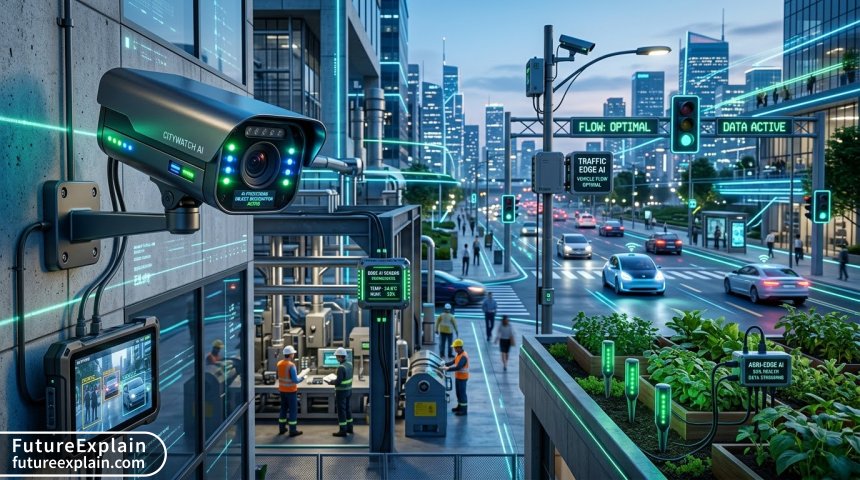
Imagine a security camera that doesn't just record footage but understands what it sees in real-time. Picture a manufacturing sensor that detects equipment failure before it happens, or a farm irrigation system that waters crops based on actual soil conditions rather than a fixed schedule. This isn't science fiction—it's the reality of Edge AI, and it's transforming how we interact with technology in profound, often invisible ways.
Edge AI represents a fundamental shift in how artificial intelligence is deployed. Instead of sending data to distant cloud servers for processing, Edge AI brings the intelligence directly to the devices where data is generated. This approach offers significant advantages: reduced latency, enhanced privacy, lower bandwidth costs, and continuous operation even without internet connectivity. According to research from the Edge Computing Consortium, Edge AI deployments are growing at 35% annually, with smart cameras and sensors leading the adoption curve.
What Exactly is Edge AI? A Clear Definition
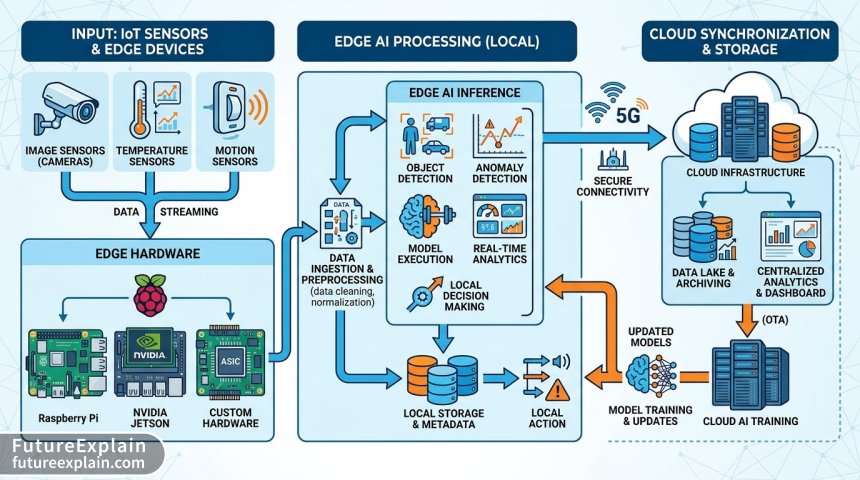
At its core, Edge AI refers to artificial intelligence algorithms that process data locally on a hardware device, without requiring a connection to cloud servers. The "edge" is the location where data is generated—whether that's a camera, sensor, smartphone, or industrial machine. When AI models run directly on these devices, they can make immediate decisions without the delay of round-trip communication to the cloud.
The distinction between cloud AI and Edge AI is crucial. Cloud AI processes data in centralized data centers, which is excellent for training large models and handling massive datasets. Edge AI, in contrast, focuses on inference—applying pre-trained models to new data in real-time. Think of it this way: if cloud AI is like having a supercomputer at a university that you can call for complex calculations, Edge AI is like having a smart calculator in your pocket that gives you answers instantly.
The Driving Forces Behind Edge AI Adoption
Several key factors are accelerating Edge AI adoption across industries. First is the dramatic reduction in hardware costs and power consumption. Modern edge processors like the NVIDIA Jetson series, Google Coral TPU, and Intel Movidius provide significant AI processing capabilities for under $100, making deployment economically viable even for small businesses.
Second, privacy regulations like GDPR and CCPA have made organizations cautious about sending sensitive data to the cloud. Edge AI keeps data local, reducing compliance risks. Third, the explosive growth of IoT devices—projected to reach 30 billion by 2025—has created bandwidth challenges that Edge AI alleviates by processing data at source.
Smart Cameras: Beyond Simple Surveillance
Intelligent Security and Monitoring
Modern security cameras with Edge AI capabilities do much more than record footage. They can identify specific objects, people, vehicles, and behaviors in real-time. A retail store camera might count customers, track dwell time in specific aisles, and identify potential shoplifting behavior—all without streaming video to the cloud. This reduces bandwidth usage by up to 90% compared to continuous cloud streaming.
One compelling use case is in manufacturing quality control. Cameras with edge-based computer vision can inspect products on assembly lines at incredible speeds, detecting defects as small as 0.1mm with 99.8% accuracy. German automotive manufacturer BMW reports a 40% reduction in quality issues after implementing edge AI camera systems, with defects caught earlier in the production process.
Traffic Management and Smart Cities
Smart traffic cameras with Edge AI are revolutionizing urban mobility. These systems don't just capture violations; they optimize traffic flow in real-time. By analyzing vehicle density, speed, and queue lengths at intersections, edge AI cameras can adjust traffic light timing dynamically. Singapore's Smart Nation initiative has reduced average commute times by 15% using such systems.
Parking management represents another valuable application. Edge AI cameras in parking lots can identify empty spaces and guide drivers via mobile apps. They can also detect parking violations and improper use of disabled spots. The City of Los Angeles generated $4.7 million in additional revenue in the first year of implementing smart parking with edge AI, while reducing enforcement costs by 30%.
Retail Analytics and Customer Experience
Retailers are leveraging edge AI cameras for sophisticated analytics without invading customer privacy. By processing video locally and only sending anonymized metrics to the cloud, these systems provide valuable insights while maintaining privacy. They can track customer flow patterns, identify popular products, and optimize store layouts.
Japanese convenience store chain Lawson uses edge AI cameras to analyze customer demographics and behavior while ensuring no personally identifiable information leaves the store. The system has helped them optimize staffing schedules and product placement, resulting in a 12% increase in sales per square foot.
Intelligent Sensors: The Unsung Heroes of Industry 4.0
Predictive Maintenance in Manufacturing
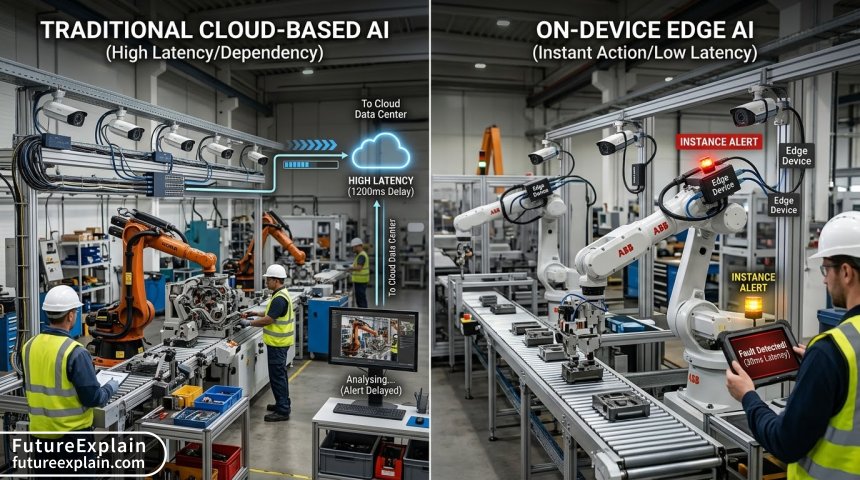
Industrial sensors with Edge AI capabilities are transforming maintenance from reactive to predictive. Vibration sensors on machinery can detect abnormal patterns that precede failures. Temperature and pressure sensors can identify inefficiencies in real-time. What makes edge implementation special is the ability to process this data locally and trigger immediate actions.
A German manufacturing plant reduced unplanned downtime by 65% by implementing edge AI sensors across their production line. The sensors analyze vibration patterns from motors and bearings, comparing them against normal operating baselines. When anomalies are detected, maintenance alerts are generated automatically, and in some cases, the system can safely shut down equipment before catastrophic failure occurs.
Environmental Monitoring and Agriculture
In agriculture, edge AI sensors are enabling precision farming at unprecedented scales. Soil moisture sensors with embedded AI can determine optimal watering schedules based on weather forecasts, crop type, and growth stage. These systems process data locally and control irrigation valves directly, responding to conditions in real-time.
California vineyard Jackson Family Wines implemented edge AI soil sensors across 14,000 acres, reducing water usage by 25% while improving grape quality. The sensors measure moisture at multiple depths and adjust irrigation down to individual vine level. The edge processing allows immediate response to changing conditions without waiting for cloud analysis.
Healthcare and Remote Patient Monitoring
Medical sensors with Edge AI are revolutionizing patient care, particularly for chronic conditions and elderly care. Wearable devices can monitor vital signs, detect falls, and identify irregular heart rhythms—all while processing data locally to ensure privacy and immediate response.
Stanford Hospital's pilot program with edge AI-enabled ECG monitors reduced false alarms by 85% by distinguishing between clinically significant and benign arrhythmias at the device level. This reduced nurse alert fatigue and allowed more focused attention on genuine emergencies.
IoT Systems: Creating Intelligent Ecosystems
Smart Building Management
Modern buildings are becoming intelligent ecosystems through IoT devices with Edge AI. Lighting systems can adjust based on occupancy and natural light levels. HVAC systems optimize temperature room-by-room based on usage patterns. Access control systems recognize authorized personnel while detecting suspicious behavior.
The Edge East building in Amsterdam, often called the world's smartest office building, uses over 28,000 sensors with edge AI processing. The system has reduced energy consumption by 42% compared to similar buildings while improving occupant comfort scores by 35%. Each floor operates as an intelligent microgrid, making local decisions while coordinating with the building-wide system.
Supply Chain and Logistics
Edge AI in logistics goes beyond simple tracking. Smart pallets with embedded sensors monitor temperature, humidity, shock, and tilt throughout shipments. If conditions exceed thresholds, the edge device can trigger local alerts or even adjust packaging conditions in smart containers.
Pharmaceutical company Pfizer uses edge AI-enabled containers for vaccine shipments. The system maintains precise temperature control and monitors for deviations. If a temperature excursion occurs, the edge AI determines whether the vaccines remain viable based on duration and severity of the deviation, providing immediate guidance to logistics personnel.
Energy Grid Optimization
Smart grids with Edge AI capabilities balance supply and demand in real-time. Local substations can reroute power around faults, integrate renewable energy sources dynamically, and respond to consumption patterns without centralized control. This creates more resilient energy networks.
In Texas, Oncor's deployment of edge AI grid management has reduced outage durations by 40% by automatically isolating faults and rerouting power. The system processes data from thousands of sensors across the grid, making local decisions in milliseconds while coordinating with the broader grid management system.
Technical Implementation: A Practical Guide
Hardware Selection Considerations
Choosing the right hardware is critical for Edge AI success. Key factors include:
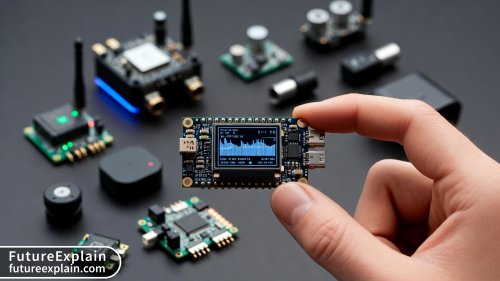
- Processing Power: Measured in TOPS (Tera Operations Per Second). Entry-level devices like Raspberry Pi with Coral USB Accelerator offer 4 TOPS for under $150, while industrial-grade NVIDIA Jetson AGX Orin provides 275 TOPS for complex applications.
- Power Consumption: Battery-powered devices need efficient processors. ARM-based chips typically offer the best performance-per-watt ratio.
- Environmental Tolerance: Industrial applications require wide temperature ranges (-40°C to 85°C), vibration resistance, and sometimes hazardous location certifications.
- Connectivity Options: Consider required interfaces—Ethernet, Wi-Fi, Bluetooth, LoRaWAN, or cellular based on deployment location.
Software Frameworks and Tools
The Edge AI software ecosystem has matured significantly. Key frameworks include:
- TensorFlow Lite: Google's framework for deploying models on mobile and edge devices, supporting quantization and hardware acceleration.
- PyTorch Mobile: Facebook's solution offering flexibility and ease of use for research-to-production workflows.
- OpenVINO: Intel's toolkit optimizing models for their hardware portfolio.
- NVIDIA TensorRT: Optimizes models for NVIDIA GPU-based edge devices.
- Apache MXNet: Amazon's framework with strong support for edge deployment.
A practical approach is to start with TensorFlow Lite for prototyping due to its extensive documentation and community support, then evaluate specialized frameworks based on final hardware selection.
Model Optimization Techniques
Deploying AI models at the edge requires optimization for limited resources. Key techniques include:
- Quantization: Reducing model precision from 32-bit to 8-bit or even 4-bit floating point, reducing size by 75% with minimal accuracy loss.
- Pruning: Removing unnecessary neurons or connections from neural networks, often reducing size by 50-90%.
- Knowledge Distillation: Training a smaller "student" model to mimic a larger "teacher" model.
- Neural Architecture Search: Automatically finding efficient model architectures for specific hardware.
Google's MobileNet family demonstrates these principles effectively, offering image classification accuracy competitive with much larger models while requiring significantly fewer computations.
Cost-Benefit Analysis: When Edge AI Makes Financial Sense
Initial Investment vs. Operational Savings
Edge AI implementations typically have higher upfront costs but significant operational savings. A smart factory implementation might cost $250,000 initially but save $800,000 annually in reduced downtime, energy savings, and quality improvements—achieving ROI in under 5 months.
Key cost components include:
- Hardware: $50-$5,000 per device depending on capabilities
- Software development: $20,000-$100,000 for custom solutions
- Integration: 30-50% of hardware/software costs
- Maintenance: 15-20% annually of initial investment
Bandwidth and Cloud Cost Reduction
One of the most significant savings comes from reduced cloud and bandwidth costs. A security camera streaming 24/7 HD video consumes approximately 2TB monthly in bandwidth. With edge processing, only metadata and occasional thumbnails are transmitted, reducing bandwidth by 95-99%.
For a 100-camera deployment, this translates to:
- Cloud-only: $12,000 monthly in bandwidth + $8,000 cloud processing
- Edge AI: $600 monthly in bandwidth + $2,000 cloud storage
- Monthly savings: $17,400 (82% reduction)
Privacy and Security Implementation
Data Minimization and Local Processing
Edge AI enhances privacy by processing sensitive data locally. Personal identifiable information (PII) never leaves the device in many implementations. For facial recognition in secure facilities, the model creates embeddings locally and only transmits match/no-match decisions rather than images.
Medical applications demonstrate particularly strong privacy benefits. Patient monitoring devices can analyze health data locally, sending only anonymized trends to healthcare providers. This approach complies with HIPAA regulations while enabling continuous monitoring.
Security Best Practices
Edge devices present unique security challenges. Key practices include:
- Secure Boot: Ensuring only signed firmware can run on devices
- Regular Updates: Establishing secure over-the-air update mechanisms
- Network Segmentation: Isolating edge devices from critical infrastructure
- Encrypted Storage: Protecting data at rest on edge devices
- Physical Security: Tamper-evident designs for sensitive deployments
The Industrial Internet Consortium's Security Framework provides comprehensive guidance specifically for edge deployments in industrial settings.
Integration Challenges and Solutions
Legacy System Compatibility
Most organizations have existing infrastructure that must work with new edge AI systems. Common integration approaches include:
- Gateway Devices: Acting as intermediaries between legacy systems and edge AI
- Protocol Translation: Converting between legacy protocols (Modbus, PROFIBUS) and modern interfaces
- Phased Rollouts: Implementing edge AI incrementally alongside existing systems
ABB's approach to manufacturing digitalization demonstrates successful integration, using edge gateways that connect to 40+ industrial protocols while providing modern API interfaces for AI applications.
Data Consistency and Quality
Edge AI systems must handle varying data quality and occasional connectivity issues. Techniques include:
- Local Buffering: Storing data during connectivity loss
- Confidence Thresholds: Only acting on high-confidence predictions
- Ensemble Methods: Combining multiple models for reliability
- Continuous Calibration: Adjusting models based on local conditions
Maintenance and Lifecycle Management
Remote Monitoring and Updates
Managing thousands of edge devices requires robust remote management capabilities. Key considerations include:
- Health Monitoring: Tracking device status, performance metrics, and environmental conditions
- Predictive Maintenance: Using device telemetry to predict failures before they occur
- Secure Updates: Deploying model and firmware updates without service disruption
- Configuration Management: Maintaining consistent settings across device fleets
Microsoft's Azure IoT Edge and AWS IoT Greengrass provide comprehensive management platforms, though open-source alternatives like Eclipse ioFog offer flexibility for custom deployments.
Model Retraining and Drift Detection
AI models can degrade over time as conditions change—a phenomenon called model drift. Edge AI systems need mechanisms to detect drift and update models. Approaches include:
- Performance Monitoring: Tracking prediction accuracy against ground truth when available
- Data Distribution Analysis: Comparing current input distributions to training data
- Federated Learning: Updating models using data from multiple edge devices without centralizing raw data
- Canary Deployments: Testing new models on a subset of devices before full rollout
Energy Efficiency and Sustainability
Power Optimization Techniques
Edge devices, especially battery-powered ones, require careful power management. Strategies include:
- Inference Scheduling: Running AI models only when needed rather than continuously
- Model Selection: Choosing energy-efficient architectures like MobileNet or EfficientNet
- Hardware Acceleration: Using specialized AI processors with better performance-per-watt
- Dynamic Voltage/Frequency Scaling: Adjusting processor speed based on workload
Research from the University of Michigan shows that optimized edge AI implementations can reduce energy consumption by 80-90% compared to unoptimized approaches while maintaining accuracy.
Sustainability Impact
Edge AI contributes to sustainability in multiple ways:
- Reduced Data Center Energy: By processing locally, edge AI reduces cloud data center loads
- Optimized Resource Usage: Smart systems reduce energy, water, and material waste
- Extended Device Lifespan: Predictive maintenance prevents premature equipment replacement
- Efficient Transportation: Optimized routing and logistics reduce fuel consumption
The Carbon Trust estimates that widespread edge AI adoption in manufacturing alone could reduce global CO2 emissions by 1.5 gigatons annually by 2030.
Future Trends and Developments
Hardware Innovations
The edge AI hardware landscape is evolving rapidly. Emerging trends include:
- Neuromorphic Computing: Hardware that mimics biological neural networks for extreme efficiency
- In-Memory Computing: Processing data within memory to avoid data movement bottlenecks
- Photonic AI Processors: Using light rather than electricity for ultra-fast, low-power computation
- 3D Stacked Silicon: Vertical integration of processors and memory for compact designs
Intel's Loihi neuromorphic research chip demonstrates the potential, performing certain AI tasks with 1,000 times greater energy efficiency than traditional processors.
Software and Ecosystem Development
The edge AI software ecosystem continues to mature. Key developments include:
- Standardized Interfaces: Efforts like ONNX (Open Neural Network Exchange) enabling model portability
- Automated Optimization: Tools that automatically optimize models for specific hardware
- Edge-to-Cloud Continuum: Frameworks that seamlessly distribute computation between edge and cloud
- Federated Learning Frameworks: Making collaborative learning across edge devices practical
Getting Started: A Step-by-Step Roadmap
Phase 1: Proof of Concept (Weeks 1-4)
- Identify a single, high-impact use case with clear metrics
- Select readily available hardware (Raspberry Pi + Coral USB Accelerator)
- Use pre-trained models from TensorFlow Hub or PyTorch Hub
- Develop minimum viable solution focusing on core functionality
- Measure performance against baseline (accuracy, latency, cost)
Phase 2: Pilot Deployment (Months 2-4)
- Scale to 5-10 devices in real environment
- Implement robust monitoring and management
- Develop integration with existing systems
- Validate ROI with detailed measurements
- Document lessons learned and refine approach
Phase 3: Full Deployment (Months 5-12)
- Procure production-grade hardware
- Develop custom models optimized for specific use case
- Implement comprehensive security and management
- Train operational teams
- Establish continuous improvement processes
Conclusion: The Edge is Where Intelligence Meets Action
Edge AI represents more than just a technical shift—it's a fundamental reimagining of how artificial intelligence integrates with our physical world. By bringing intelligence to where data is generated and decisions are needed, edge AI enables applications that were previously impractical or impossible.
The journey to edge AI implementation requires careful planning, but the rewards are substantial: reduced latency, enhanced privacy, lower operational costs, and more resilient systems. As hardware continues to advance and software ecosystems mature, edge AI will become increasingly accessible to organizations of all sizes.
Whether you're a manufacturer seeking to improve quality control, a city planner optimizing traffic flow, or a healthcare provider enhancing patient monitoring, edge AI offers tangible benefits that can be realized today. The key is starting with a focused use case, learning through implementation, and scaling based on demonstrated value.
The future isn't just smart—it's intelligently distributed, with decisions made precisely where and when they're needed most. That future is being built at the edge, one camera, sensor, and IoT device at a time.
Visuals Produced by AI
Further Reading
Share
What's Your Reaction?
 Like
0
Like
0
 Dislike
0
Dislike
0
 Love
0
Love
0
 Funny
0
Funny
0
 Angry
0
Angry
0
 Sad
0
Sad
0
 Wow
0
Wow
0