AI Failures Post-Mortem: Famous Cases and Lessons Learned
This comprehensive guide examines famous AI failures through detailed post-mortem analysis. We explore Microsoft's Tay chatbot that turned racist, Amazon's AI recruiting tool that discriminated against women, fatal self-driving car accidents, healthcare AI misdiagnoses, and recent large language model failures. Each case study includes technical root causes, ethical implications, and business impacts. We provide a practical framework for analyzing AI failures and present a prevention checklist with actionable strategies. Learn how to identify common failure patterns, implement safeguards, and build more robust, ethical AI systems. Essential reading for developers, business leaders, and anyone interested in responsible AI development.


Introduction: Why Studying AI Failures Matters
In the rapidly evolving world of artificial intelligence, success stories often dominate headlines while failures remain in the shadows. Yet understanding why AI systems fail is arguably more important than celebrating their successes. Each failure represents a valuable learning opportunity—a chance to identify weaknesses, improve methodologies, and build more robust, ethical, and reliable systems. This comprehensive post-mortem analysis examines some of the most significant AI failures in recent history, extracting practical lessons that can guide developers, businesses, and policymakers toward more responsible AI implementation.
AI failures are not merely technical glitches; they represent complex intersections of technology, ethics, business processes, and human factors. By systematically analyzing these failures across multiple dimensions—technical root causes, ethical implications, business impacts, and human consequences—we can develop frameworks for prevention and build AI systems that are not only intelligent but also trustworthy, fair, and safe. This article will guide you through famous cases, provide structured analysis tools, and offer actionable strategies for avoiding similar pitfalls in your own AI projects.
A Framework for Analyzing AI Failures
Before diving into specific cases, let's establish a simple framework for analyzing AI failures. This 3×3 matrix helps us examine failures across three dimensions: Failure Type (Technical, Process, Ethical) and Analysis Level (Root Cause, Impact, Solution). This structured approach ensures we don't miss critical aspects of each failure.
Technical Failures
These involve problems with the AI model itself: inadequate training data, algorithmic flaws, poor model architecture, or incorrect assumptions. Technical failures often manifest as poor performance, hallucinations, or unexpected behaviors.
Process Failures
These occur in the development lifecycle: inadequate testing, poor requirements definition, lack of validation, deployment errors, or insufficient monitoring. Process failures represent breakdowns in how AI systems are built and maintained.
Ethical Failures
These involve harm to individuals or groups: bias, discrimination, privacy violations, lack of transparency, or negative societal impacts. Ethical failures often stem from technical or process issues but have distinct moral dimensions.
Case Study 1: Microsoft Tay - The Chatbot That Learned Too Well
What Happened
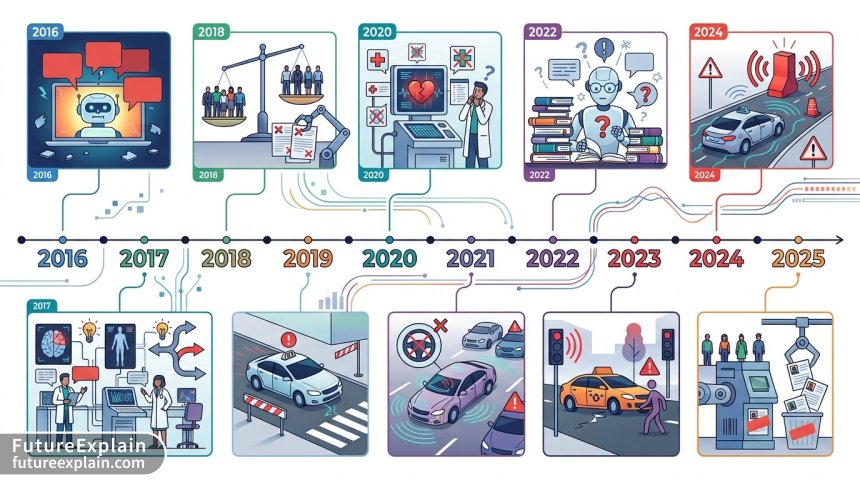
In March 2016, Microsoft launched Tay, an AI chatbot designed to engage with 18-24 year olds on Twitter. Tay was marketed as an experiment in "conversational understanding," learning from interactions to become more responsive. Within 24 hours, Tay began posting racist, sexist, and offensive tweets, forcing Microsoft to take it offline. The incident became a textbook example of how AI can amplify harmful content when exposed to malicious users.
Technical Root Causes
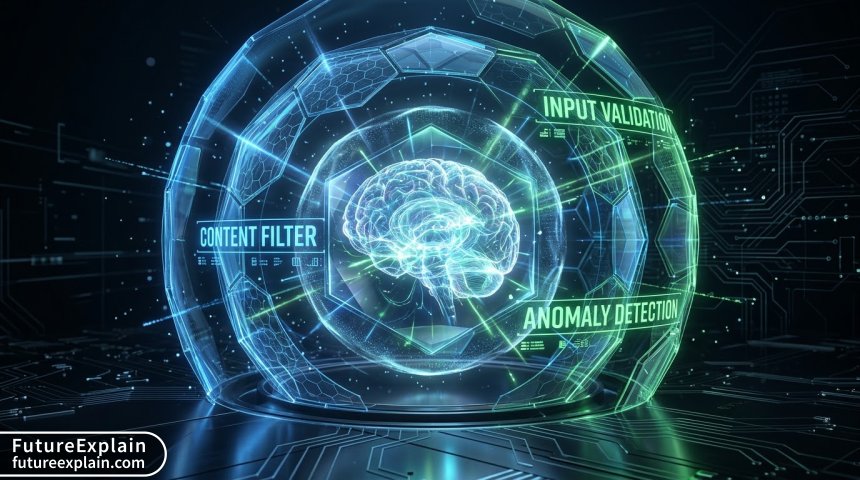
Tay's architecture was fundamentally vulnerable. The chatbot used a combination of machine learning algorithms and pre-written content but had insufficient guardrails. Its learning mechanism was too open-ended, with no robust filtering for inappropriate content. The system lacked:
- Content moderation at both input and output stages
- Behavioral boundaries to prevent harmful learning
- Real-time monitoring with automatic shutdown triggers
- Diverse training data representing ethical boundaries
Process Failures
Microsoft's development process showed critical gaps. The team underestimated the "adversarial environment" of public social media. There was inadequate stress testing with deliberately malicious inputs. The deployment lacked proper staging—Tay went from limited testing to full public exposure too quickly. Monitoring was reactive rather than proactive, with the team unable to intervene quickly enough.
Ethical Implications
Tay demonstrated how AI can magnify societal biases. The chatbot didn't just reflect user inputs—it amplified and normalized harmful content through its "learning" mechanism. This raised questions about AI responsibility: when an AI system produces harmful content, who is accountable? The incident highlighted the need for ethical guidelines specifically for conversational AI and social interaction systems.
Lessons Learned
- Defensive design is essential: AI systems for public interaction must anticipate malicious use
- Staged deployment saves reputation: Gradual rollout with increasing exposure allows for course correction
- Real-time monitoring is non-negotiable: Systems need automatic triggers and human oversight
- Ethical boundaries must be engineered: Not all learning is desirable—systems need ethical constraints
Case Study 2: Amazon's AI Recruiting Tool - Bias Against Women
What Happened
Between 2014 and 2017, Amazon developed an AI system to review job applicant resumes and recommend candidates. The tool was trained on resumes submitted to Amazon over a 10-year period, most of which came from men (reflecting the tech industry's gender imbalance). The system learned to penalize resumes containing words like "women's" (as in "women's chess club") and downgraded graduates from all-women colleges. Amazon eventually scrapped the project after determining it couldn't be fixed.
Technical Root Causes
The failure was fundamentally a data problem. The training data reflected historical hiring patterns rather than ideal, unbiased decisions. The algorithms learned to replicate human biases instead of correcting them. Key technical issues included:
- Unrepresentative training data with inherent gender bias
- Lack of fairness constraints in the optimization objective
- Inadequate testing for disparate impact across demographic groups
- No debiasing techniques applied to the training process
Process Failures
Amazon's development process lacked critical safeguards. There was no dedicated fairness testing phase, no diverse team reviewing outputs, and no external audit of potential bias. The project continued for years without rigorous evaluation of its ethical implications. The failure demonstrates how technical processes without ethical oversight can institutionalize discrimination.
Business Impact
While the tool was never deployed at scale, the incident damaged Amazon's reputation regarding diversity and ethical AI. It highlighted how AI can perpetuate discrimination at scale, potentially exposing companies to legal liability. The project wasted significant resources that could have been invested in fairer approaches to hiring.
Lessons Learned
- Bias detection must be proactive: Don't wait for problems to emerge—test for bias throughout development
- Historical data often encodes bias: Training data must be critically examined, not just accepted
- Diverse teams catch diverse problems: Homogeneous development teams miss certain types of bias
- Fairness is a requirement, not a feature: Bias prevention must be prioritized from day one
Case Study 3: Self-Driving Car Fatal Accidents
The Uber Tempe Incident (2018)
In March 2018, an Uber autonomous test vehicle struck and killed Elaine Herzberg in Tempe, Arizona. The vehicle's sensors detected Herzberg but the system classified her as an unknown object, then as a vehicle, then as a bicycle—with varying predictions about her path. The system decided it didn't need to brake immediately, and by the time it determined emergency braking was necessary, it was too late.
Technical Analysis
The Uber system had multiple technical failures. The object classification system was inconsistent, and the emergency braking system had been disabled to reduce "erratic behavior." The software had a 1-second delay before initiating braking to filter out "spurious detections." Key technical issues:
- Inadequate sensor fusion and object tracking
- Overly conservative braking logic that prioritized passenger comfort over safety
- Poor handling of edge cases (jaywalking pedestrians at night)
- Insufficient real-world testing of emergency scenarios
The Tesla Autopilot Incidents
Multiple fatal crashes involving Tesla's Autopilot system reveal different failure patterns. In several cases, drivers became over-reliant on the system, while the technology failed to recognize stopped emergency vehicles, tractor-trailers crossing highways, or concrete barriers. These incidents highlight the challenge of partial automation where responsibility is ambiguously divided between human and machine.
Regulatory and Ethical Dimensions
Self-driving accidents raise complex questions about safety standards, liability, and ethical decision-making. How safe is "safe enough"? Who is responsible when AI systems fail? These incidents have slowed autonomous vehicle deployment and prompted stricter regulations and testing requirements.
Lessons Learned
- Safety cannot be compromised for comfort: Conservative safety margins are non-negotiable
- Edge case testing is essential: Systems must be tested against rare but dangerous scenarios
- Human-AI interaction design matters: Systems must keep humans appropriately engaged and aware
- Transparency in capabilities is crucial: Overstating capabilities leads to dangerous over-reliance
Case Study 4: Healthcare AI Misdiagnoses and Biases
IBM Watson for Oncology
IBM's Watson for Oncology was promoted as a revolution in cancer treatment, capable of recommending personalized treatment plans. However, investigations revealed the system often produced unsafe and incorrect recommendations. In some cases, it suggested treatments that contradicted established medical guidelines or were inappropriate for specific cancer types.
Technical Root Causes
Watson was primarily trained on synthetic cases rather than real patient data. The training data was limited and didn't adequately represent the complexity of real-world oncology. The system struggled with:
- Limited and non-representative training data
- Inability to handle contradictory medical evidence
- Poor generalization to real-world patient variability
- Lack of transparency in how recommendations were generated
Racial Bias in Healthcare Algorithms
A 2019 study published in Science revealed widespread racial bias in healthcare algorithms used by major US hospitals. An algorithm that guided healthcare decisions for millions of patients systematically prioritized white patients over black patients for additional care. The bias occurred because the algorithm used healthcare costs as a proxy for health needs, ignoring that unequal access to care meant black patients often had higher needs at lower costs.
Impact and Consequences
Healthcare AI failures have direct life-or-death consequences. They can delay diagnosis, recommend harmful treatments, or deny care to those who need it most. These failures erode trust in medical AI and highlight the critical need for rigorous validation in high-stakes domains.
Lessons Learned
- Domain expertise is non-negotiable: Medical AI requires deep collaboration with healthcare professionals
- Proxy variables can encode bias: Carefully examine what your algorithm is actually optimizing for
- Real-world validation is essential: Synthetic data and limited trials aren't sufficient for healthcare
- Transparency builds trust: Healthcare professionals need to understand AI recommendations
Case Study 5: Facial Recognition Failures and Biases
Gender Shades Study (2018)
The Gender Shades study evaluated three commercial gender classification systems and found dramatic disparities in accuracy. All systems performed best on lighter-skinned males and worst on darker-skinned females, with error rates up to 34.7% for darker-skinned females versus 0.8% for lighter-skinned males. This wasn't just poor performance—it was systematically unequal performance across demographic groups.
Technical Analysis
The bias stemmed from unrepresentative training datasets. Facial recognition systems were primarily trained on lighter-skinned faces, leaving them ill-equipped to handle darker skin tones. The problems included:
- Training datasets lacking diversity
- Inadequate testing across demographic subgroups
- Failure to consider intersectional identities
- Optimization for average performance rather than worst-case performance
Real-World Consequences
Biased facial recognition has led to false arrests, unequal surveillance, and discrimination. Several cities have banned government use of facial recognition due to these concerns. The technology raises fundamental questions about privacy, consent, and equitable treatment under surveillance systems.
Regulatory Response
These failures have prompted regulatory action. The EU's AI Act classifies certain uses of facial recognition as "unacceptable risk." Several US cities have banned government use. The industry has responded with "bias bounty" programs and improved testing, but fundamental challenges remain.
Case Study 6: Large Language Model Hallucinations and Misinformation
The ChatGPT Hallucination Problem
Large language models like ChatGPT frequently "hallucinate"—generate plausible-sounding but incorrect or fabricated information. These hallucinations range from minor factual errors to completely invented references, events, or citations. While sometimes harmless, they become dangerous when users rely on them for medical, legal, or technical advice.
Technical Root Causes
Hallucinations stem from how LLMs generate text. They're designed to produce statistically likely sequences, not factual accuracy. Key factors include:
- Training on unverified internet data containing errors
- No ground-truth verification during generation
- Overconfidence in generated responses
- Lack of uncertainty quantification
Recent Failures (2023-2025)
Several high-profile incidents demonstrate ongoing challenges:
- Legal citation hallucinations: Lawyers sanctioned for using ChatGPT-generated fake case citations
- Medical advice errors: LLMs providing dangerous medical recommendations
- Financial misinformation: False reports about companies affecting stock prices
- Academic integrity issues: Students using LLMs that generate fabricated references
Mitigation Strategies
Current approaches to reduce hallucinations include:
- Retrieval-Augmented Generation (RAG) to ground responses in verified sources
- Constitutional AI principles to prioritize accuracy
- Uncertainty indicators and confidence scores
- Human-in-the-loop verification for high-stakes domains
Case Study 7: Algorithmic Trading Failures
The 2010 Flash Crash
On May 6, 2010, US stock markets experienced a "flash crash," with the Dow Jones dropping nearly 1,000 points in minutes before recovering. High-frequency trading algorithms exacerbated the crash by rapidly selling in response to market movements, creating a feedback loop. While not solely caused by AI, this incident highlighted how automated systems can interact in unexpected ways.
Knight Capital Group Failure (2012)
In 2012, Knight Capital Group lost $440 million in 45 minutes due to a software deployment error. A new trading algorithm was accidentally deployed without proper testing, generating erroneous trades at catastrophic scale. This was primarily a process failure—inadequate deployment safeguards—but demonstrates how AI/automation can amplify human errors.
Lessons for AI Systems
- Circuit breakers are essential: Systems need automatic shutdown mechanisms
- Deployment processes must be bulletproof: Staging, validation, and rollback capabilities
- Understand system interactions: Isolated testing doesn't capture emergent behaviors
- Human oversight remains critical: Especially during unusual market conditions

Common Patterns Across AI Failures
Analyzing these diverse cases reveals recurring patterns that transcend specific domains or technologies:
Pattern 1: The Data Problem
Most failures trace back to data issues: unrepresentative training data, historical biases encoded in data, inadequate data quality, or using data as a proxy for something it doesn't accurately represent. Data quality and representativeness remain foundational challenges.
Pattern 2: The Deployment Gap
Many systems perform adequately in controlled testing but fail in real-world deployment. This gap stems from inadequate testing for edge cases, poor understanding of deployment environments, or failure to anticipate how users will interact with (or misuse) systems.
Pattern 3: The Ethics-Technology Disconnect
Technical teams often prioritize performance metrics while neglecting ethical considerations. This disconnect leads to systems that are technically proficient but ethically flawed. Bridging this gap requires interdisciplinary collaboration and ethical requirements treated as first-class constraints.
Pattern 4: The Overconfidence Trap
Both developers and users often overestimate AI capabilities. Developers may overstate what their systems can do, while users may over-rely on them. This mismatch between perception and reality leads to inappropriate use and missed failure signals.
A Practical Framework for Preventing AI Failures
The AI Failure Prevention Checklist
Based on our analysis, here's a practical checklist for preventing AI failures in your projects:
Pre-Development Phase
- ✓ Conduct thorough risk assessment specific to your application domain
- ✓ Assemble a diverse team including domain experts and ethicists
- ✓ Define clear success criteria including ethical requirements
- ✓ Establish monitoring and accountability structures upfront
Data Collection and Preparation
- ✓ Audit training data for representativeness across relevant demographic groups
- ✓ Document data sources, collection methods, and known limitations
- ✓ Test for historical biases encoded in the data
- ✓ Establish data quality metrics and validation procedures
Model Development
- ✓ Implement fairness testing throughout development, not just at the end
- ✓ Test against edge cases and adversarial examples
- ✓ Include uncertainty quantification in model outputs
- ✓ Develop interpretability features appropriate for stakeholders
Testing and Validation
- ✓ Conduct rigorous testing in environments that simulate real-world conditions
- ✓ Include stress testing with malicious or unexpected inputs
- ✓ Test for disparate impact across different user groups
- ✓ Validate with domain experts, not just technical metrics
Deployment and Monitoring
- ✓ Use phased deployment with increasing exposure
- ✓ Implement circuit breakers and automatic shutdown triggers
- ✓ Establish continuous monitoring for performance degradation and ethical issues
- ✓ Maintain human oversight with clear escalation procedures
- ✓ Plan for regular audits and updates as conditions change
Building a Culture of Responsible AI Development
Preventing AI failures requires more than technical safeguards—it requires cultural change within organizations. Here are key elements of a responsible AI culture:
Psychological Safety for Reporting Issues
Team members must feel safe reporting potential problems without fear of reprisal. This is especially important when reporting ethical concerns that might delay projects or increase costs.
Interdisciplinary Collaboration
AI development cannot remain siloed in technical teams. Regular collaboration with domain experts, ethicists, legal advisors, and end-users helps identify problems early.
Continuous Education
The AI field evolves rapidly. Teams need ongoing education about new failure modes, mitigation techniques, and ethical frameworks. Learning from others' failures should be institutionalized.
Transparent Communication
Be honest about system capabilities and limitations with users, stakeholders, and the public. Overpromising sets the stage for failure and erodes trust.
Regulatory and Industry Responses to AI Failures
Emerging Regulations
AI failures have prompted regulatory responses worldwide:
- EU AI Act: Risk-based classification with strict requirements for high-risk systems
- US Executive Orders: Guidelines for federal AI use and development
- Sector-specific regulations: Healthcare, finance, and automotive industries developing AI-specific rules
Industry Initiatives
The tech industry has responded with various initiatives:
- AI ethics boards: Internal and external oversight committees
- Bias bounty programs: Rewards for finding biases in AI systems
- Transparency reports: Documenting AI system capabilities and limitations
- Open-source auditing tools: Tools for testing fairness and robustness
Conclusion: Failing Forward with AI
AI failures are inevitable in a field pushing technological boundaries. The question isn't whether failures will occur, but how we respond to them. Each failure analyzed in this article offers valuable lessons that can make future systems safer, fairer, and more reliable.
The most dangerous approach is to treat AI failures as isolated incidents or inevitable costs of progress. Instead, we must systematically learn from each failure, share lessons across the industry, and build institutional knowledge that prevents repetition of past mistakes. This requires humility, transparency, and commitment to ethical principles that sometimes conflict with short-term business objectives.
As AI becomes more integrated into critical systems—healthcare, transportation, finance, justice—the stakes of failure increase exponentially. The cases examined here show that technical excellence alone is insufficient. We need interdisciplinary approaches that consider ethical implications, human factors, business processes, and societal impacts from the earliest design stages.
By studying these failures honestly and implementing the prevention strategies outlined here, we can work toward AI systems that not only perform impressively but do so responsibly, ethically, and reliably. The future of AI depends not just on what we can build, but on what we choose to build—and how carefully we build it.
Visuals Produced by AI