AI for Project Management: Automating Tasks and Summaries
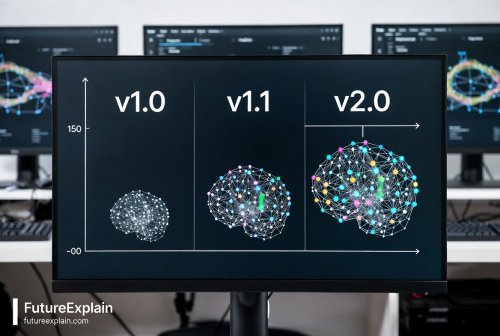
This comprehensive guide explores how artificial intelligence is revolutionizing project management through intelligent automation of routine tasks, generation of actionable summaries, and predictive insights. We examine real-world applications across various industries, discuss implementation strategies for teams of all sizes, and provide practical guidance on selecting and integrating AI tools. The article covers everything from automating status updates and meeting summaries to predicting project risks and optimizing resource allocation, helping project managers leverage AI to enhance productivity, reduce administrative overhead, and make data-driven decisions.


AI for Project Management: Automating Tasks and Summaries
The landscape of project management is undergoing a profound transformation, driven by artificial intelligence technologies that promise to alleviate administrative burdens, enhance decision-making, and optimize resource allocation. As projects grow increasingly complex and teams become more distributed, traditional manual approaches to tracking tasks, generating reports, and managing communications are proving inadequate. AI emerges as a powerful ally for project managers, not as a replacement for human expertise, but as an enhancement that automates routine tasks and provides intelligent insights. This comprehensive guide explores how AI is reshaping project management, offering practical strategies for implementation, and examining real-world applications that deliver measurable value.
The Evolution of Project Management: From Manual to Intelligent
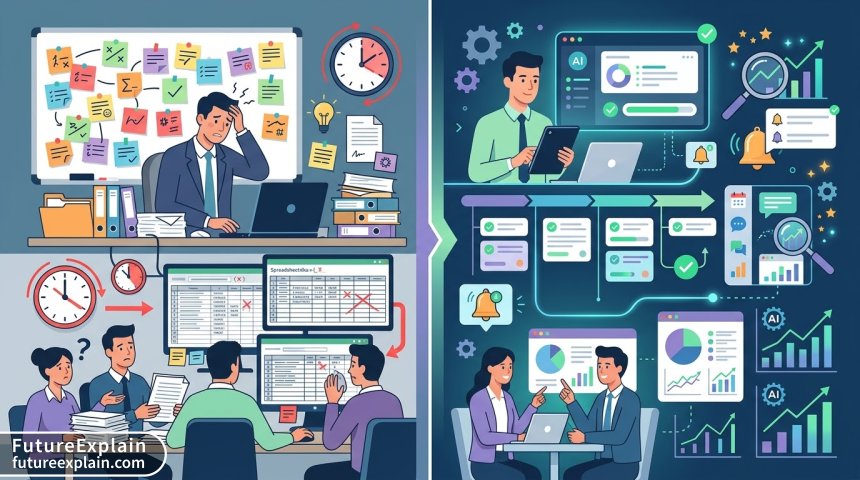
Project management has evolved through several distinct phases, each marked by technological advancements that improved efficiency and capability. The earliest approaches relied on physical boards, paper documentation, and manual tracking systems. The digital revolution introduced spreadsheet software and dedicated project management tools, which brought significant improvements but still required substantial manual input. Today, we stand at the threshold of the intelligent era, where AI systems can understand context, predict outcomes, and automate complex workflows.
Modern project management faces unprecedented challenges: distributed teams across time zones, increasing regulatory requirements, complex stakeholder networks, and accelerating project timelines. Simultaneously, the volume of project-related data has exploded—from communication channels and task updates to resource allocation and budget tracking. Human project managers struggle to process this deluge of information effectively, often spending up to 40% of their time on administrative tasks rather than strategic leadership. AI addresses this imbalance by taking over routine data processing, pattern recognition, and communication tasks, freeing project managers to focus on higher-value activities like stakeholder management, strategic planning, and creative problem-solving.
The integration of AI into project management isn't about creating fully autonomous systems that replace human judgment. Instead, it's about developing collaborative intelligence—systems that augment human capabilities by providing timely insights, automating repetitive tasks, and identifying patterns invisible to the human eye. This human-AI collaboration represents the future of effective project leadership, combining the emotional intelligence, ethical reasoning, and creative thinking of humans with the data processing power, consistency, and predictive capabilities of artificial intelligence.
Core AI Capabilities Transforming Project Management
Intelligent Task Automation
One of the most immediate applications of AI in project management is the automation of routine administrative tasks. These include status update collection, meeting scheduling, deadline reminders, and dependency tracking. Modern AI systems can analyze project plans and automatically identify tasks that are falling behind schedule, then proactively notify relevant team members with contextual information about why the delay matters and what dependencies are affected. Unlike simple calendar reminders, AI-driven notifications understand the relative importance of tasks, the availability of team members, and the project's critical path, ensuring that alerts are both timely and relevant.
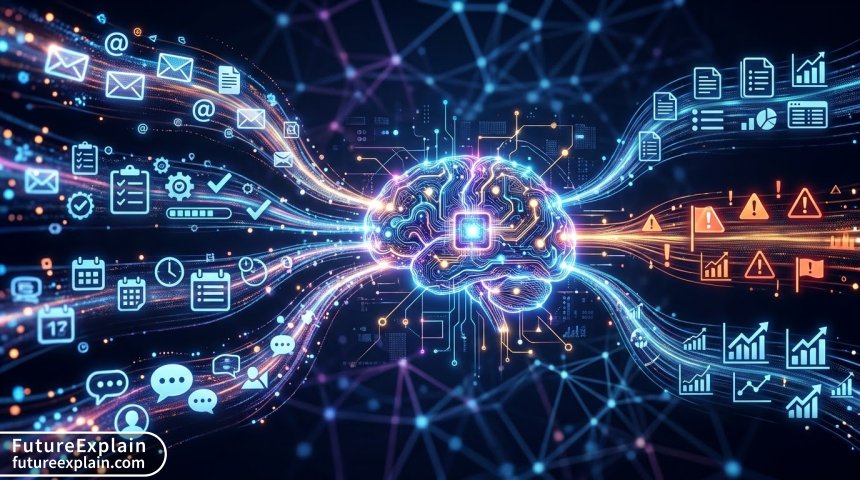
Natural Language Processing (NLP) enables AI systems to understand and generate human language, transforming how project communications are managed. AI can automatically parse email threads, chat conversations, and document comments to extract action items, decisions made, and commitments expressed. These extracted items can then be automatically converted into tasks in the project management system, assigned to appropriate team members, and tracked to completion. This capability dramatically reduces the "communication overhead" that plagues many projects, where important decisions and action items get lost in lengthy email chains or meeting notes.
Predictive Analytics and Risk Management
AI excels at identifying patterns in historical data and using those patterns to predict future outcomes. In project management, this capability transforms risk management from a reactive to a proactive discipline. Machine learning algorithms can analyze hundreds of variables from past projects—team composition, task types, client characteristics, seasonal factors, resource availability—to identify early warning signs of potential problems. These systems can predict which tasks are likely to encounter delays, which budget categories might face overruns, and which team members might experience burnout based on workload patterns.
The predictive power of AI extends beyond simple flagging of potential issues. Advanced systems can recommend specific mitigation strategies based on what worked in similar past situations. For example, if the AI identifies that a particular type of technical task consistently takes 30% longer than estimated when assigned to junior developers, it might recommend either adjusting the timeline, pairing the junior developer with a senior mentor, or breaking the task into smaller, more manageable pieces. These data-driven recommendations help project managers make more informed decisions and allocate resources more effectively.
Intelligent Resource Allocation
Optimal resource allocation represents one of the most complex challenges in project management, requiring balancing skills, availability, costs, and personal development goals. AI systems can analyze historical performance data, skill inventories, availability calendars, and even learning preferences to recommend optimal team assignments. These systems consider not only who can complete a task most efficiently, but also who would benefit from the learning experience, how the assignment affects team dynamics, and whether it supports long-term career development goals.
More sophisticated AI implementations can perform "what-if" analyses for resource planning. Project managers can simulate different team compositions, project timelines, or budget allocations to see how each scenario affects projected outcomes. These simulations can account for complex interrelationships between variables that would be impossible for humans to calculate manually. For example, an AI system might reveal that adding one senior developer to a project team would have a disproportionate positive impact on quality and timeline, while adding two junior developers would actually slow progress due to increased coordination overhead.
Automated Documentation and Reporting
Documentation represents a necessary but time-consuming aspect of project management. AI can automatically generate comprehensive project documentation by synthesizing information from multiple sources: task completion data, communication threads, meeting recordings, code repositories, and design files. Modern AI systems can produce everything from weekly status reports to comprehensive project closure documents, automatically tailoring the content and detail level based on the intended audience—executive summaries for leadership, technical details for engineering teams, and progress updates for clients.
The quality of AI-generated documentation has improved dramatically with advances in natural language generation. Today's systems can produce coherent, well-structured documents that include appropriate contextual explanations, highlight key achievements and challenges, and maintain consistent terminology throughout. Some systems can even adapt their writing style to match organizational preferences or specific stakeholder expectations. This automation doesn't eliminate the need for human review and refinement, but it dramatically reduces the time required to produce high-quality project documentation.
Practical Applications: Where AI Delivers Immediate Value
Meeting Automation and Summarization
Meetings consume a significant portion of project time, yet their value is often undermined by poor documentation and follow-through. AI meeting assistants can join virtual meetings, transcribe conversations in real-time, identify speakers, extract decisions and action items, and generate comprehensive summaries distributed immediately after the meeting concludes. These systems can recognize when discussions are veering off-topic and provide gentle nudges back to the agenda, or identify when key stakeholders haven't contributed to important discussions and prompt their input.
Beyond simple transcription, advanced AI meeting tools can analyze conversation patterns to provide insights about meeting effectiveness. They can measure speaking time distribution to identify potential dominance issues, detect sentiment shifts that might indicate emerging conflicts, and track action item completion rates from previous meetings. Some systems can even suggest optimal meeting durations based on agenda complexity and participant availability patterns, helping teams make more efficient use of their collaborative time.
Status Update Automation
The weekly status update ritual represents a classic example of administrative overhead in project management. Team members spend time composing updates, project managers spend time compiling them, and stakeholders spend time reading them—often with diminishing returns as projects progress. AI can automate this entire process by continuously monitoring task completion, code commits, document updates, and communication channels to generate personalized status updates for each stakeholder.
These AI-generated updates go beyond simple task completion percentages. They can highlight unexpected challenges, call attention to dependencies that need management intervention, and provide contextual explanations for delays or accelerations. The system can automatically escalate issues that require executive attention while resolving routine matters autonomously. By personalizing updates based on each stakeholder's interests and responsibilities, AI ensures that everyone receives relevant information without being overwhelmed by unnecessary detail.
Risk Prediction and Mitigation
Traditional risk management relies on periodic risk assessment workshops and manual tracking of risk registers. AI transforms this into a continuous, data-driven process. By analyzing real-time project data alongside historical patterns, AI systems can identify emerging risks before they become apparent to human observers. For example, subtle changes in communication patterns—increased frequency of questions about a particular module, longer response times for certain types of queries, or changes in sentiment in team discussions—might indicate underlying technical or interpersonal challenges.
AI risk prediction systems become increasingly accurate as they learn from organizational history. They can identify that certain combinations of factors—a new technology stack plus a distributed team plus aggressive timelines, for instance—have historically led to specific types of problems. This institutional memory persists even as team members come and go, helping organizations avoid repeating past mistakes. The system can recommend proven mitigation strategies based on what worked in similar past situations, creating a virtuous cycle of continuous improvement in risk management practices.
Implementation Roadmap: Integrating AI into Your Project Management Practice
Phase 1: Assessment and Foundation Building
Successful AI implementation begins with a thorough assessment of current processes, pain points, and readiness factors. Start by documenting your existing project management workflows, identifying which activities consume disproportionate time relative to their value, and pinpointing where information gaps or communication breakdowns most frequently occur. Simultaneously, assess your data infrastructure—AI systems require clean, structured data to function effectively. Evaluate whether your current tools generate the necessary data in accessible formats, and identify any gaps that need addressing before AI implementation.
Building organizational readiness represents another critical foundation element. This involves educating stakeholders about what AI can and cannot do, addressing common misconceptions, and establishing realistic expectations. Particularly important is clarifying that AI augments rather than replaces human project managers, automating administrative tasks to free up time for higher-value activities like stakeholder relationship building, strategic thinking, and team development. Early education efforts should include hands-on demonstrations of AI capabilities relevant to your specific context to build confidence and generate enthusiasm.
Phase 2: Pilot Program Design
Rather than attempting organization-wide implementation immediately, begin with carefully designed pilot programs focused on specific, measurable use cases. Select pilot projects that have clear success metrics, engaged project teams, and supportive stakeholders. Ideal pilot candidates often include projects with repetitive administrative burdens, well-defined processes, and available historical data for training AI systems. The pilot should test not only technical functionality but also user adoption patterns, training requirements, and integration challenges with existing tools and workflows.
Define success metrics for your pilot that go beyond simple task completion. Consider measuring time saved on administrative tasks, improvement in project timeline accuracy, reduction in meeting time, increase in stakeholder satisfaction scores, or improvement in team morale as indicated by surveys. Establish baseline measurements before implementing AI tools to enable meaningful comparison. Also plan for iterative refinement—expect that initial implementation will reveal unanticipated challenges and opportunities for improvement, and build processes for capturing and acting on these insights.
Phase 3: Tool Selection and Integration
The AI project management tool landscape includes several categories of solutions: standalone AI tools that integrate with existing project management platforms, AI-enhanced versions of familiar tools, and comprehensive AI-native project management systems. Selection criteria should include not only feature lists but also integration capabilities with your existing technology stack, data security and privacy considerations, vendor stability and support, total cost of ownership, and scalability. Particularly important is evaluating how each tool handles your specific data types and project management methodologies.
Integration represents one of the most challenging aspects of AI implementation. Most organizations have existing investments in project management tools, communication platforms, document management systems, and other specialized software. The selected AI solution must integrate seamlessly with these existing systems to avoid creating new data silos or requiring duplicate data entry. Technical integration considerations include API availability, data synchronization frequency and reliability, authentication mechanisms, and compliance with organizational security standards. Equally important is process integration—ensuring that AI-enhanced workflows align with existing approval processes, reporting requirements, and organizational norms.
Phase 4: Scaling and Optimization
Successful pilots create the foundation for broader implementation, but scaling requires careful planning and resource allocation. Develop a phased rollout plan that considers training requirements, support capacity, and change management needs. Different teams and project types may have varying readiness levels and requirements, so a one-size-fits-all approach rarely works. Instead, categorize projects and teams based on complexity, data availability, and process maturity, then tailor implementation approaches accordingly.
Continuous optimization represents the final phase of implementation, where organizations move beyond basic adoption to sophisticated utilization. This involves regularly reviewing AI system performance against established metrics, soliciting user feedback for improvement opportunities, and staying current with vendor updates and new features. As teams become more comfortable with AI capabilities, they often discover novel applications beyond the original implementation scope. Creating channels for sharing these discoveries across the organization accelerates learning and maximizes return on investment.
Overcoming Implementation Challenges
Data Quality and Availability
AI systems are only as good as the data they process, making data quality the most common implementation challenge. Many organizations discover that their project data is fragmented across multiple systems, inconsistently formatted, or incomplete. Addressing these issues requires both technical solutions (data integration platforms, standardization processes) and cultural changes (establishing data entry standards, creating accountability for data quality). A phased approach often works best, beginning with improving data quality for the most critical data elements before expanding to less critical areas.
Data privacy and security represent additional considerations, particularly for organizations handling sensitive client information or operating in regulated industries. AI implementation must comply with relevant regulations (GDPR, HIPAA, etc.) and organizational security policies. This often requires working closely with legal, compliance, and security teams to ensure appropriate safeguards are in place. Techniques like data anonymization, differential privacy, and federated learning can help balance the need for comprehensive data analysis with privacy and security requirements.
Change Management and User Adoption
Technical implementation represents only part of the challenge; equally important is ensuring that team members actually use the new AI capabilities. Resistance to change is natural, particularly when AI is perceived as threatening job security or requiring new skills. Effective change management addresses these concerns directly through transparent communication, comprehensive training, and visible leadership support. Highlighting how AI eliminates tedious tasks rather than replacing people, and demonstrating concrete time savings that can be redirected to more meaningful work, helps build positive attitudes toward adoption.
Training should be role-specific and context-relevant, showing each user group how AI addresses their particular pain points and enhances their specific responsibilities. For project managers, training might focus on interpreting AI-generated insights and integrating them into stakeholder communications. For team members, training might emphasize how AI reduces administrative burdens and clarifies task expectations. For executives, training might highlight how AI provides better visibility into project portfolios and early warning of potential issues. Ongoing support mechanisms, including dedicated help resources and super-user networks, ensure that users can overcome initial hurdles and build confidence in the system.
Integration with Existing Processes
Most organizations have established project management methodologies (Agile, Waterfall, Hybrid, etc.) and cultural norms around how projects are planned, executed, and reviewed. AI implementation must align with these existing approaches rather than forcing disruptive changes. This requires careful mapping of how AI capabilities complement existing processes—for example, how AI-generated insights can enhance sprint planning in Agile methodologies, or how automated documentation can support phase-gate reviews in Waterfall approaches.
Process integration also involves reconsidering existing roles and responsibilities. As AI takes over certain administrative tasks, team members may need to develop new skills or shift their focus to higher-value activities. Project managers might spend less time compiling reports and more time coaching team members or managing stakeholder expectations. Team members might spend less time providing status updates and more time on deep work. Proactively identifying these shifts and providing support for role evolution helps ensure smooth transitions and maximizes the value of AI implementation.
Measuring ROI and Success Metrics
Quantitative Metrics
Measuring the return on investment for AI implementation requires establishing clear baseline measurements and tracking relevant metrics over time. Key quantitative metrics include time savings on administrative tasks (status reporting, meeting documentation, risk assessment), improvement in project timeline accuracy (reduction in schedule variance), reduction in budget overruns, increase in team capacity utilization, and decrease in project failure rates. These metrics should be tracked at both the individual project level and across the project portfolio to identify patterns and trends.
More sophisticated quantitative analysis might include calculating the net present value of AI implementation based on projected efficiency gains over multiple years, or conducting A/B testing where similar projects are managed with and without AI support to isolate the specific impact of AI capabilities. Financial metrics should consider not only direct cost savings but also opportunity costs—what valuable work could team members accomplish with the time saved from administrative tasks? These calculations help build compelling business cases for continued investment in AI capabilities.
Qualitative Benefits
Beyond quantitative metrics, AI implementation delivers important qualitative benefits that contribute to long-term organizational success. These include improved team morale as tedious administrative burdens are reduced, enhanced stakeholder confidence through more transparent and timely communication, better decision-making through data-driven insights, and increased organizational learning as AI systems capture and disseminate lessons from completed projects. While harder to measure precisely, these qualitative benefits often prove equally valuable to the quantitative savings.
Qualitative assessment methods include regular stakeholder surveys, focus groups with project teams, analysis of feedback in performance reviews, and examination of project retrospective outputs. Look for changes in how team members describe their work experience, how stakeholders characterize their engagement with project teams, and how project managers articulate their challenges and successes. These narrative insights complement quantitative data to provide a comprehensive picture of AI implementation impact.
Future Trends: Where AI Project Management is Heading
Hyper-Personalization and Adaptive Systems
The next generation of AI project management tools will move beyond standardized automation to hyper-personalized experiences that adapt to individual working styles, preferences, and strengths. These systems will learn how each team member processes information, makes decisions, and collaborates most effectively, then tailor interfaces, notifications, and recommendations accordingly. A visual thinker might receive more graphical representations of project status, while a detail-oriented analyst might receive comprehensive data tables. This personalization extends to timing—delivering information when each individual is most receptive based on their work patterns and cognitive rhythms.
Adaptive systems will also adjust their behavior based on project context and phase. During chaotic project initiation periods, the system might prioritize clarity and structure, providing more guidance and templates. During intense execution phases, it might minimize interruptions and streamline communication. During closing phases, it might emphasize documentation and lessons learned. This contextual awareness represents a significant advance over current systems that apply the same rules and interfaces regardless of project circumstances.
Predictive Portfolio Management
While current AI systems excel at predicting outcomes for individual projects, future developments will enable predictive analysis at the portfolio level. These systems will consider resource constraints, strategic objectives, market conditions, and interdependencies between projects to recommend optimal portfolio composition and sequencing. They might identify that launching two technically similar projects simultaneously would create unsustainable demand for specific skills, or that delaying a particular initiative by one quarter would allow better alignment with anticipated market developments.
Portfolio-level AI will also enhance strategic alignment by continuously evaluating how individual project decisions affect broader organizational goals. If a project scope change improves local outcomes but jeopardizes strategic initiatives, the system can flag this conflict for executive attention. Similarly, it can identify unexpected synergies between seemingly unrelated projects—for example, recognizing that two different initiatives could share research costs or leverage common infrastructure if properly coordinated. This strategic perspective represents a significant evolution from today's primarily operational focus.
Ethical AI and Bias Mitigation
As AI systems take on more decision-making responsibilities in project management, ethical considerations become increasingly important. Future developments will focus on making AI reasoning more transparent and accountable, particularly for decisions affecting team assignments, performance evaluations, and resource allocations. Explainable AI techniques will help project managers understand not just what the system recommends, but why—what factors weighted most heavily in the decision, what alternatives were considered, and what uncertainties remain.
Bias mitigation represents another critical frontier. AI systems trained on historical project data may inadvertently perpetuate past biases in team formation, opportunity allocation, or performance assessment. Future systems will incorporate sophisticated bias detection and correction mechanisms, regularly auditing their recommendations for fairness across demographic dimensions. They will also provide "bias dashboards" that help organizations understand patterns in their project management practices and identify opportunities for more equitable approaches.
Getting Started: Practical First Steps
Begin with Low-Risk, High-Value Applications
Organizations new to AI in project management should begin with applications that deliver clear value with minimal risk and complexity. Meeting summarization represents an excellent starting point, as it addresses a universal pain point with immediate tangible benefits. Most teams spend significant time either taking detailed meeting notes or struggling with incomplete documentation afterwards. AI meeting assistants can join existing meetings without disrupting workflows, providing immediate value through comprehensive summaries while team members acclimate to AI collaboration.
Another low-risk starting point is automated status reporting. Rather than replacing existing reporting processes entirely, begin by having AI generate draft reports that team members review and refine. This approach demonstrates AI capabilities while maintaining human oversight and control. As confidence grows, teams can gradually increase automation levels, eventually shifting to AI-generated reports with human exception handling rather than human-generated reports with AI assistance. This gradual transition builds competence and comfort with AI capabilities.
Build Internal Champions and Communities of Practice
Successful AI implementation requires internal champions who can demonstrate value, address concerns, and support colleagues through the learning curve. Identify team members who are naturally curious about technology, respected by their peers, and effective communicators. Provide these champions with early access to tools, additional training, and opportunities to share their experiences. Their authentic enthusiasm and practical examples often prove more persuasive than top-down mandates or vendor demonstrations.
Complement champions with formal communities of practice where team members can share experiences, ask questions, and collectively solve implementation challenges. These communities create psychological safety for discussing difficulties and uncertainties while accelerating organizational learning. They also provide valuable feedback to implementation teams about what's working, what needs improvement, and what additional support would be helpful. Regular community meetings, dedicated communication channels, and shared documentation create the infrastructure for sustained learning and improvement.
Establish Continuous Learning Processes
AI capabilities in project management evolve rapidly, with new features and applications emerging constantly. Organizations must establish processes for staying current with these developments and systematically evaluating which advancements merit adoption. This might include regular technology scanning sessions, participation in industry conferences and webinars, engagement with academic research, and structured evaluation of vendor update roadmaps.
Equally important is establishing processes for learning from implementation experiences—both successes and challenges. Regular retrospectives on AI adoption, structured analysis of ROI metrics, and systematic collection of user feedback create organizational knowledge that informs future decisions. This learning orientation transforms AI implementation from a one-time project to an ongoing capability development process, positioning the organization to continuously leverage advancing technologies for competitive advantage.
Conclusion: The Future of Intelligent Project Leadership
The integration of AI into project management represents not a threat to the profession, but an unprecedented opportunity to elevate it. By automating administrative burdens, providing data-driven insights, and enhancing communication, AI allows project managers to focus on what truly matters: leading teams, building stakeholder relationships, navigating complexity, and delivering value. The most successful organizations will be those that approach AI not as a technology implementation challenge, but as a catalyst for reimagining how projects are conceived, planned, and executed.
As we look toward the future, the distinction between "AI projects" and "projects using AI" will gradually disappear, just as the distinction between "digital projects" and "projects using digital tools" has faded. AI capabilities will become embedded in the fabric of project management, invisible in their operation but transformative in their impact. Project managers who embrace these technologies early, develop the skills to leverage them effectively, and guide their teams through the transition will position themselves and their organizations for success in an increasingly complex and fast-paced world.
The journey toward AI-enhanced project management begins with a single step: identifying one pain point, one repetitive task, one information gap where AI could make a difference. From that starting point, organizations can build capability, confidence, and momentum, gradually expanding AI applications as they demonstrate value and build competence. The future belongs not to those who wait for perfect solutions, but to those who start today, learn continuously, and adapt proactively to harness the power of intelligent automation in service of better projects and better outcomes.
Visuals Produced by AI