AI for Education: Tools for Teachers and Students
This comprehensive guide explores how artificial intelligence is transforming education for both teachers and students. We examine practical AI tools that enhance teaching effectiveness, personalize learning experiences, and streamline administrative tasks. The article covers intelligent tutoring systems, adaptive learning platforms, AI-powered assessment tools, and accessibility solutions for diverse learners. We provide implementation strategies for educators at all technical levels, address ethical considerations including student data privacy and algorithmic bias, and offer real-world case studies of successful AI integration in classrooms. Whether you're a teacher looking to save time on grading, a student seeking personalized learning support, or an administrator planning edtech investments, this guide provides actionable insights and carefully curated tool recommendations to navigate the evolving landscape of AI in education responsibly and effectively.


The integration of artificial intelligence into educational settings represents one of the most significant technological shifts in teaching and learning since the advent of the internet. As we move through 2025, AI tools are no longer futuristic concepts but practical resources transforming classrooms, empowering teachers, and personalizing education for millions of students worldwide. This comprehensive guide explores the current landscape of AI in education, providing educators, administrators, students, and parents with actionable insights into tools that enhance learning outcomes while addressing critical ethical considerations.
The Current State of AI in Education
Artificial intelligence in education has evolved from simple automated grading systems to sophisticated platforms that adapt to individual learning styles, predict student challenges before they occur, and provide teachers with unprecedented insights into classroom dynamics. According to recent studies, the global AI in education market is projected to reach $20 billion by 2027, with adoption rates accelerating post-pandemic as institutions recognize the potential for personalized learning at scale[1].
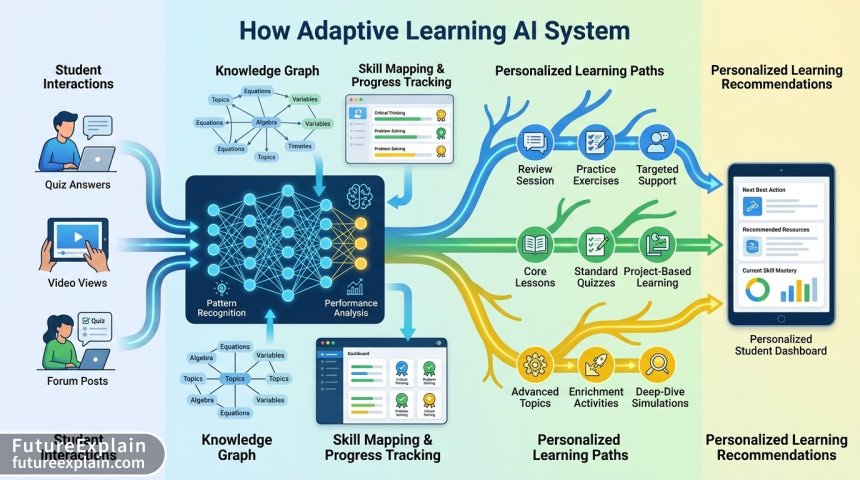
What distinguishes current AI educational tools from earlier educational technology is their capacity for genuine adaptation. Unlike static digital resources, AI-powered systems analyze student interactions in real-time, adjusting content difficulty, presentation style, and learning pathways based on continuous assessment of comprehension, engagement, and skill mastery. This represents a fundamental shift from one-size-fits-all digital resources to truly personalized educational experiences.
Core Categories of AI Educational Tools
Intelligent Tutoring Systems (ITS)
Intelligent Tutoring Systems represent the most direct application of AI to individual learning. These systems simulate one-on-one human tutoring by providing immediate feedback, personalized instruction, and adaptive challenges. Modern ITS platforms like Carnegie Learning's MATHia and Squirrel AI's adaptive learning system use sophisticated algorithms to model student knowledge states, identify misconceptions, and deliver targeted interventions.
What sets contemporary ITS apart is their ability to employ multiple AI techniques simultaneously. Natural language processing enables conversational interactions, computer vision can analyze written work, and reinforcement learning optimizes the teaching strategy based on student responses. For instance, when a student struggles with algebraic equations, an advanced ITS doesn't simply provide the correct answer but diagnoses the specific misunderstanding—whether it's order of operations, variable isolation, or foundational arithmetic—and addresses that precise gap in understanding.
Adaptive Learning Platforms
Adaptive learning platforms represent a broader category than ITS, focusing on curricular content that adjusts to student performance across entire subjects or learning domains. Platforms like DreamBox Learning (mathematics), Century Tech (multiple subjects), and Smart Sparrow create dynamic learning paths that respond to individual progress, pacing, and learning preferences.
These systems typically employ three types of adaptation: content adaptation (adjusting difficulty and presentation), assessment adaptation (modifying question types and complexity based on performance), and pathway adaptation (reordering learning objectives based on prerequisite mastery). The most sophisticated platforms incorporate learning science principles, spacing and interleaving techniques optimized by AI algorithms to enhance long-term retention[2].
Automated Assessment and Feedback Tools
AI-powered assessment tools are revolutionizing how teachers evaluate student work and provide feedback. Platforms like Gradescope, Turnitin's Revision Assistant, and Writable use machine learning to automate grading for certain assignment types while providing detailed, actionable feedback. These tools can assess everything from multiple-choice quizzes to complex essays and mathematical proofs.
The most significant advancement in this category is the move beyond simple pattern recognition to substantive evaluation. Modern essay-grading AI doesn't just check for grammar and plagiarism but can evaluate argument structure, evidence usage, logical coherence, and even creativity in some implementations. For mathematics and coding assignments, systems can identify not just final answers but solution approaches, common errors, and conceptual misunderstandings.
Learning Analytics and Predictive Systems
Learning analytics platforms powered by AI give educators insights that were previously impossible to obtain manually. Systems like BrightBytes, Civitas Learning, and the learning analytics modules in major LMS platforms analyze thousands of data points to identify students at risk of falling behind, predict course outcomes, and recommend interventions.
These systems employ predictive modeling techniques that consider factors beyond academic performance, including engagement metrics (login frequency, assignment submission times), participation patterns in discussion forums, and even sentiment analysis of written submissions. By identifying at-risk students weeks before traditional indicators would flag concerns, these systems enable proactive rather than reactive support[3].
Content Creation and Curation Tools
AI is also transforming how educational content is created and organized. Tools like Curipod, Education Copilot, and Diffit help teachers generate lesson plans, create interactive presentations, develop differentiated materials, and curate resources aligned with specific learning objectives and student needs.
These platforms leverage large language models specifically fine-tuned for educational contexts, ensuring generated content is pedagogically sound, age-appropriate, and aligned with curriculum standards. Some advanced systems can even analyze existing teaching materials and suggest improvements, alternative explanations, or supplemental resources based on best practices in learning science.
Practical Implementation Strategies for Educators
Successfully integrating AI tools into educational practice requires more than just technical implementation—it demands pedagogical alignment, thoughtful rollout strategies, and continuous evaluation. Based on research from institutions that have successfully adopted AI tools, here are evidence-based implementation frameworks.
Starting Small: The Pilot Approach
Rather than attempting wholesale transformation, successful implementations typically begin with focused pilots. Select one tool that addresses a specific pain point (such as automated grading for routine assignments or adaptive practice for a challenging concept) and implement it in a single classroom or with a volunteer group of teachers. This approach allows for:
- Controlled evaluation of the tool's effectiveness
- Identification of technical and training needs before wider rollout
- Development of best practices and use cases specific to your context
- Building advocacy through early success stories
The pilot should include clear success metrics established in advance, regular check-ins with participating educators, and mechanisms for gathering student feedback. Duration should be sufficient to move beyond the initial learning curve—typically 6-8 weeks for most tools.
Professional Development Framework
Effective AI tool implementation requires targeted professional development that goes beyond technical training. A comprehensive framework includes:
- Pedagogical Integration: How the tool supports specific learning objectives and teaching strategies
- Technical Proficiency: Hands-on training with the tool's features and interface
- Data Literacy: Interpreting analytics and insights generated by the tool
- Ethical Considerations: Understanding privacy implications and algorithmic limitations
- Troubleshooting and Adaptation: Adjusting implementation based on classroom realities
Professional development should be ongoing rather than one-time, with opportunities for collaborative planning, observation of effective implementations, and reflective practice sessions where teachers share experiences and strategies.
Student Onboarding and Digital Literacy
Students也需要 guidance in effectively using AI educational tools. A structured onboarding process should cover:
- Tool purpose and benefits for their learning
- Basic navigation and feature usage
- Interpreting feedback and recommendations from the system
- Understanding the tool's limitations and when to seek human assistance
- Digital citizenship aspects specific to AI interactions
This onboarding is particularly important for tools that collect substantial student data or require significant behavior change. Incorporating student voice in tool selection and implementation planning also increases buy-in and identifies potential barriers early.
Ethical Considerations and Responsible Implementation
The integration of AI in education raises important ethical questions that must be addressed proactively. Responsible implementation requires attention to privacy, equity, transparency, and pedagogical integrity.
Student Data Privacy and Security
AI educational tools typically require substantial student data to function effectively. Ensuring this data is handled responsibly involves:
- Compliance with regulations: FERPA (Family Educational Rights and Privacy Act) in the United States, GDPR in Europe, and similar regulations globally establish requirements for student data protection[4].
- Vendor vetting: Detailed review of privacy policies, data handling practices, and security certifications before adopting any tool.
- Data minimization: Collecting only data necessary for educational purposes and establishing clear data retention and deletion policies.
- Transparency with stakeholders: Clear communication with students and parents about what data is collected, how it's used, and what protections are in place.
Institutional agreements with vendors should explicitly address data ownership, usage restrictions, breach notification procedures, and audit rights. Regular security assessments of both vendor systems and internal integration points are essential.
Addressing Algorithmic Bias
AI systems can perpetuate or amplify existing biases present in their training data or design. In educational contexts, this risk manifests in several ways:
- Performance disparities: Systems that perform differently for students from different demographic backgrounds
- Content bias: Recommendations or generated materials that reflect limited cultural perspectives
- Interaction bias: Natural language interfaces that respond differently to varied communication styles
- Prediction bias: Risk identification systems that disproportionately flag certain student groups
Mitigating these risks requires proactive measures including diverse training data, bias testing across student subgroups, human oversight of critical decisions, and regular audits of system outputs for fairness. Transparency about system limitations and maintaining human authority over consequential decisions are essential safeguards.
Maintaining Human Agency in Education
While AI can enhance educational experiences, it should augment rather than replace human judgment and relationships. Key principles for maintaining appropriate human agency include:
- Teacher as decision-maker: AI provides insights and recommendations, but final educational decisions remain with educators
- Transparent augmentation: Students should understand when they're interacting with AI versus human feedback
- Critical engagement: Developing students' ability to question, evaluate, and contextualize AI-generated information
- Relationship preservation: Ensuring technology enhances rather than replaces meaningful teacher-student interactions
Establishing clear boundaries for AI assistance—particularly in assessment and feedback—helps maintain academic integrity while leveraging technological capabilities.
Specialized Applications and Emerging Trends
AI for Special Education and Accessibility
AI tools show particular promise for supporting students with diverse learning needs. Applications include:
- Speech recognition and synthesis for students with speech impairments or dyslexia
- Computer vision applications that describe visual materials for students with visual impairments
- Adaptive interfaces that adjust to individual motor or cognitive needs
- Emotion recognition systems that help identify when students are struggling or disengaged
- Predictive text and writing assistance for students with learning differences
Tools like Microsoft's Immersive Reader, Google's Live Transcribe, and specialized platforms like ModMath demonstrate how AI can create more inclusive learning environments. However, implementation requires particular attention to individual needs and preferences—what assists one student may hinder another.
Language Learning and Multilingual Education
AI-powered language learning platforms like Duolingo, Babbel, and Rosetta Stone have demonstrated how adaptive systems can accelerate language acquisition. More recently, tools focused on academic language development and content learning for multilingual students have emerged.
These systems provide real-time translation, vocabulary support contextualized to specific subjects, pronunciation feedback, and culturally responsive content adaptation. For classrooms with multiple language backgrounds, AI tools can help bridge communication gaps while supporting English language development.
STEAM Education and Creative Applications
AI is becoming both a tool for learning and a subject of study in STEAM (Science, Technology, Engineering, Arts, and Mathematics) education. Applications include:
- Coding education: Platforms that provide personalized feedback on programming assignments
- Scientific simulation: AI-enhanced virtual labs that adapt to student hypotheses and experimental approaches
- Mathematical exploration: Systems that generate increasingly complex problems based on demonstrated mastery
- Creative arts: Tools that teach artistic concepts through AI-assisted creation and analysis
These applications help students develop both domain knowledge and AI literacy—understanding how AI systems work, their capabilities and limitations, and their societal implications.

Evaluation Framework: Assessing AI Tool Effectiveness
With hundreds of AI educational tools available, educators and administrators need systematic approaches to evaluation and selection. An effective framework considers multiple dimensions:
Educational Impact Assessment
Beyond technical features, tools should be evaluated based on their educational value:
- Learning outcome alignment: Does the tool support specific curriculum standards and learning objectives?
- Evidence of effectiveness: What research or data supports claims of educational impact?
- Pedagogical approach: Does the tool's underlying educational philosophy align with institutional values?
- Differentiation capability: How effectively does it adapt to diverse learner needs?
- Engagement factors: Does it maintain student interest and motivation?
Pilot implementations should include pre- and post-assessment of relevant skills, surveys of student and teacher experiences, and analysis of usage patterns relative to outcomes.
Technical and Practical Considerations
Even educationally sound tools can fail due to technical or practical limitations:
- Integration capability: How well does it work with existing systems (LMS, SIS, etc.)?
- Accessibility standards: Does it meet WCAG and other accessibility guidelines?
- Device and bandwidth requirements: Is it accessible with available technology infrastructure?
- Scalability: Can it accommodate anticipated user numbers and data volumes?
- Support and maintenance: What technical support and professional development does the vendor provide?
Technical evaluations should include testing in real-world conditions with representative hardware, network conditions, and user technical proficiency levels.
Cost-Benefit Analysis
AI tools represent significant investments that should be justified by their value:
- Total cost of ownership: Beyond subscription fees, consider training time, integration costs, and ongoing support needs
- Time savings: How much teacher time does the tool save, and how is that time reallocated?
- Outcome improvements: What measurable improvements in learning outcomes justify the investment?
- Opportunity costs: What other resources or tools are foregone by choosing this option?
A comprehensive analysis considers both quantitative factors (cost per student, time savings metrics) and qualitative benefits (teacher satisfaction, student engagement, equity improvements).
Future Directions and Emerging Technologies
The landscape of AI in education continues to evolve rapidly. Several emerging trends are likely to shape the next generation of educational tools:
Multimodal Learning Systems
Future AI educational systems will process and respond to multiple input modalities simultaneously—speech, text, handwriting, gesture, and even physiological signals. This multimodal approach allows for richer assessment of understanding and more natural, intuitive interfaces.
Research in affective computing—systems that recognize and respond to emotional states—may lead to tools that adapt not just to cognitive states but to engagement, frustration, or confusion levels. These systems raise important ethical questions about emotional surveillance but offer potential benefits for timely intervention.
Generative AI in Curriculum Development
While current generative AI tools can create educational content, future systems will likely offer more sophisticated capabilities:
- Dynamic curriculum generation: Systems that create personalized learning pathways in real-time based on student progress and interests
- Scenario-based learning: AI-generated simulations and problem scenarios tailored to individual knowledge gaps
- Automated differentiation: Instant generation of multiple versions of materials at different complexity levels
- Cross-disciplinary connections: Systems that identify and create connections between seemingly unrelated concepts
These applications will require advances in pedagogical knowledge representation—encoding teaching expertise in forms that AI systems can operationalize effectively.
Decentralized and Privacy-Preserving AI
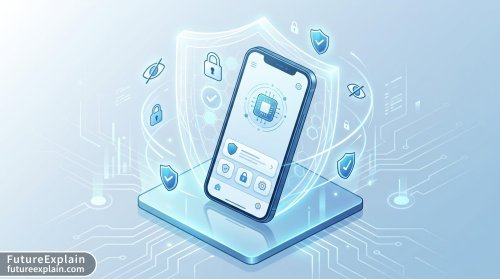
Growing concerns about data privacy are driving development of decentralized AI approaches for education:
- Federated learning: Systems that train on decentralized data without centralizing sensitive information
- On-device processing: AI that runs locally on student devices rather than in the cloud
- Differential privacy: Techniques that provide useful insights while mathematically guaranteeing individual privacy
- Homomorphic encryption: Performing computations on encrypted data without decryption
These technologies could enable personalized learning while addressing legitimate privacy concerns, particularly for vulnerable student populations.
Implementation Roadmap: A Step-by-Step Guide
For educators and institutions beginning their AI integration journey, this practical roadmap provides structured guidance:
Phase 1: Foundation (Weeks 1-4)
- Needs assessment: Identify specific challenges or opportunities where AI could provide value
- Stakeholder engagement: Involve teachers, students, parents, and administrators in planning
- Resource inventory: Assess existing technology infrastructure and support capabilities
- Policy review: Examine existing policies regarding data privacy, technology use, and assessment
- Professional learning: Provide foundational AI literacy training for educators
Phase 2: Exploration and Selection (Weeks 5-12)
- Tool research: Identify potential tools addressing identified needs
- Evaluation framework application: Systematically assess candidate tools
- Pilot planning: Design focused pilot implementations with clear success metrics
- Vendor discussions: Engage with tool providers about implementation support
- Pilot implementation: Deploy selected tools in controlled settings
Phase 3: Scaling and Integration (Months 4-9)
- Pilot evaluation: Assess results and refine implementation approach
- Infrastructure preparation: Address technical requirements for broader deployment
- Policy development: Create or update policies for AI tool use
- Professional development rollout: Expand training based on pilot learnings
- Phased deployment: Gradually expand tool access with continuous support
Phase 4: Optimization and Evolution (Ongoing)
- Continuous assessment: Regularly evaluate tool effectiveness and user satisfaction
- Community of practice: Foster collaboration and sharing among users
- Tool refinement: Work with vendors to address issues and enhance features
- Emerging technology monitoring: Stay informed about new tools and approaches
- Ethical review: Periodically reassess ethical implications as usage evolves
Case Studies: Real-World Implementations
Case Study 1: Rural School District Mathematics Improvement
A rural school district with limited specialist resources implemented an AI-powered adaptive mathematics platform across middle schools. The system provided personalized practice, identified common misconceptions, and gave teachers detailed analytics on class and individual performance. After one academic year, standardized test scores in mathematics increased by 18% district-wide, with the largest gains among previously struggling students. Teachers reported saving approximately 5 hours per week on assessment and differentiation, which they redirected to small-group instruction and individual support.
Case Study 2: University Writing Center Expansion
A large university writing center implemented an AI writing feedback tool to supplement human tutoring. The system provided immediate feedback on drafts, allowing tutors to focus on higher-order concerns during sessions. Usage data showed students submitted drafts more frequently and came to tutoring sessions better prepared. The writing center was able to serve 40% more students without additional staff, and end-of-semester writing assessments showed significant improvement in structural and mechanical writing skills.
Case Study 3: Special Education Program Enhancement
A special education program implemented multiple AI tools to support diverse learning needs: speech-to-text for students with dysgraphia, AI-powered reading support for students with dyslexia, and emotion recognition tools to help teachers identify when students were experiencing frustration or anxiety. The integrated approach reduced the need for one-on-one adult support by approximately 30% while improving academic outcomes and student self-reporting of classroom experience.
Conclusion: Balancing Innovation with Responsibility
The integration of AI into education offers transformative potential for personalizing learning, enhancing teaching effectiveness, and addressing longstanding educational challenges. However, realizing this potential requires careful, thoughtful implementation that balances innovation with responsibility.
Successful AI integration begins with clear educational goals rather than technological fascination. Tools should be evaluated not just for their technical capabilities but for their alignment with pedagogical values, their evidence of effectiveness, and their ethical implications. Implementation requires attention to human factors—teacher training, student onboarding, and cultural adaptation—as much as technical considerations.
As AI capabilities continue to advance, the fundamental questions in education remain human ones: How do we create meaningful learning experiences? How do we support each student's growth and development? How do we prepare young people for a rapidly changing world? AI tools can help address these questions, but they cannot answer them alone. The most effective educational environments will be those that leverage AI's capabilities while maintaining human wisdom, empathy, and judgment at the center of the educational experience.
By approaching AI integration with both optimism and critical awareness, educators can harness these powerful tools to create more effective, engaging, and equitable learning environments while preparing students to navigate a world increasingly shaped by artificial intelligence.
Visuals Produced by AI
Further Reading
- AI for Content Creators: From Idea to Publish Workflow - Learn how AI tools are transforming content creation across industries
- AI-Powered Accessibility: Make Content More Inclusive - Explore how AI enhances accessibility in digital environments
- Multilingual Models: Translating and Localizing Content - Understand AI applications in language translation and cultural adaptation