
Machine Learning Explained Simply: How AI Learns
Machine learning is the core of artificial intelligence. Learn how AI learns from data, improves over time, and powers modern technology in simple language.

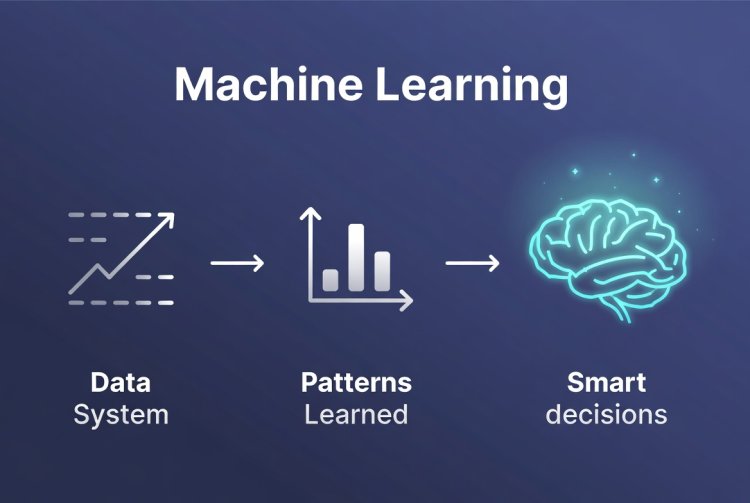
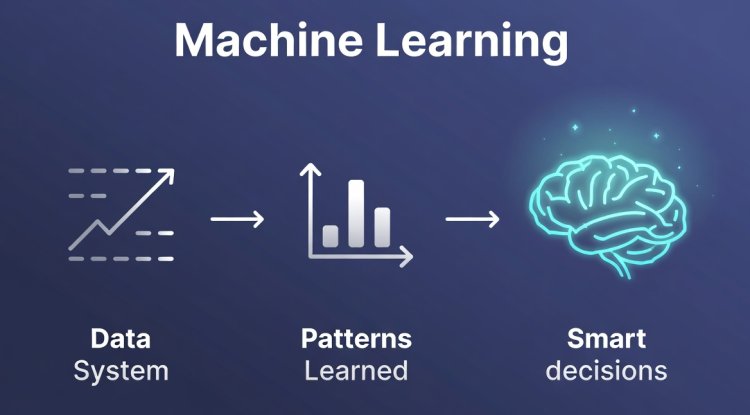
Machine Learning is the engine that powers most modern artificial intelligence. When people say that “AI learns,” they are usually talking about machine learning.
In this guide, you will learn what machine learning is, how it works, and why it is essential for AI — explained clearly, without technical jargon.
If you are completely new to AI, you should first read: What Is Artificial Intelligence? (Beginner’s Guide) .
What Is Machine Learning?
Machine learning is a method that allows computers to learn from data instead of being explicitly programmed for every task.
Instead of telling a computer exactly what to do, we give it examples and let it discover patterns on its own.
In simple words:
- Traditional software follows fixed rules
- Machine learning systems learn rules from data
Why Machine Learning Is Important for AI
Artificial intelligence would be extremely limited without machine learning.
Machine learning allows AI systems to:
- Improve automatically over time
- Adapt to new situations
- Handle complex and unpredictable data
- Make predictions instead of fixed decisions
This is why most modern AI applications — from voice assistants to recommendation engines — rely heavily on machine learning.
How Machine Learning Works (Step by Step)
Although machine learning sounds complex, the basic process is straightforward.
- Data Collection
The system is given examples such as images, text, numbers, or user behavior. - Training the Model
Algorithms analyze the data to find patterns and relationships. - Testing and Validation
The system is tested with new data to check accuracy. - Learning and Improvement
The model improves by adjusting itself based on errors.
This cycle repeats continuously, allowing the system to become more accurate over time.
Types of Machine Learning
There are three main types of machine learning. Each is used for different kinds of problems.
1. Supervised Learning
In supervised learning, the system is trained using labeled data.
Example:
- Emails labeled as “spam” or “not spam”
- Images labeled with object names
The system learns by comparing its predictions with the correct answers.
2. Unsupervised Learning
In unsupervised learning, the system is given data without labels.
The goal is to discover hidden patterns or groupings.
Example:
- Customer behavior analysis
- Grouping similar products or users
3. Reinforcement Learning
In reinforcement learning, the system learns through trial and error.
- Correct actions are rewarded
- Wrong actions are penalized
This method is commonly used in robotics, gaming AI, and decision-making systems.
Real-World Examples of Machine Learning
Machine learning is already part of your daily life.
- Video recommendations on streaming platforms
- Voice recognition in smartphones
- Fraud detection in banking
- Search result ranking
- Product recommendations in online stores
Each of these systems improves as more data is collected.
Machine Learning vs Traditional Programming
| Traditional Programming | Machine Learning |
|---|---|
| Rules written by developers | Rules learned from data |
| Predictable behavior | Adaptive behavior |
| Limited flexibility | Improves with experience |
This difference explains why machine learning is so powerful — and why it is not the same as automation.
For a detailed comparison, read: AI vs Automation: What’s the Difference and Why It Matters .
Is Machine Learning the Same as Artificial Intelligence?
No — machine learning is a subset of artificial intelligence.
- AI is the broader concept
- Machine learning is one way to build AI systems
Not all AI uses machine learning, but most modern AI does.
How Machine Learning Fits into AI Types
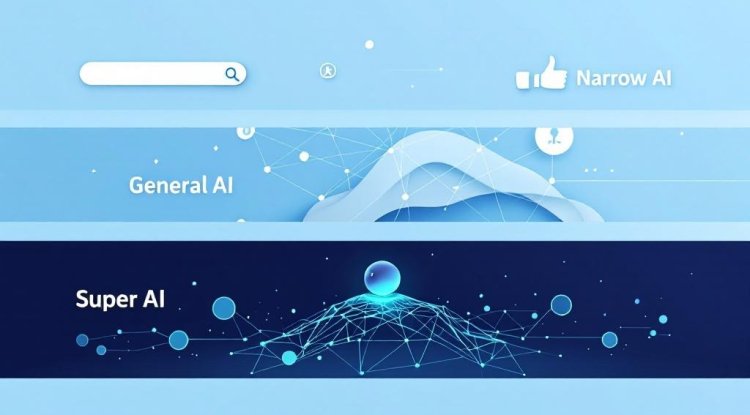
Machine learning is mainly used in Narrow AI, which focuses on specific tasks.
To understand how this fits into the bigger picture, read: Types of Artificial Intelligence: Narrow vs General vs Super AI .
Common Myths About Machine Learning
- Machine learning does not think like humans
- It does not understand meaning — only patterns
- It cannot learn without data
- It is not automatically intelligent
Understanding these limits helps prevent unrealistic expectations.
Why Beginners Should Learn Machine Learning Basics
You do not need to become a programmer to understand machine learning.
Basic knowledge helps you:
- Use AI tools more effectively
- Make informed technology decisions
- Understand how recommendations and predictions work
- Avoid misinformation about AI
What You Will Learn Next
Now that you understand how AI learns, the next step is understanding how AI differs from automation and where its limits are.
Final Thoughts
Machine learning is not magic. It is a structured way for machines to learn from data and improve through experience.
By understanding machine learning, you gain clarity about how modern AI systems really work — without fear or confusion.
This knowledge forms the foundation for everything you will learn next on FutureExplain.
Share
What's Your Reaction?
 Like
0
Like
0
 Dislike
0
Dislike
0
 Love
1
Love
1
 Funny
1
Funny
1
 Angry
0
Angry
0
 Sad
0
Sad
0
 Wow
0
Wow
0






Clean layout and useful content. Well done.
Great article for beginners and professionals alike.
Yes, misuse is possible. That is why responsible development, regulation, and human oversight are essential.
Please update this list regularly as tools change fast.
This article convinced me to try AI tools seriously.
I appreciate that you explained each tool instead of just listing names.
The productivity section was very helpful.
Not always. Some AI systems can work offline if models are already installed locally, though updates may require internet access.